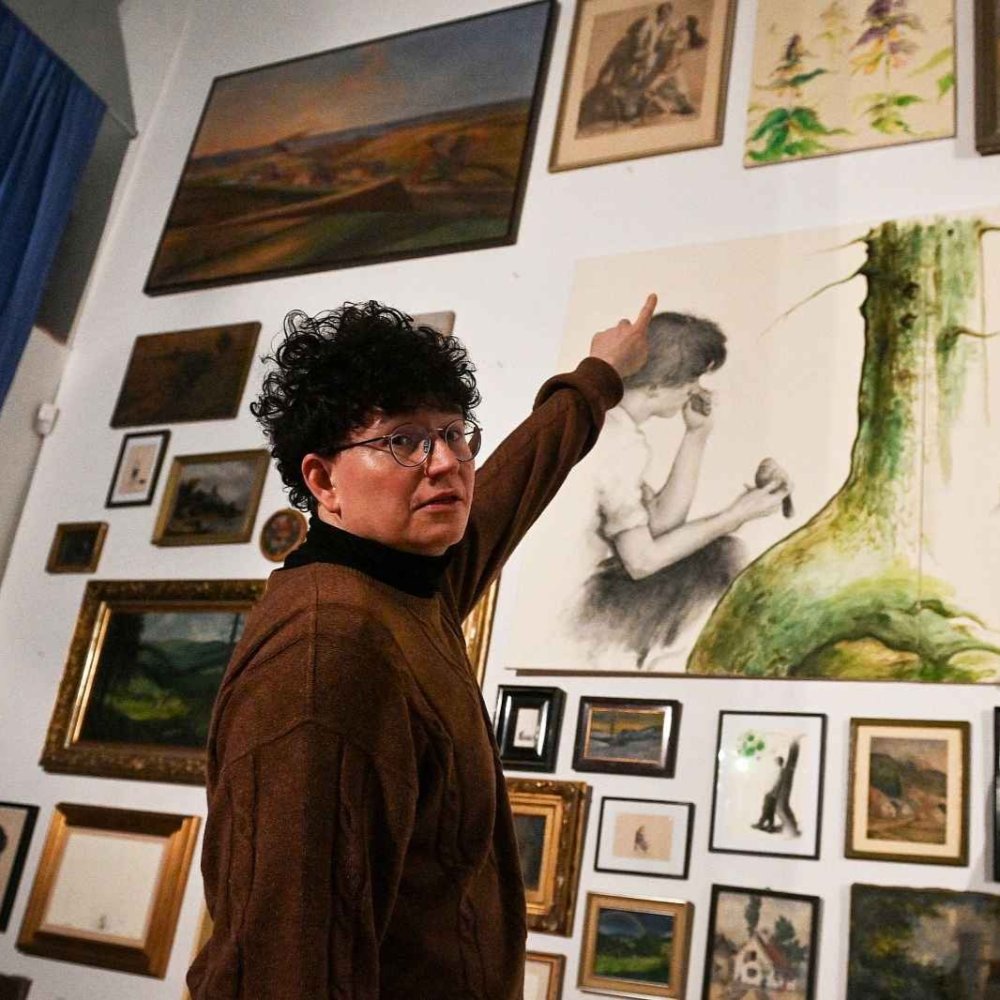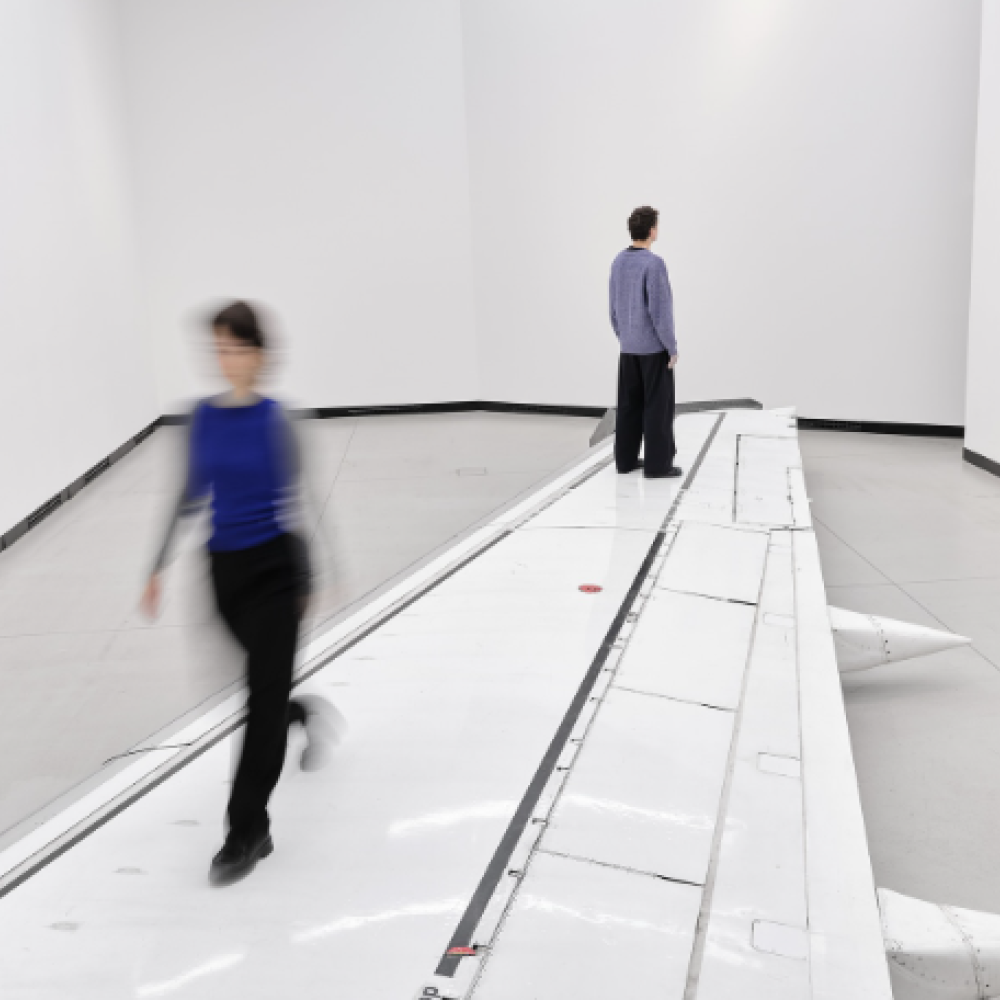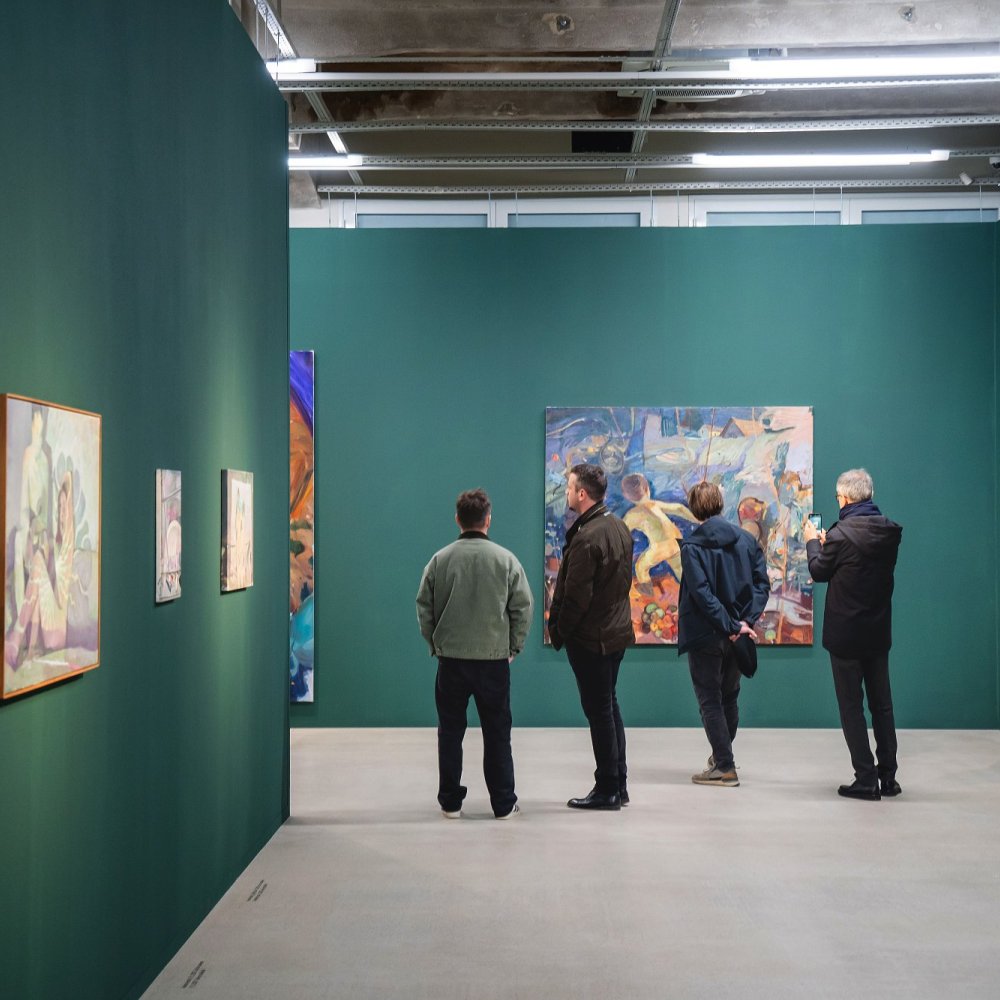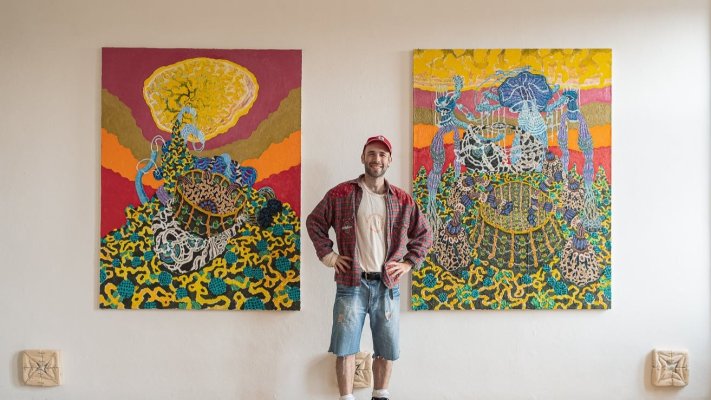
Kanrec Sakul (*1989) works with detailed oil paintings, obsessive drawings and raw objects or installations. His paintings are dominated by a strong interest in experimenting with structures and organic forms. He deliberately works with repetition, geometric shapes or relative perspective, which is reflected in an expressive and absurd colour palette. Through variations and combinations of glaze and pasty parts, a fauvist sensibility and the use of colour, he builds surreal microworlds dominated by architectural scenes with an unclear function, time and place of their existence. Sakul offers a variety of totemic objects, biomorphic shapes, interior details, platforms, cages, imaginary ceremonial sites or hints of urban structures that unfold on small formats and monumental canvases.
This interview was conducted on the occasion of his residency at the Telegraph, which will culminate in Open Studio on 29 April 2026.
Your work has undergone some significant changes in recent years, from more figurative motifs, through physicality and sexuality, to imaginary flowers, biomorphic shapes and strange spatial situations. When you look back at this evolution, was the choice of these themes rather spontaneous or is there a hidden meaning behind each of them?
My work has undergone significant changes because my life has periods where there are significant changes. With hindsight, I can see that even though I have destroyed much of my previous work, some of the older work is making its way into the current work. 15 years ago I painted psychological portraits, then I ripped over 100 paintings from their frames, stuffed them in a barrel and set them on fire so they wouldn't exist. Right after that I painted my first flower and discovered that it was actually a psychological portrait. I can't escape myself.
Many artists are shaped by teachers or mentors during their studies. As a self-taught artist, you didn't go through traditional studio guidance. Did you nevertheless have someone who shaped you significantly?
I have been shaped by many people of different ages, backgrounds and communities. I was not taught in the sense of teacher and student. I didn't want advice or oversight on creation. I would leave the school after a while or be kicked out. That's not to say I don't have respect for other artists' work. Many times I was impressed by their work. I spent dozens of hours in front of Matthias Grünewald's Isenheim Altarpiece. If I had met him in person, maybe we would have cut each other's ears off, or conversely we would have been friends, I don't know. But I do know that I get everything important from observation, not from talk. Perhaps it would be nice to mention my primary art school teacher who encouraged my imagination and the old gentleman draughtsman who wanted to teach me the craft. But sitting in front of my painting, I see that my work has been far more influenced by life outside the studio and especially by people who have had little or nothing to say about my work.
Your current residency at the Telegraph takes you out of your usual work background for a time. To what extent can the change in space, rhythm and the everyday affect the actual process of making? And has this already manifested itself in the work that is now being produced here?
Space and background affect the process of making. When we renovated the apartment and I wanted to paint at home without dirtying the carpet, walls and furniture with paint, I painted small paintings with thin brushes behind a small table, which was tidy. When I paint in the garden, I can feel the difference between summer and winter paintings as the light and temperature changes. In winter paintings, the details are less precise and the brushstrokes are also more expressive because I am cold. I've changed several environments in which I've created - from my childhood bedroom to my studio, where paint was everywhere, even on the ceiling, and there was a garbage can under my feet. I worked under one light bulb in the middle of the room. My windows were boarded up and my head was spinning with turpentine. All places have their specificities, which are partly reflected in the work just for practical reasons. At Telegraph, I paint in a large, light-filled space. Every day I go for walks around Olomouc. This must be reflected in the work created here.
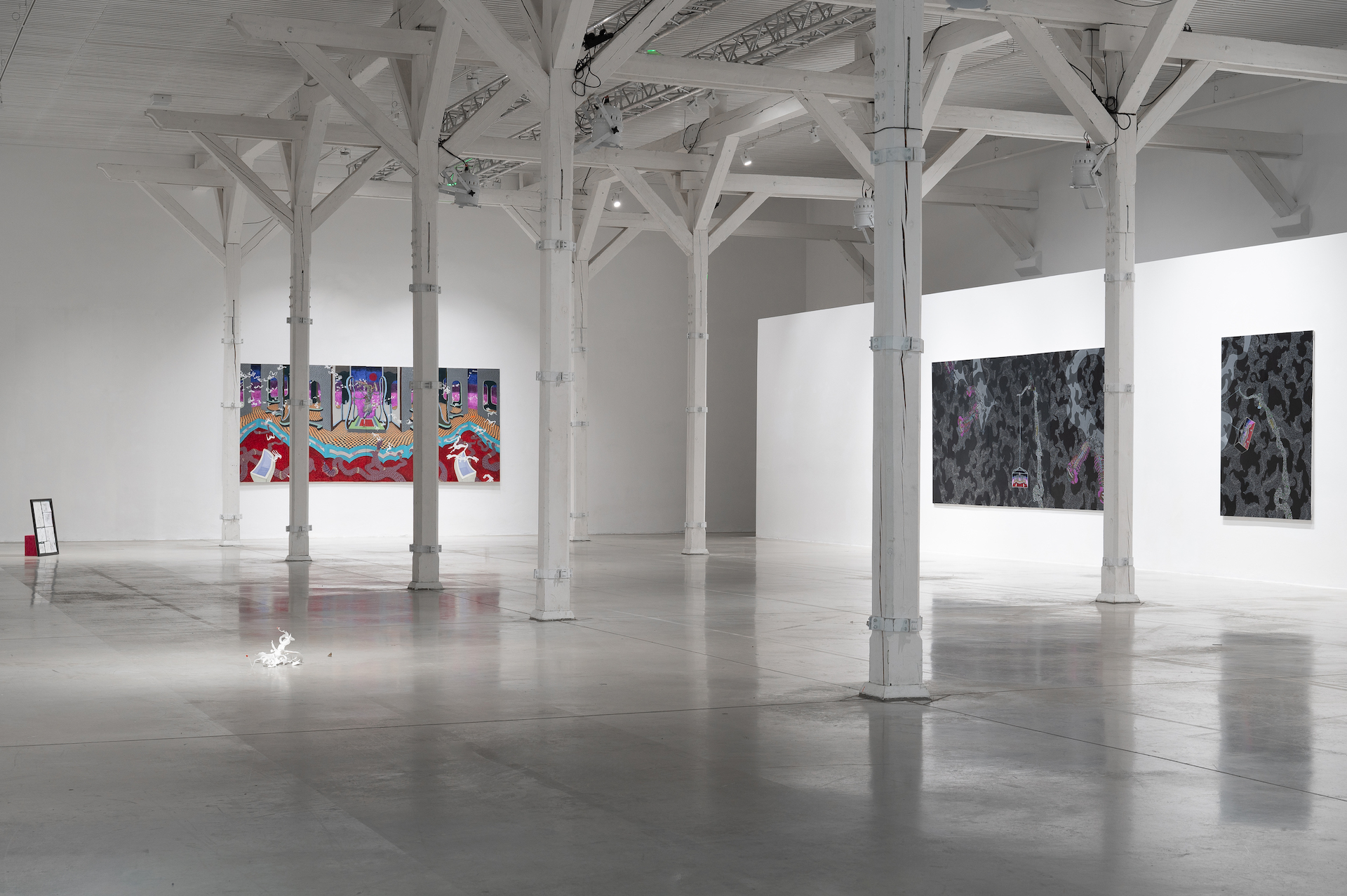
In addition to painting, objects and installations are increasingly prominent in your work. How do you think between these media? Are they different ways of developing the same theme for you, or does each open up a different type of thinking and working?
I paint with a brush on canvas and carve into wood with a chisel. You can conveniently hang the canvas on the wall and embed the object in a pond, as I did in the botanical garden in Košice. When I create anything and out of anything, it will still be me. The difference is in the technological process and the possibilities of display."
What material do you work best with at the moment? Is there any material you would like to try or work with more in the future?
I mostly paint and of course draw. Drawing is affordable and quick to do. I once moved into a house that had a workshop, wood, a saw and a planer. That's how I get introduced to new materials and techniques. I don't think about what I want to try and what I want to try with - if I have the opportunity and the desire, I try.
Although references to natural forms, architecture or interior design can be recognized in your work, the resulting image often feels like a microcosm with its own logic. Do you have specific visual references in your work?
Nothing in particular, they are subconscious mutations of everything I have seen and experienced.
In collaboration with VUNU gallery you have created five solo projects, three of which build on each other. The exhibitions Senfina Flugo, Velura Rando and Sukera Fumo work with the concept of "false spaces", i.e. spaces that appear real at first glance but at the same time carry something disturbing and hidden. Was linking these exhibitions and themes the intention from the beginning?
The linking of exhibitions is not the intention. Senfina Flugo, or in the Esperanto language composite Infinite Flight- there I see flying creatures, while in the exhibition Velura Rando, for example, translated as Velvet Edge, I see still lifes. I gave them titles after I finished the series because I saw something there that would define them. For each solo show I do a closed unit, but I don't get rid of the continuity in the work. The disturbing and hidden things are appealing to me and I think they are central to the nature of being human. Because of that, people are willing to sit down in a confined space and take a trip to see the other side of the moon even at the risk of not coming back.
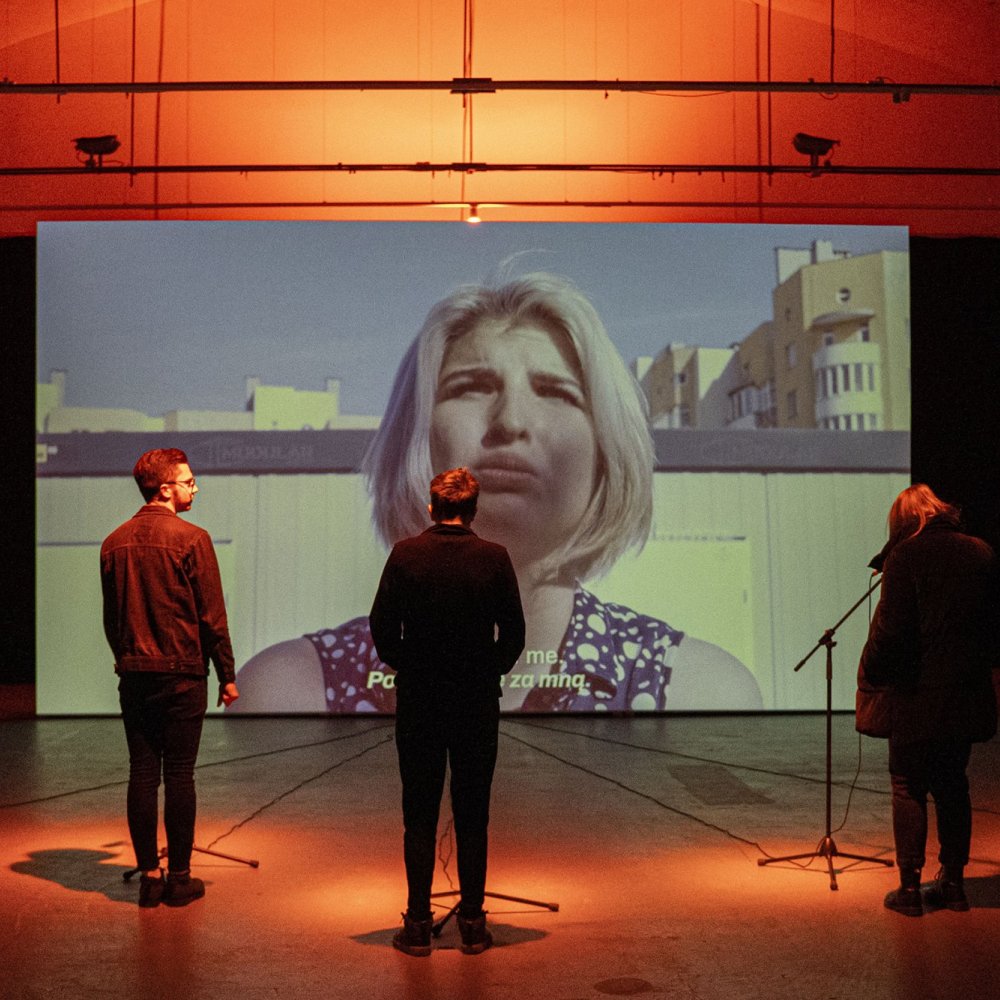
In addition to your solo work, you also participate in collaborative projects, such as the exhibition Svetspalonos. This was created as a long-distance collaboration between three different artists - yourself, painter Sophie Belkin and video artist Dave Greber. What was the link that drew you together, and what did such a long-distance collaboration look like?
I reached out to Dave and Sophia via Instagram. It was a spontaneous idea. They liked the collaboration, even though nothing was clear beforehand. After a year of email communication, we met in person at an exhibition and worked on a site-specific project in a building in an industrial estate on the outskirts of Košice. I involved my family, friends and strangers. Several people participated in it for free because they were excited and wanted to help. For example, the owner of the area, Mrs. Zuzana, provided us with space and workers. It was a collective work.
When you look back at your journey so far, from your autodidactic beginnings to exhibitions and residencies, is there a moment that was a turning point for you? That is, a moment that took you a step further as an artist?
The turning point was my absolute conviction from childhood that I was going to be a painter. It was this that created a path where I discovered many other milestones and new experiences. Such as my first solo exhibition when I was 13, the first painting I sold, all the other exhibitions and fairs, the collaboration with the gallerist Niki Bernáth and yes, this residency.