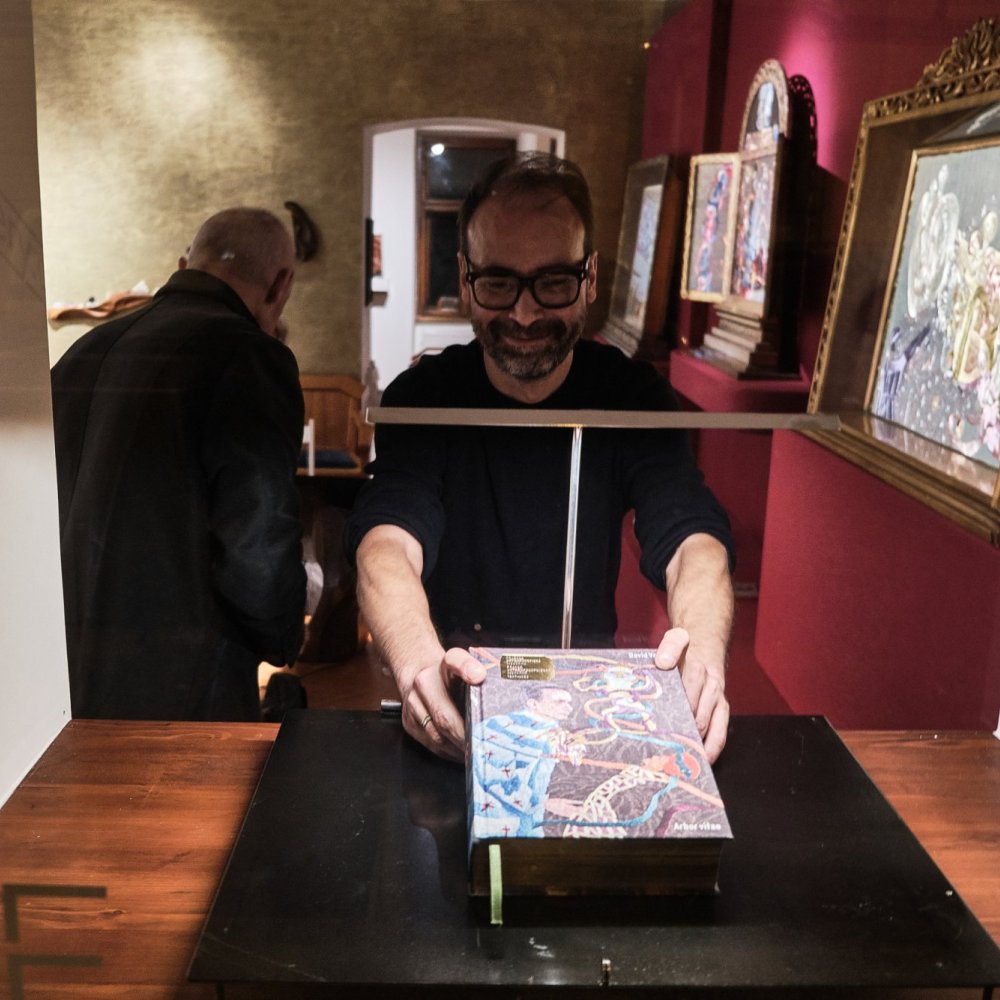
Roman Ondak is not an unfamiliar face to visitors of the Olomouc Telegraph. We've encountered his specific approach to material before at the Telegraph, specifically in Søren Dahlgaard's Dough Portraits project, where his work was captured in one of the dough-covered portraits. Now, however, this globally acclaimed artist is making a comeback.
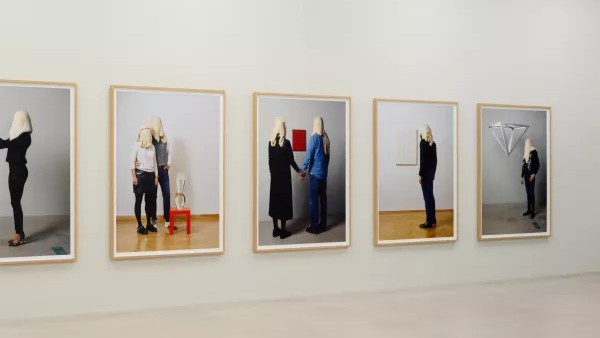
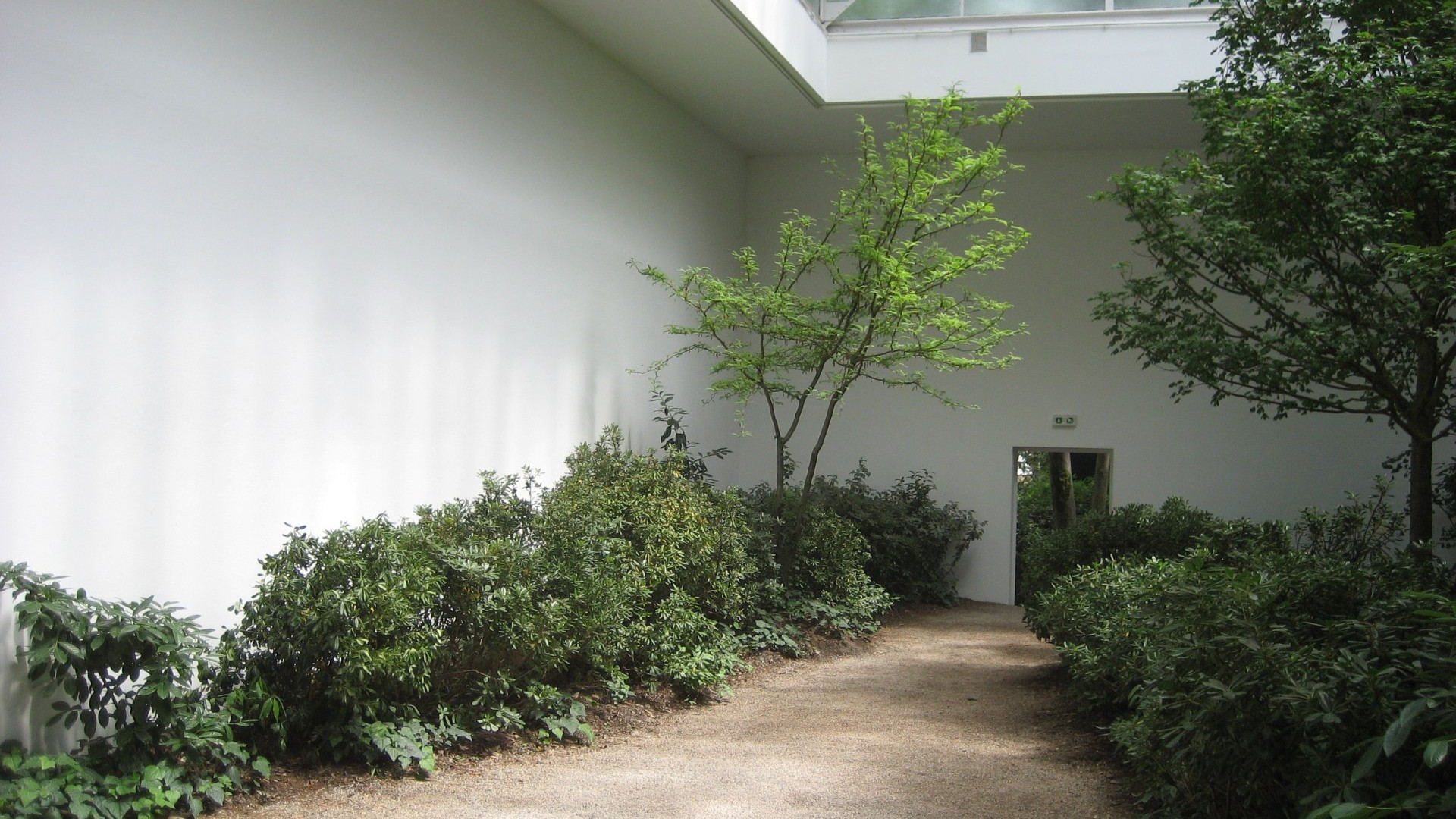
Roman Ondak is one of the most prominent figures of contemporary European conceptual art and his work has long been situated between installation, sculpture, performative actions and video. Although his roots are in Slovakia, the artist is now an established figure, exhibiting in major galleries from London to New York. There, he has established himself as a master of subtle interventions that only slightly distort ordinary reality, giving new meaning to everyday situations. He achieved international fame with his project LOOP, which represented the Czech Republic and Slovakia at the Venice Biennale in 2009. At that time, Ondak had the interior space of the pavilion connected to the surrounding park by means of living vegetation and walkways, creating a perfect illusion in which the boundary between the interior of the gallery and the outside world completely dissolved. His position was later confirmed by his participation in the prestigious Documenta show and exhibitions at MoMA in New York and Tate Modern in London. However, The Day After Yesterday exhibition at Kunsthalle Prague, which ran from 13 November 2025 to 9 March 2026, was his first major retrospective in Central and Eastern Europe in more than two decades. It was a symbolic return for Ondak, as Prague played a key role as his springboard to the international scene in the 1990s, and this project reinvigorated his ties to the city.
The exhibition's curator, Barbora Ropková, conceived the exhibition as a cross-section of more than three decades of the artist's work. The nearly fifty works on display cover a wide range of forms, from drawings and paintings to objects, video art and spatial installations. The title of the exhibition, referring to a work of the same name from 2005, suggested the main thematic line, which is the work with time and memory. In his work, he drew on the legacy of conceptual art of the 1960s and 1970s, but shifted it towards a dreamy reflection on the everyday. His approach was characterized by working with banal materials and situations, which he transformed into metaphors about identity and human existence through subtle shifts. He often thematized the specifics of the Central European space and coming to terms with the communist past, which he confronted with our globalized present. Ondak's works function as tools that teach us to observe the world around us anew and more attentively. Through them, we uncover hidden tensions between our personal experience and how we perceive things as a society.
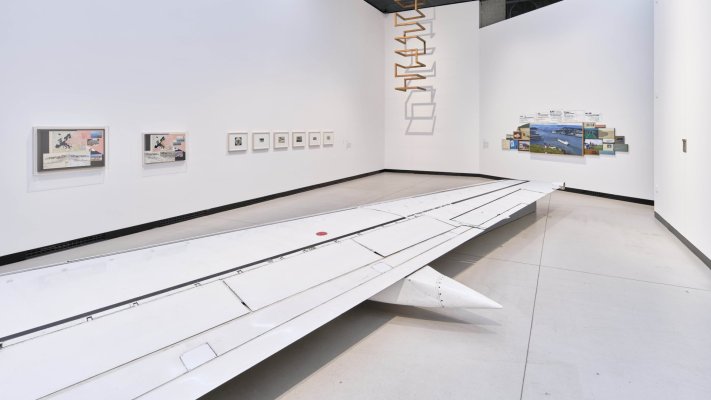
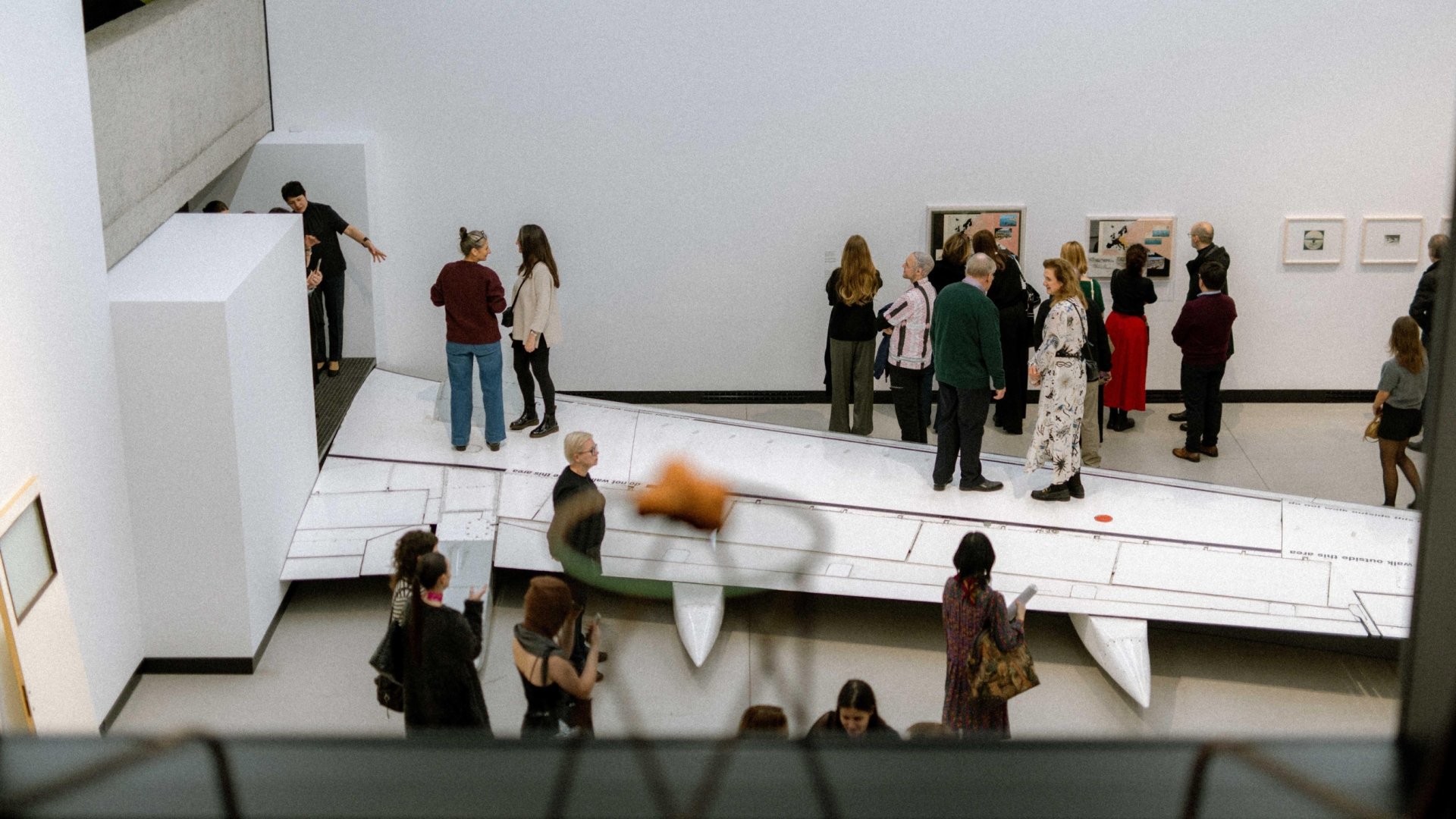
The space of Gallery 1 was dominated by a monumental readymade entitled Do not walk outside this area. It is an actual wing of a Boeing 737-500 that visitors were able to step directly onto. Here, Ondak radically changed the viewer's perspective. He turned a technical object, normally seen only from a distance, into a walking platform, blurring the line between sculpture and architecture.
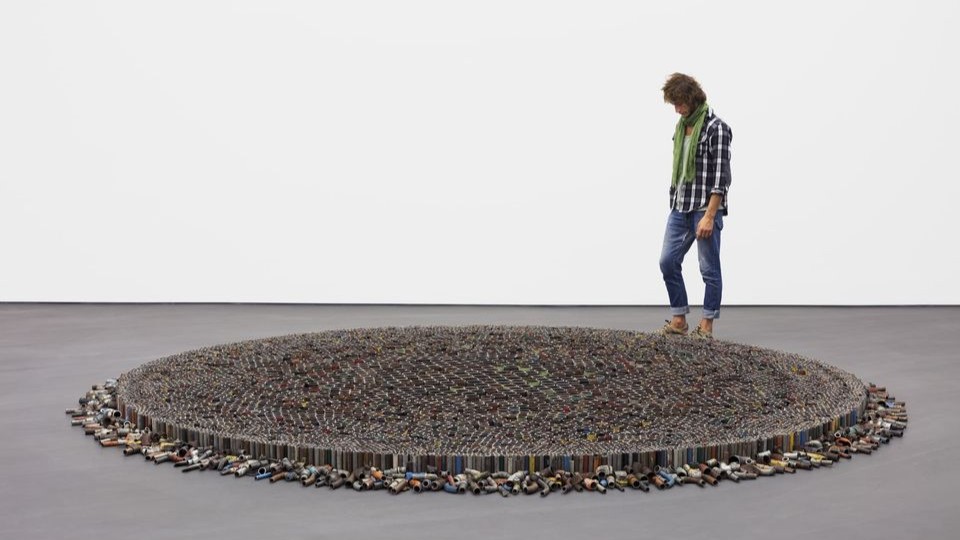
In fact, Ondak's entire oeuvre is strongly shaped by his coming of age in Central Europe and its socialist past. This biographical and political subtext is clearly written into other installations that combine intimate memories with collective memory. In Freed Doorway, the artist ripped the door from his childhood bedroom and placed it in a new setting, while Resting Corner invites viewers into an environment made up of nostalgically familiar socialist furniture. These motifs, as in the case of Bad News Is a Thing of the Past Now, are also followed by works from the Kunsthalle Praha collection. An example is the installation Perfect Society, made of industrial pipes, which evokes utopian ideals and their subsequent dystopian collapse.
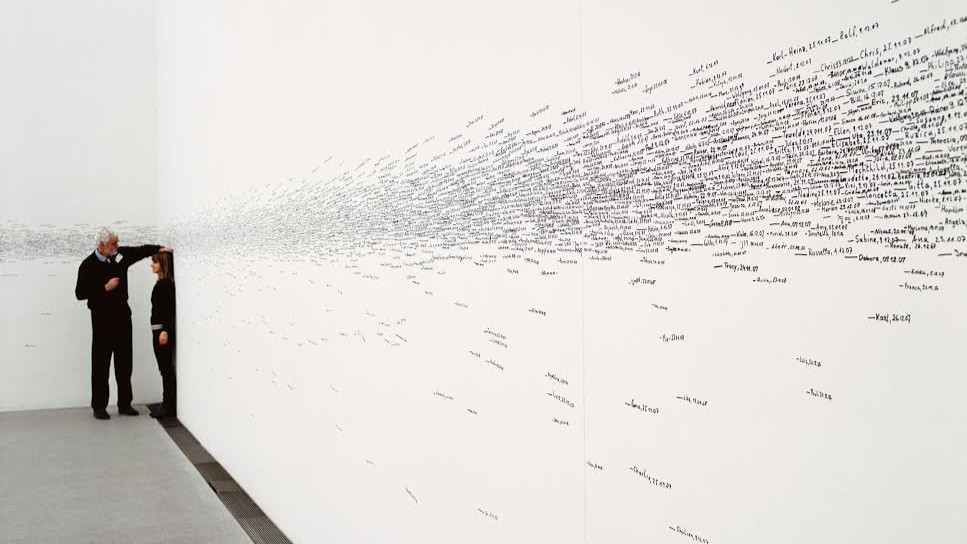
The highlight of the exhibition at Gallery 2 was the iconic participatory performance work Measuring the Universe. First installed at the Pinakothek der Moderne in Munich in 2007, it was created exclusively with audience participation. Assistants recorded the height, name and date of each visitor on the white walls, gradually turning the empty space into a dark strip where the individual's individuality merged into a collective portrait. The motif of the passage of time was also developed in Event Horizon, a work made from a century-old oak tree from the artist's native region. The tree, cut into a hundred discs, served as a calendar, with one disc representing an event in world history hanging on the wall each day of the exhibition. The entire exhibition in the Kunsthalle evolved naturally over time and was constantly changing. It has thus become a perfect personification of Roman Ondák's work, which teaches us to find the unexpected extraordinary in the most ordinary details.