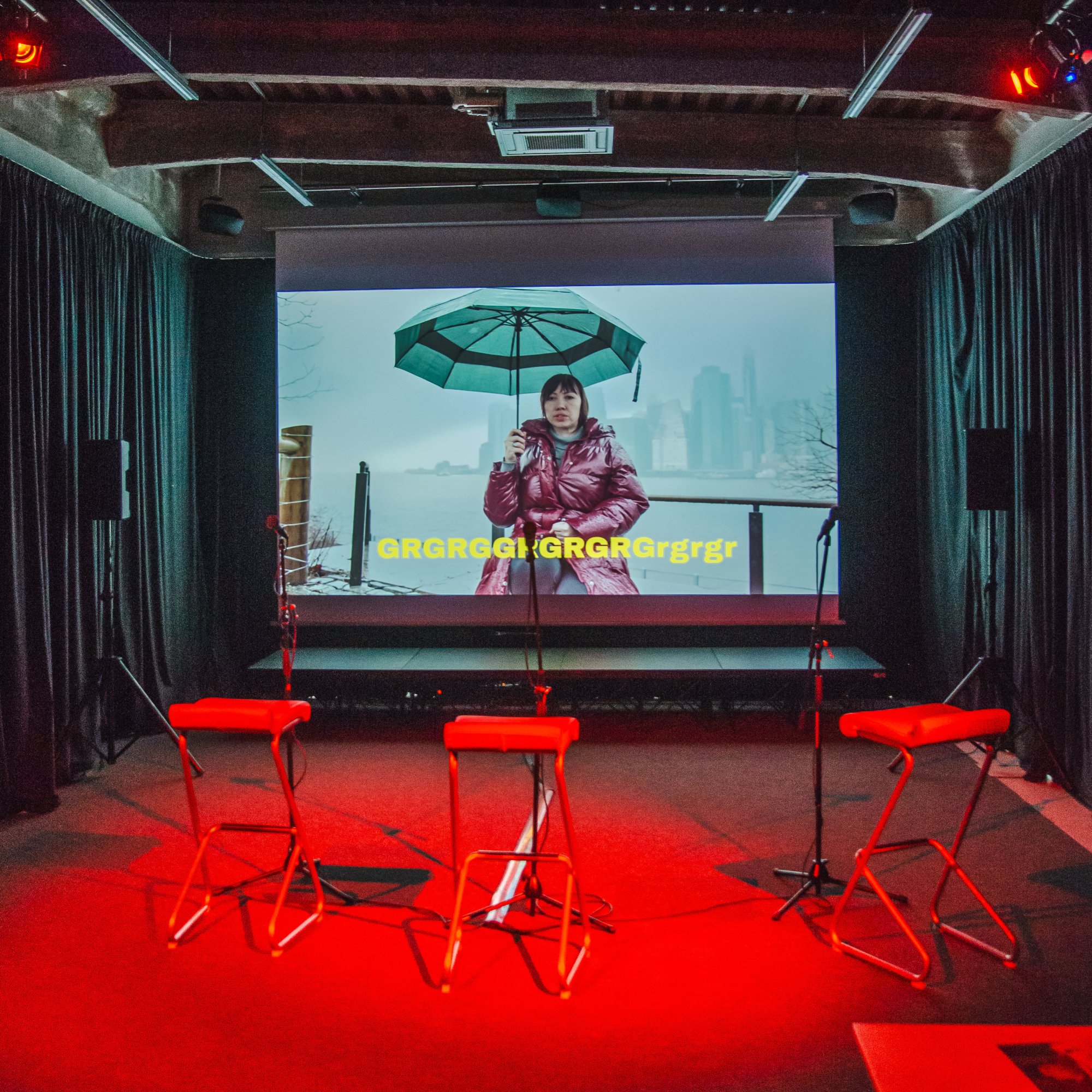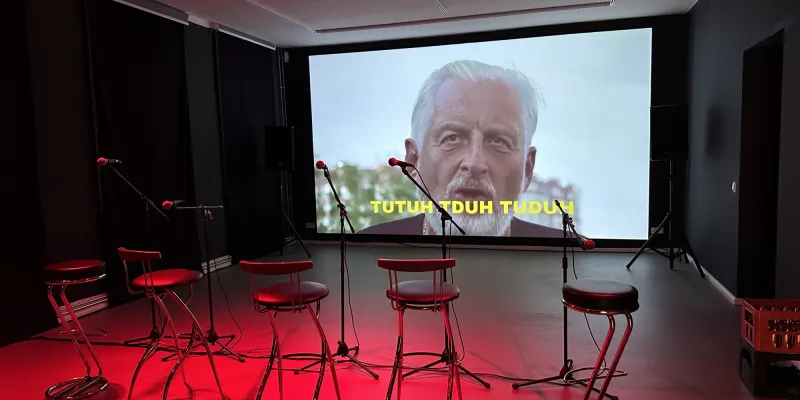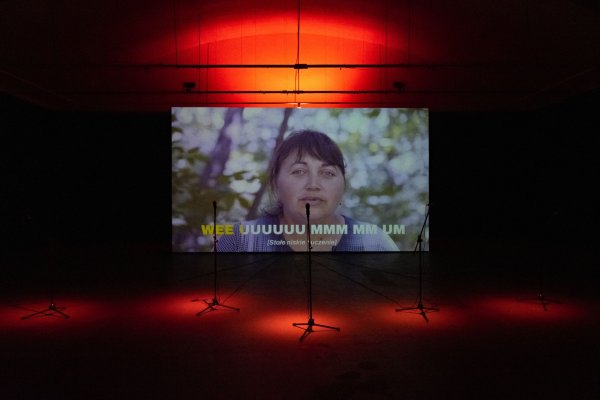
Try closing your eyes for a moment and listen to the sounds around you. The hum of the coffee machine, the laughter from the hallway, the distant honking of an ambulance. For most of us, these are just the scenery of the day. But for the people in exile who had to leave their homes in Ukraine, sound is a tool for survival. Coming to our cinema is Repeat After Me, a project by the Open Group collective, which was featured in the Polish Pavilion at the Venice Biennale in 2024. We now present it for the first time in the Telegraph.
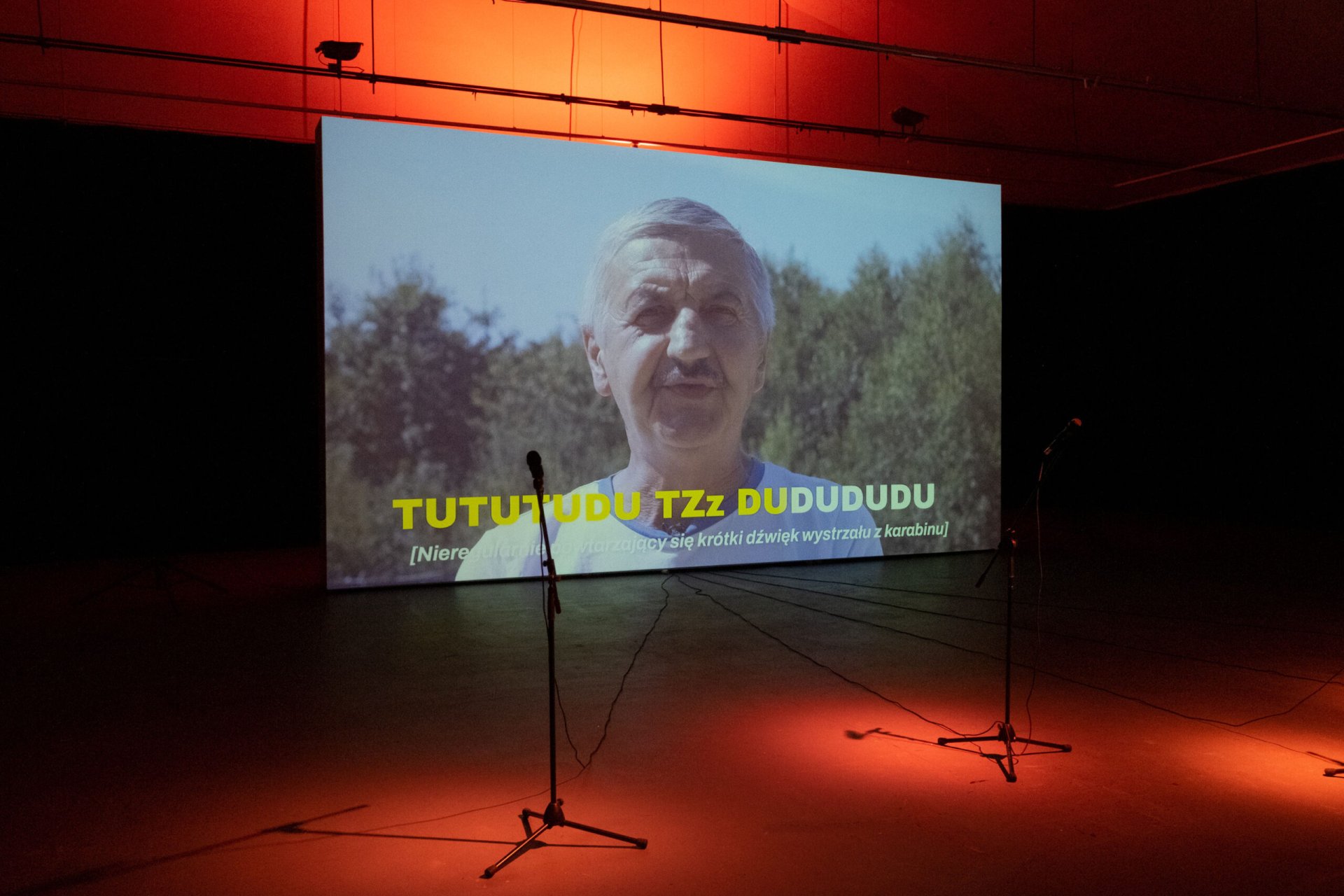
Open Group's installation uses a karaoke format - an activity we associate with fun, alcohol and a relaxed atmosphere. But in the performance of the Lviv-based collective Open Group, this banal pastime turns into a chilling testimony. Instead of the lyrics of pop hits, you watch on the screen the faces of civilians in exile. They do not encourage you to sing, but to imitate the sounds of weapons they have learned to safely recognise by ear. Rocket launcher, mortar, cluster bomb. As spectators, you then try to replicate these sounds through a microphone.
A fascinating and terrifying clash ensues. While we are trying to "hit the note", for the people on the screen this sound was a matter of life and death. It's a lesson in the acoustics of violence. As the filmmakers themselves say, "War today doesn't need images to be present, it just needs sound." While we can displace the images of conflict, sound strikes our bodies before we can attach rational meaning to it.
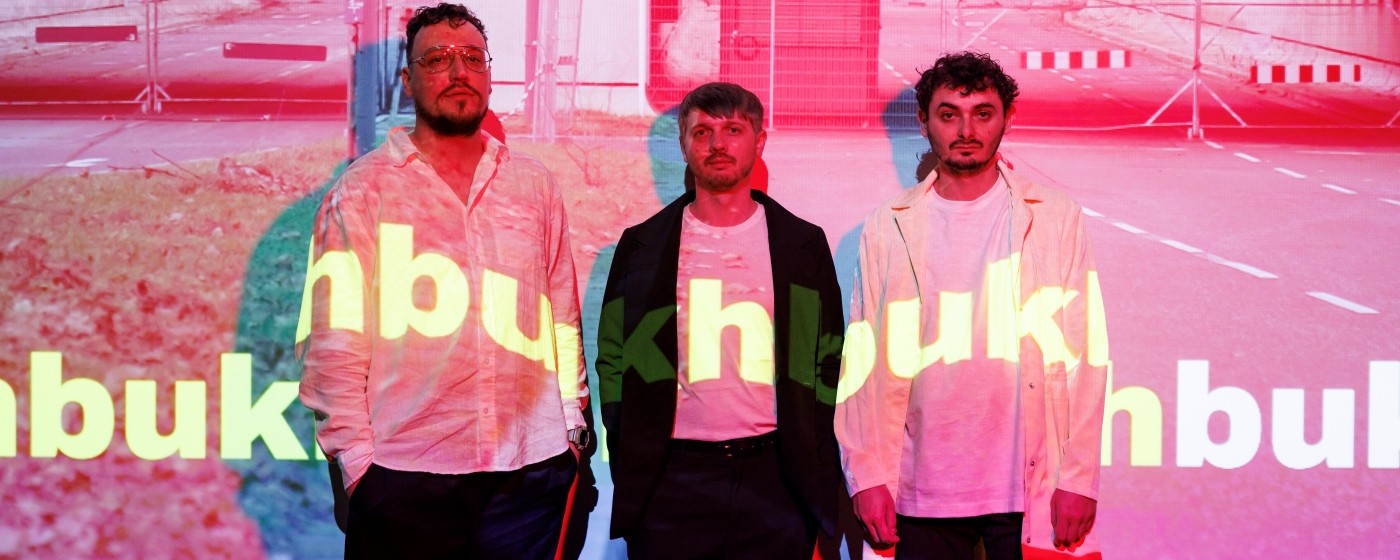
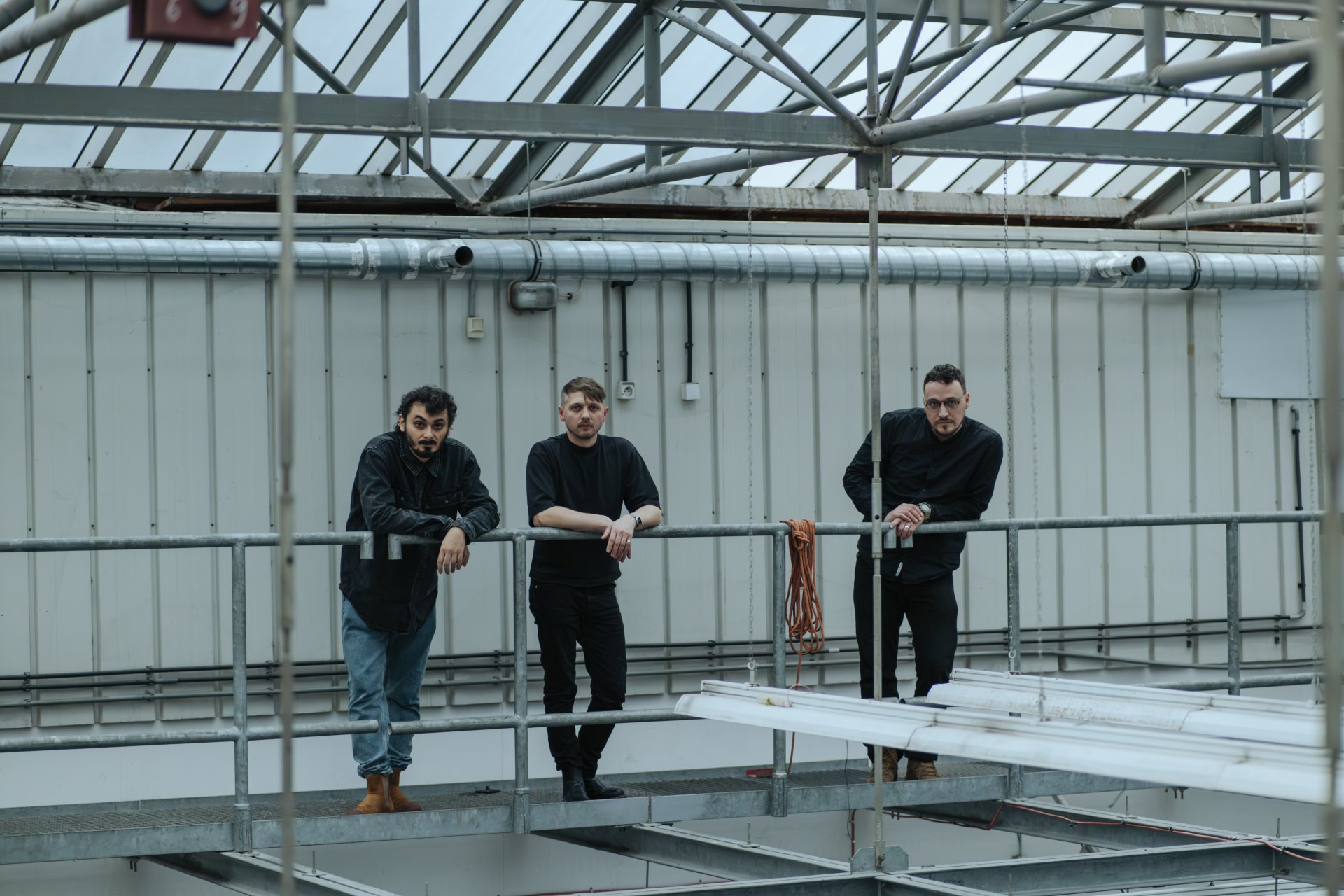
The Open Group collective (Yuriy Biley, Pavlo Kovach and Anton Varga) is one of the most prominent voices of the contemporary Ukrainian scene. Their success at the 60. Biennale in Venice was not accidental. They struck a nerve in the global debate on empathy and the technology of war. The Telegraph now presents Edition II of this project, created in 2024. The project is presented by Ecological Days Olomouc with the help of Polish Institute in Prague, Telegraph Pulse and Telegraph Gallery in conjunction with the One World International Human Rights Film Festival.
This project does not show war as a visual spectacle full of debris. It shows it as an inner state of man, who carries his acoustic memory with him everywhere. It is an opportunity for quiet reflection and an experience that literally gets under the skin. For a few minutes in the Telegraph's cinema room, you will find yourself in another reality, where sound is not just noise, but a testament to trauma and the mechanics of survival.
- When: 17 4 - 3 5 2026
- Opening Hours: Always Friday to Sunday (detailed times can be found in our programme)
- Venue.