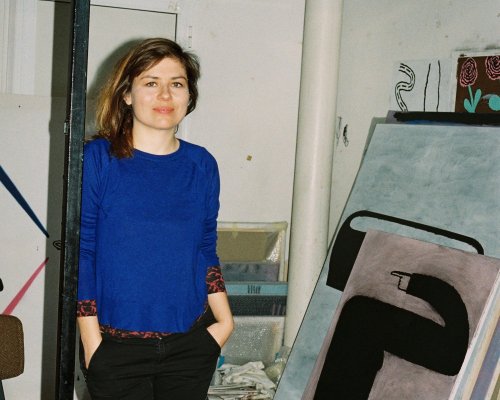
Nevena Aleksovski is a visual artist educated at the Academy of Fine Arts and Design in Novi Sad (2008) and the University of Ljubljana, where she completed an MA in Cultural Studies (2014). Her work has been presented internationally in exhibitions and art fairs including ŠKUC, Cukrarna, Vienna Contemporary, Artissima, ARCOmadrid and Berlin Art Week. In 2022 she published Melancholy of the Abandoned Lands, a book tracing her family’s migration history during and after Yugoslavia’s dissolution. Working across painting, drawing, installation and found objects, Aleksovski explores displacement, memory, labour and historical transformation through a feminist perspective and a minimalist visual language.
The interview was created on the occasion of Maja Babič Košir and Nevena Aleksovski's residency at Telegraph, which will culminate in a joint Open Studio on June 23, 2026.
One of the central themes of your work is migration. How have your family’s experiences, as well as your own, shaped your perspective, and how do these experiences manifest in your artistic practice?
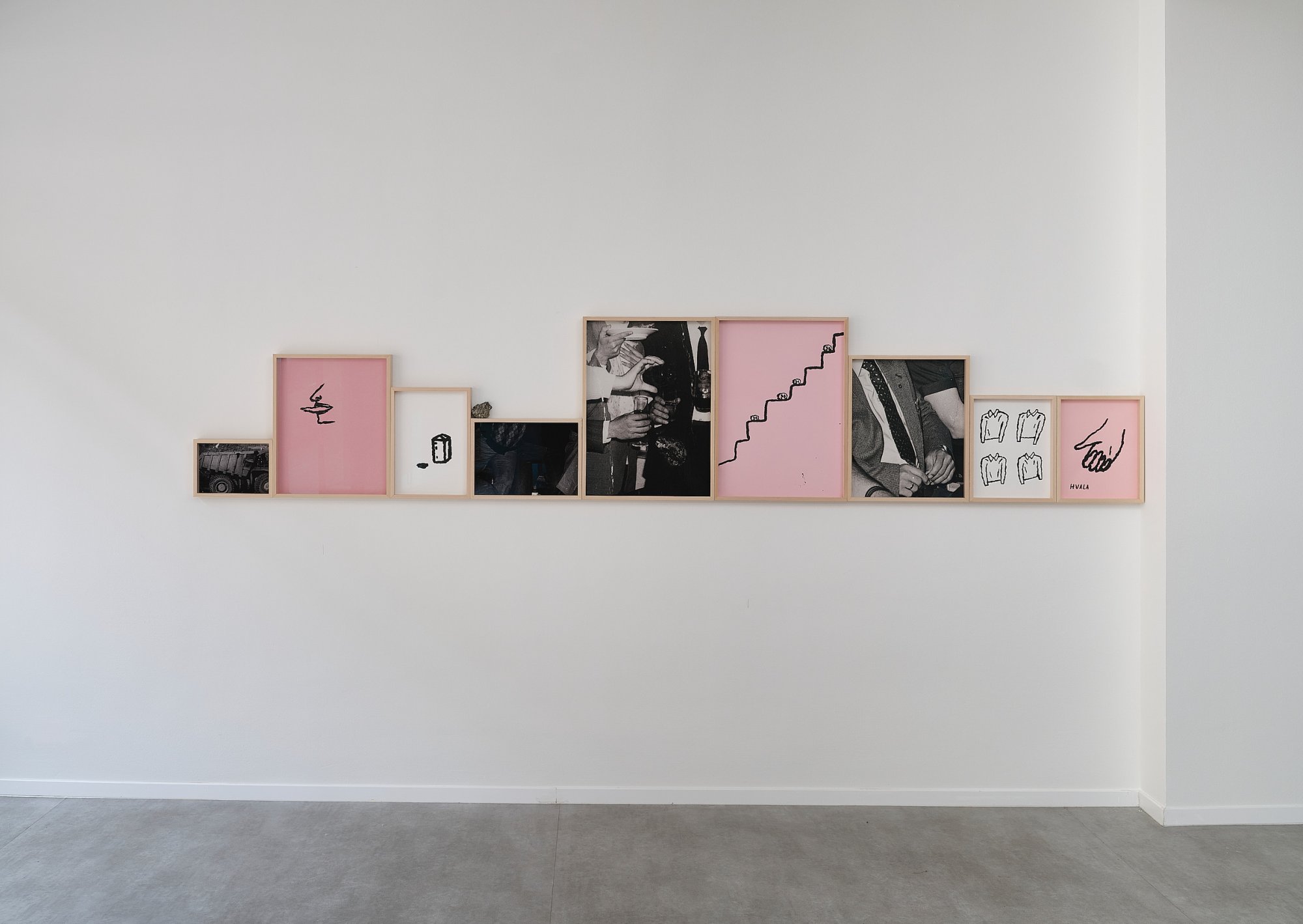
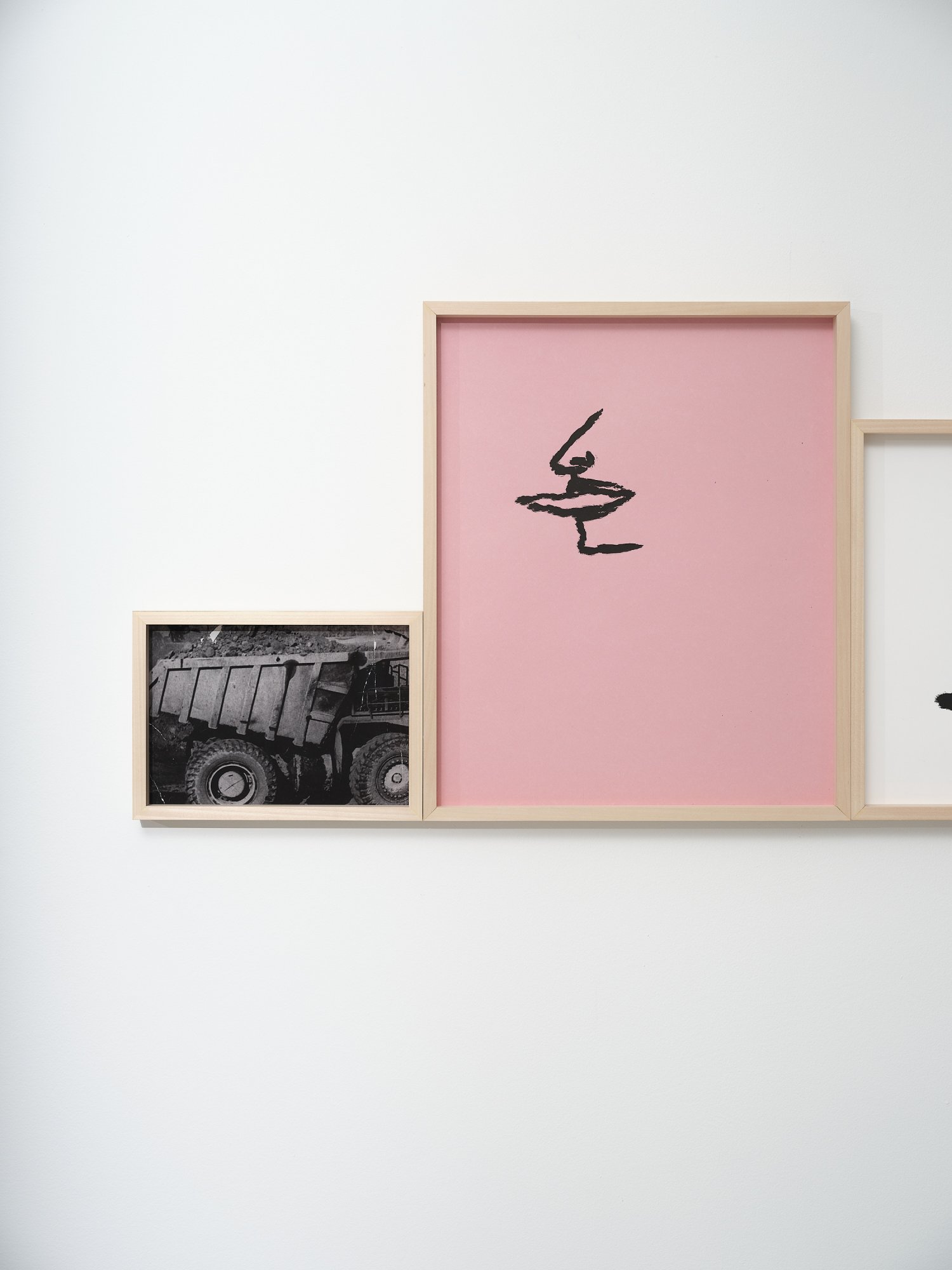
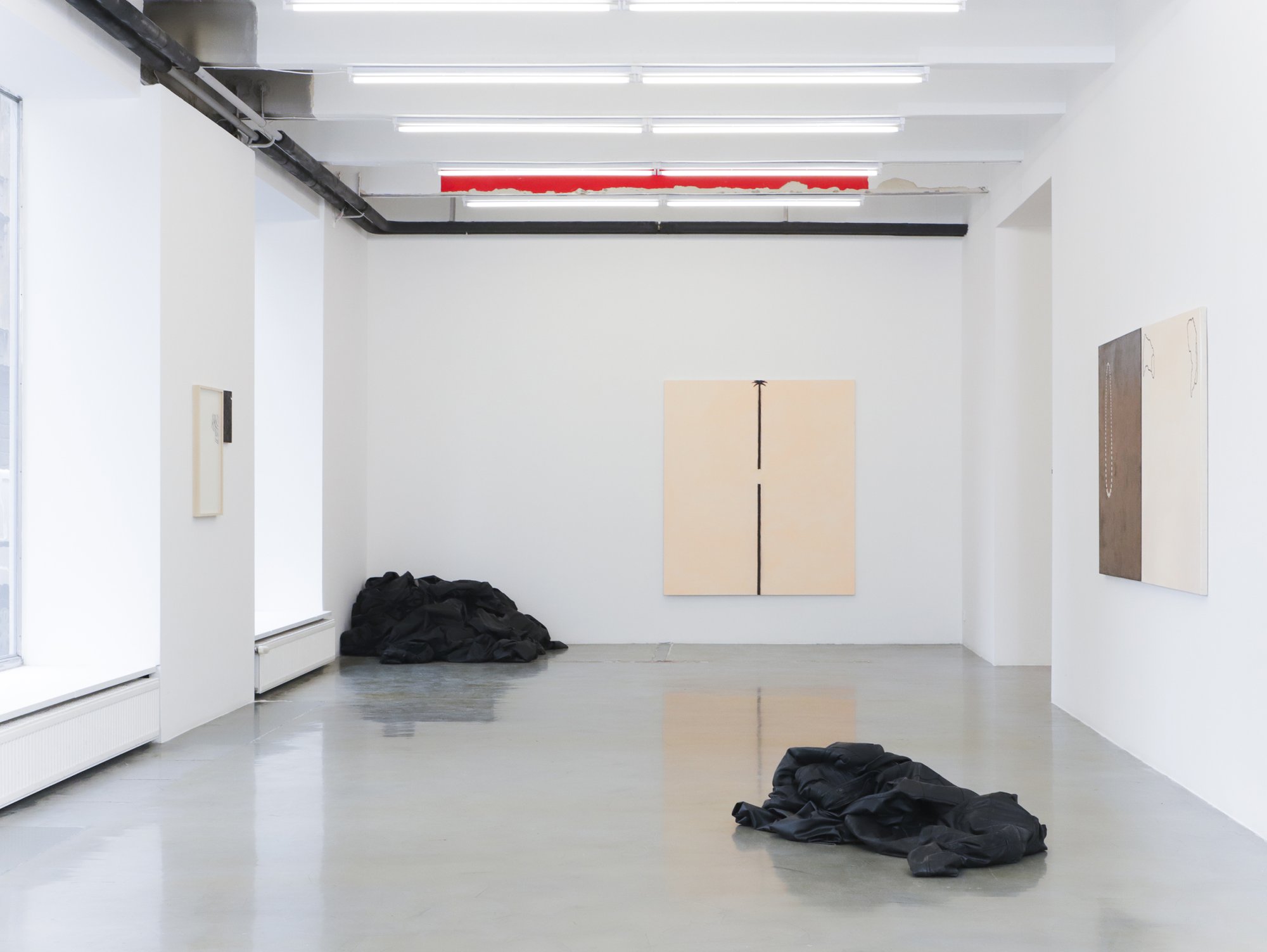
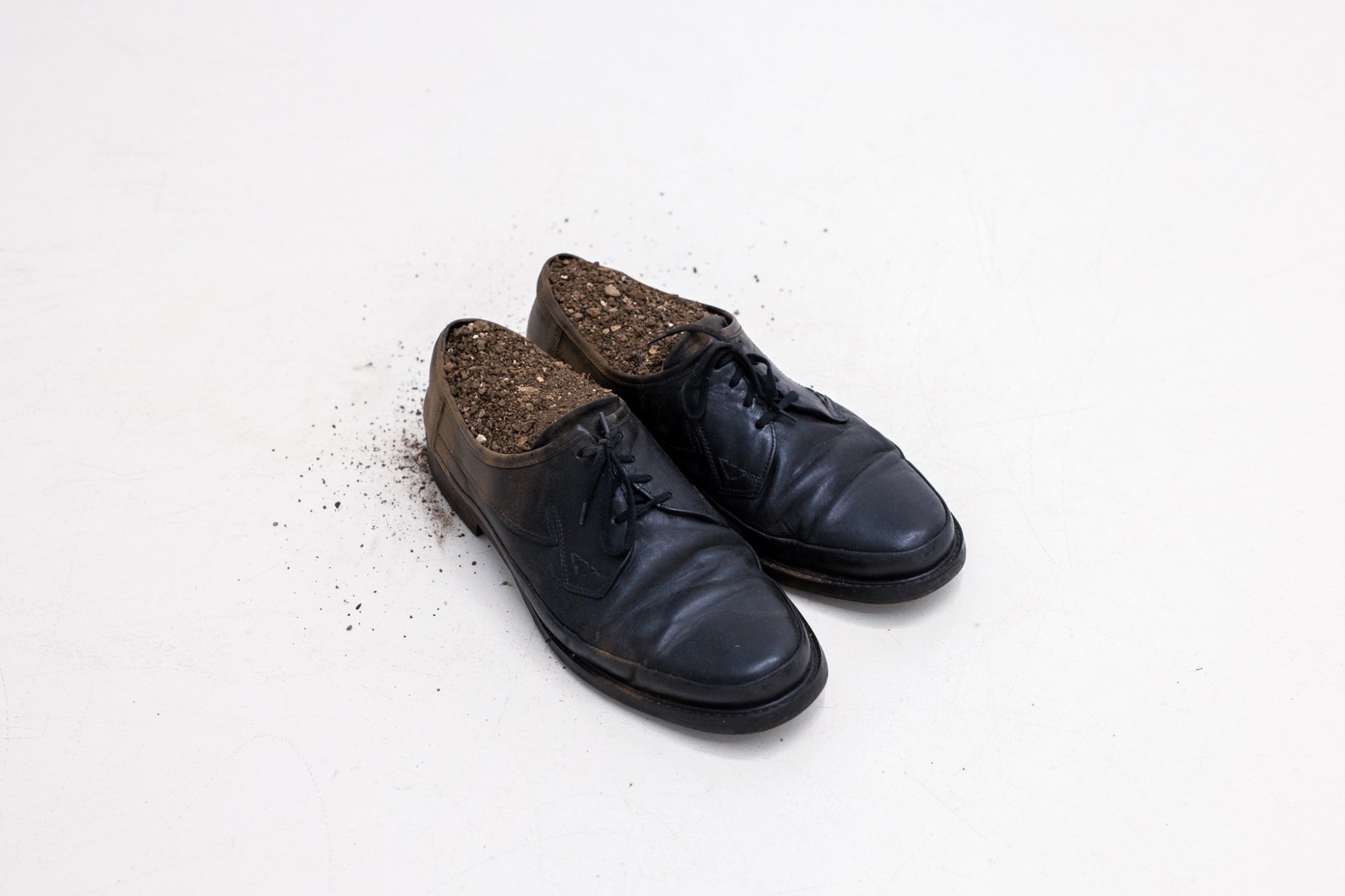
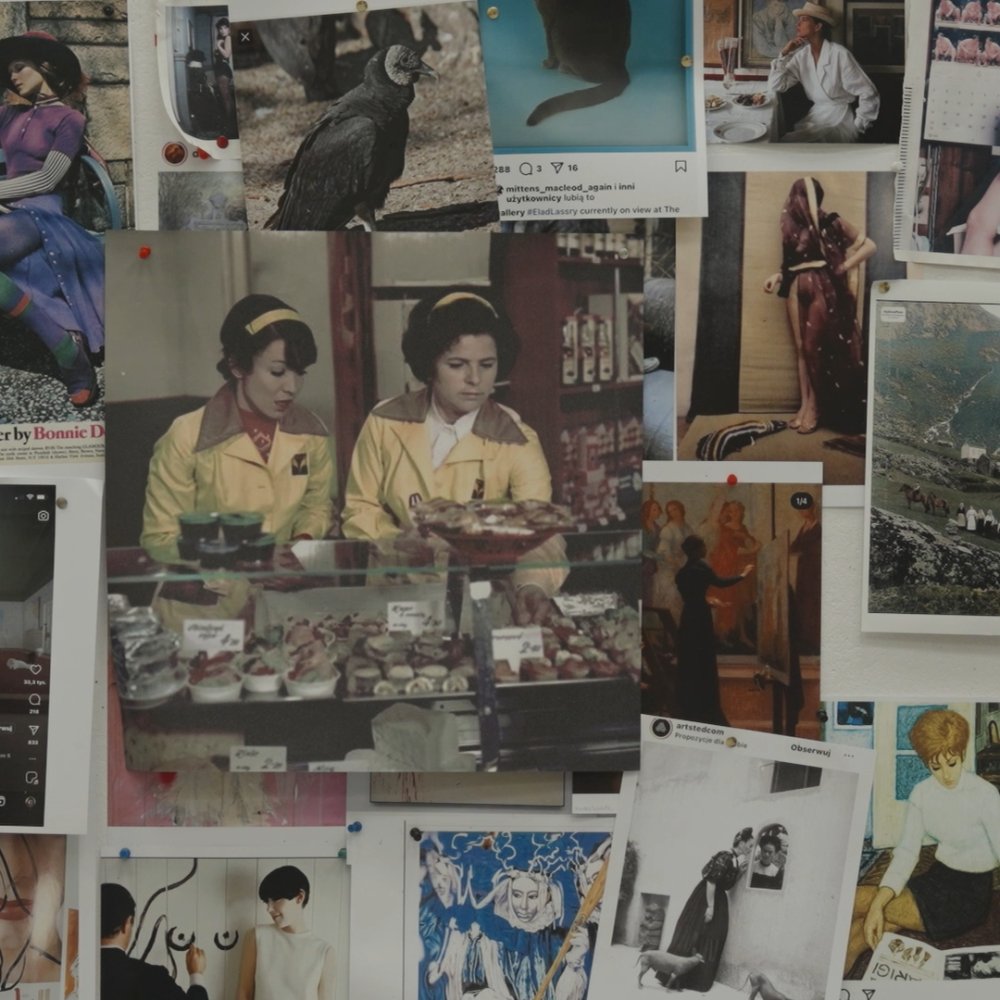
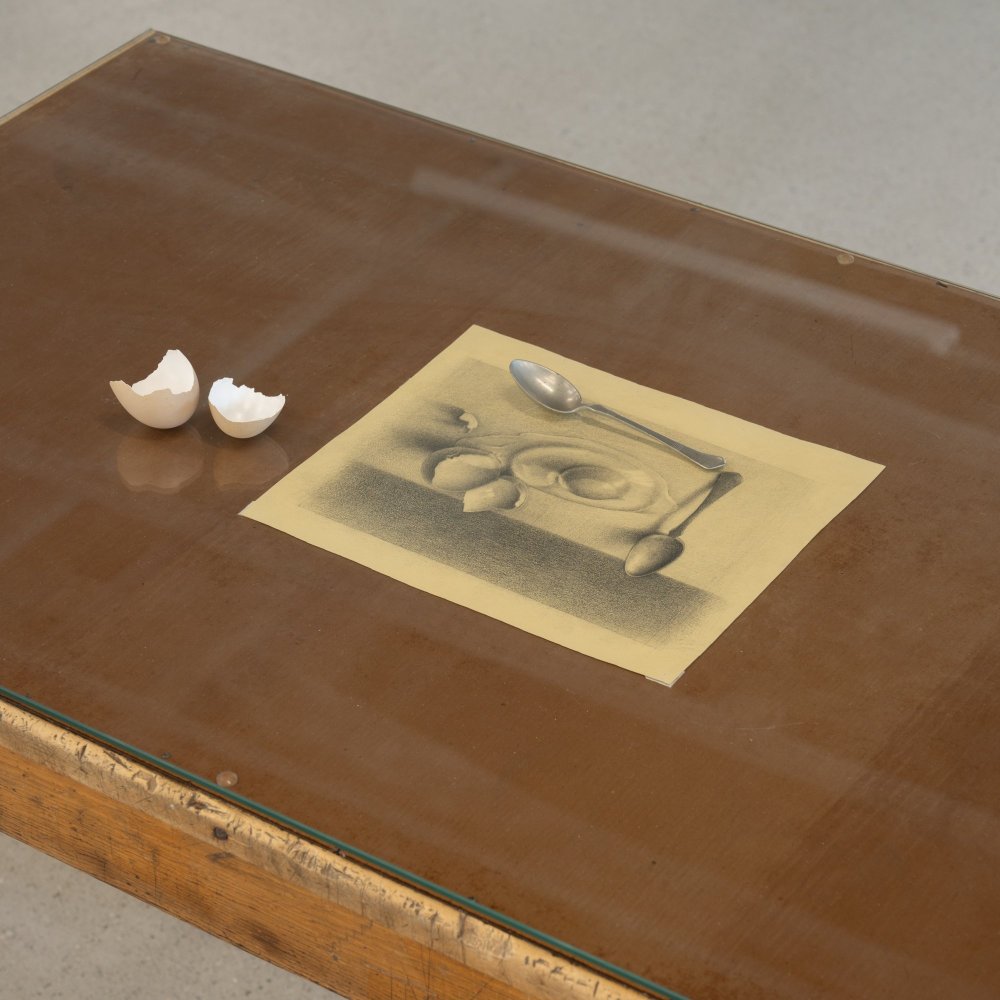
Yes, migration is a very important theme in my work, as it has deeply shaped both my family history and my own life. As someone who has experienced moving to another country and building a new life from scratch, I am particularly sensitive to other issues connected to migration, such as questions of identity, home, belonging, otherness, and exclusion. My work is always deeply personal and intimate, so it feels natural to draw on these experiences as a source for my creative process. Rather than focusing solely on migration as a physical movement, I am interested in its emotional and psychological traces, and in the ways it continues to shape individual and collective identities across generations. I express these themes primarily through drawing, using it as a tool to create emotionally charged, intimate, and direct works. I also frequently work with found objects and archival photographs as a way of exploring and deconstructing personal and collective histories, while creating new narratives from existing ones.
You often work with materials from your family archive, for example, in Melancholy of the Abandoned Lands and the exhibition Here, but Somewhere Else. What significance does the family archive hold for you, and why do you repeatedly return, in particular, to your father’s archive?
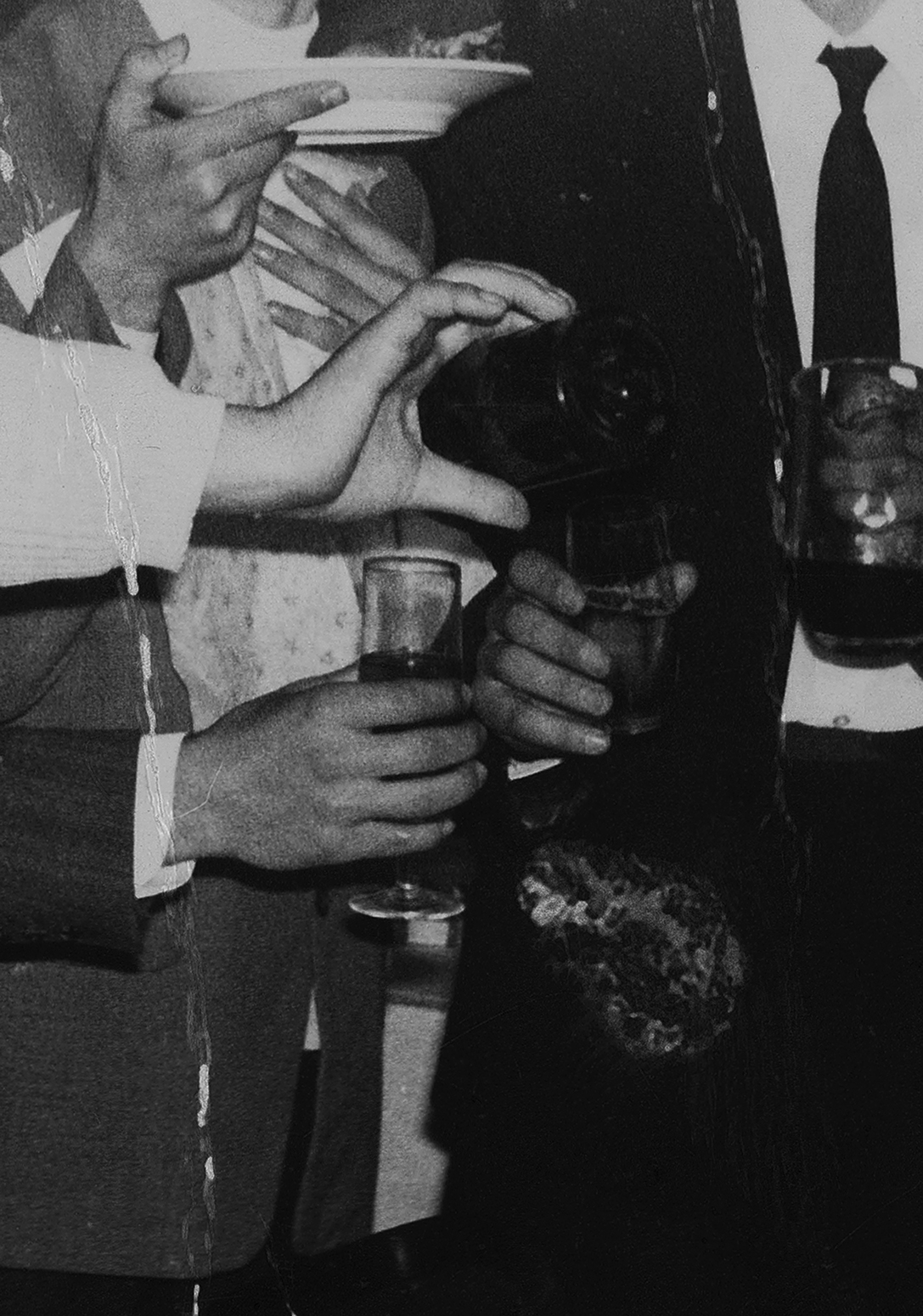
I work with family archives a lot, but mostly as a starting point that allows me to connect personal experiences with broader historical and social narratives. I am interested in archives not as fixed records of the past, but as living structures that can be reinterpreted and reactivated through my artistic practice. The family photographs, documents, and objects I work with carry traces of individual lives, but they also reveal larger stories about migration, political change, memory, and belonging. I often return to my father's archive because it represents a very specific and, for me, particularly interesting point of entry into these themes. Through it, I can explore not only his personal history and, in doing so, establish a deeper connection with him, but also the wider social and historical contexts that shaped his life and, indirectly, my own - specifically the context of post-Second World War socialist Yugoslavia. What interests me most is not documenting the past but creating new meanings and narratives from archival fragments and connecting them to broader social and political questions.
You frequently return to landscapes that carry both historical and personal narratives. What fascinates you about the relationship between landscape and memory?
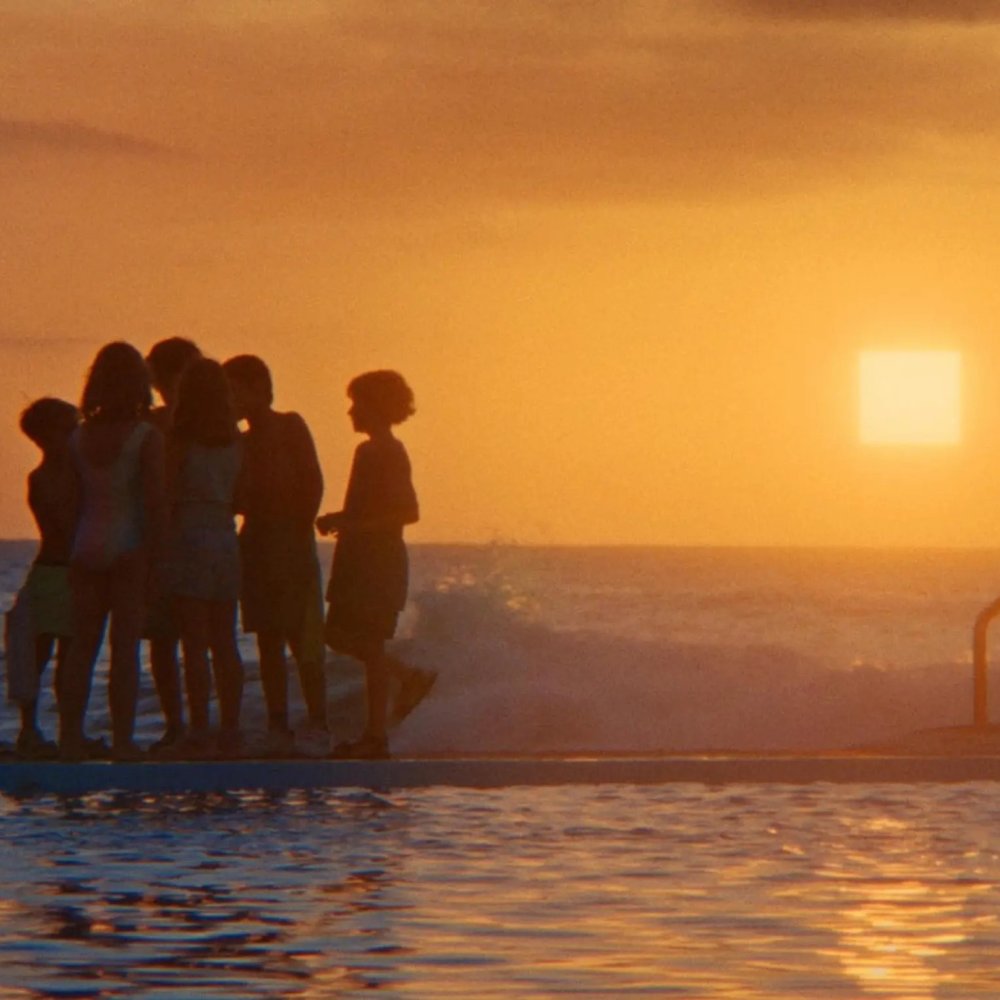
Many of the landscapes I work with are connected to places that form part of my own or my family's history - abandoned villages in North Macedonia, the wastelands of the mining town of Bor, where I grew up, or the magnificent yet often inaccessible mountains of Slovenia, the country I moved to. Working with such motifs allows me to explore how personal memories intersect with larger historical processes and how places continue to carry emotional significance long after the events that shaped them have passed. This tension between the personal and the collective is something that deeply interests me and to which I continually return in my practice.
Your practice encompasses a wide range of techniques and media. You work with photography, while also developing a distinctive minimalist visual language through drawing. What does your creative process look like?
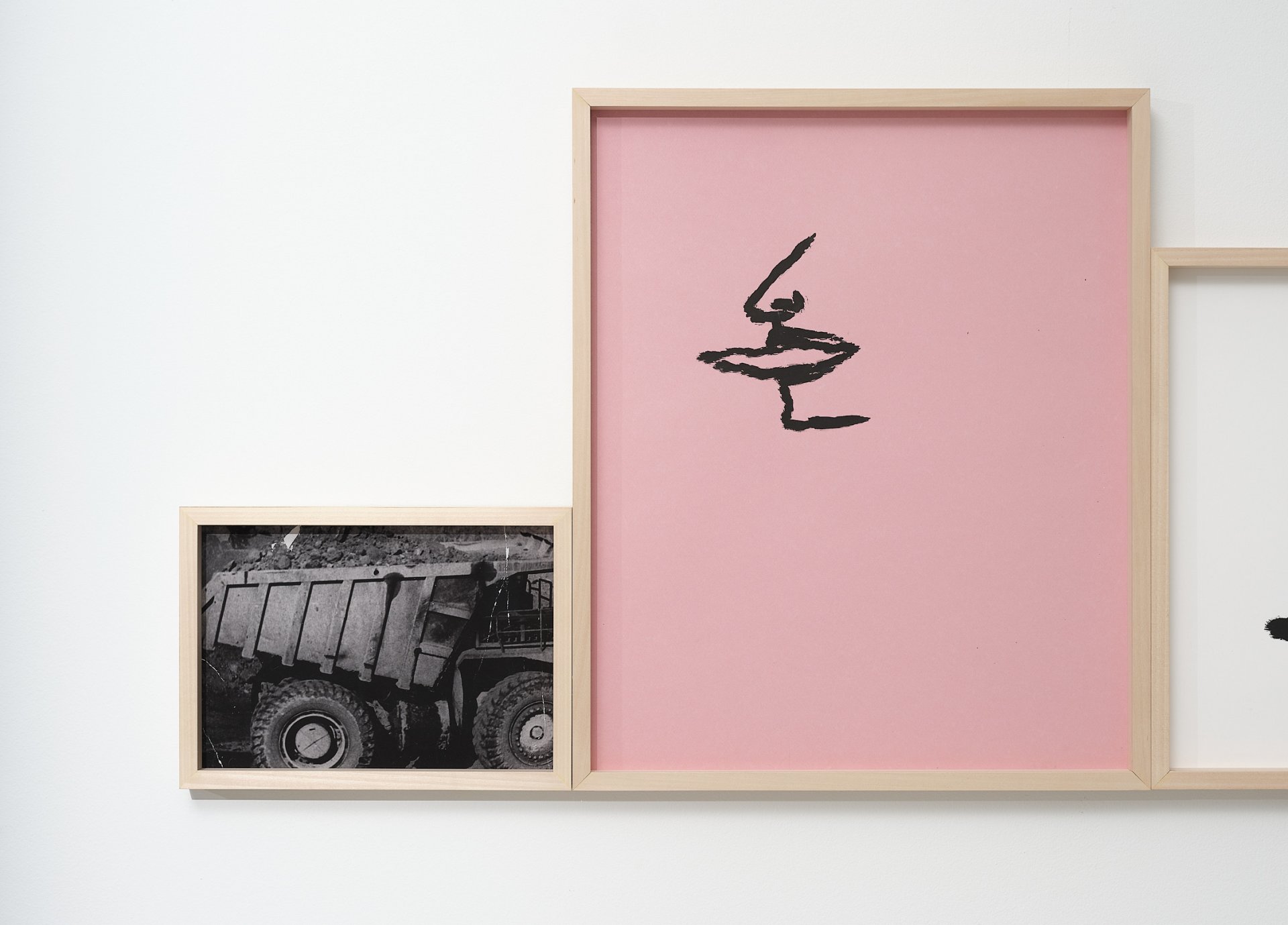
My creative process is very intuitive, expressive, and direct, especially when it comes to drawing, which I still consider my primary medium. Drawing offers a sense of immediacy, playfulness, and freedom that most other media do not. Through drawing, I feel I can express the layers of my inner world in the most direct and sincere way, which is something I value deeply in art. It allows me to work instinctively, following associations, emotions, and visual impulses as they emerge. When it comes to working with archival photography or found objects, the process is somewhat different. It involves more research-based work, analysis, and, in general, a more rational and investigative approach to the subjects I am exploring. I spend a lot of time looking through the materials, uncovering connections, and thinking about the historical, social, and personal contexts they carry. Although these approaches may seem quite different, they are closely connected in my practice. Whether I am drawing or working with archival materials, I am ultimately interested in questions of memory, identity, belonging, and the ways personal experiences intersect with broader historical narratives. I see intuition and research not as opposites, but as complementary methods that help me develop and articulate ideas.
Texts also appear in your drawings—slogans, phrases, or short sentences placed in close relation to the drawn motif. How do you work with language and text as both visual and conceptual carriers of meaning?
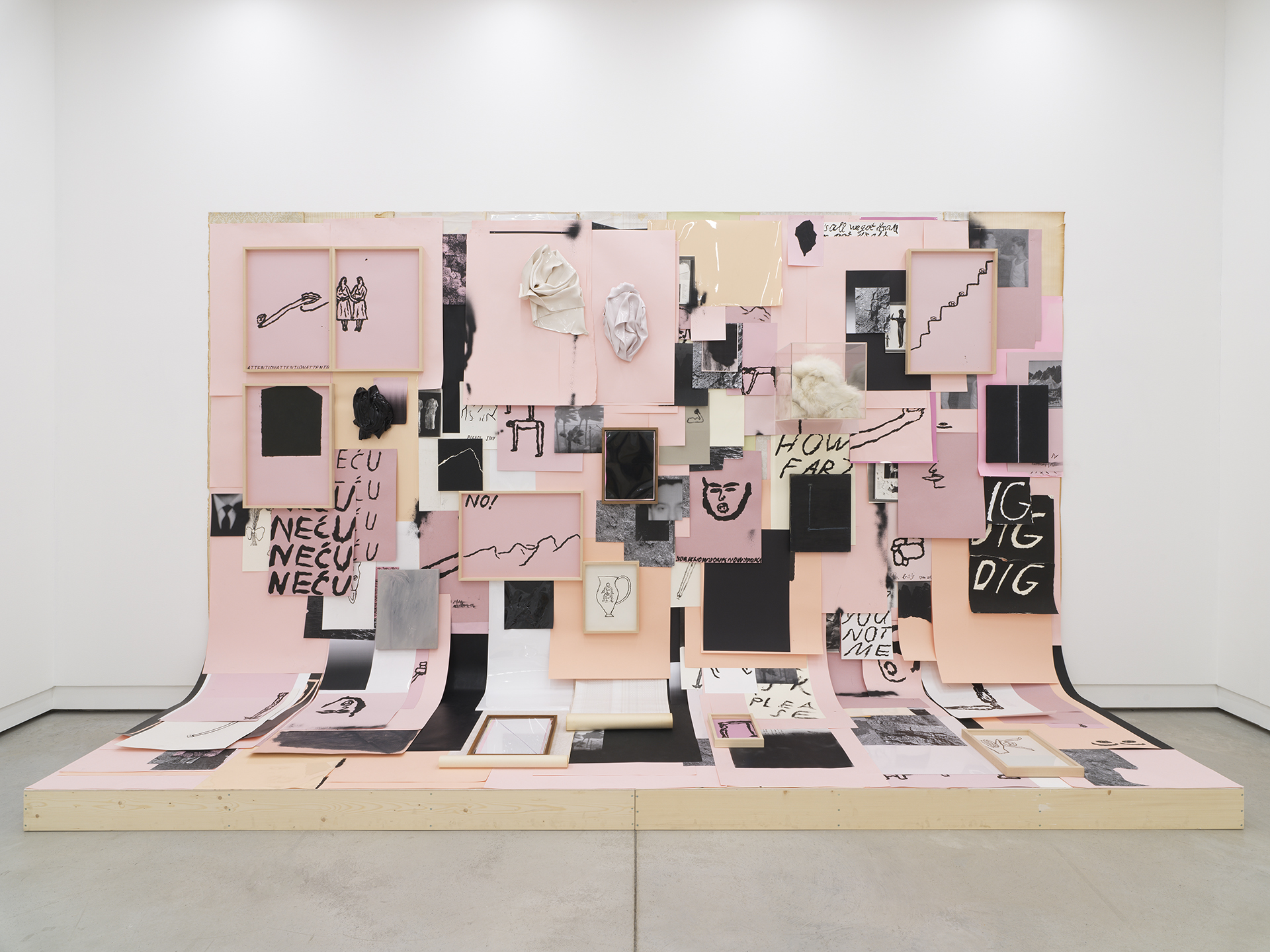
Yes, text is something I like to use in my work both as a visual and conceptual element. A specific word - whether invented or real - a whole sentence, or simply a playful combination of letters can appear in my work, primarily in drawings, in a very spontaneous and intuitive manner. Sometimes the text originates from conversations I overhear in my surroundings, a song I am listening to, a verse from a poem I am reading, or simply an expression that resonates with my current emotional state. The text that appears in my drawings, therefore, functions as an enhancement of the meanings a drawing can generate, while also serving as a strong visual element that complements the language of the image. I am interested in the way words can shift, expand, or even complicate the interpretation of a drawing. At times, text provides an additional layer of context. At others, it introduces ambiguity or contradiction, opening up new associations and readings. I do not approach language as something separate from the visual field. Instead, I see words, letters, and handwriting as forms that carry both semantic and visual weight. Their placement, rhythm, and graphic quality are just as important as their literal meaning. In this sense, text becomes another element in the drawing, allowing me to navigate between image and language, intuition and narrative, personal reflection and collective experience.
You have published several artist books that bring together photography, drawing, and text. What place does the book occupy in your life and practice? What does the book format allow you to express that other forms cannot?
I entered the world of artist books and publishing through the zine format. At that time, zine culture in Slovenia was very vibrant (and it still is). Many artists were creating all kinds of interesting zines, artist books, and independent art publications, and several small publishing houses played an important role in popularising these formats. One of them was Look Back and Laugh, which published my first zine and later a risograph artist book. In the beginning, publishing my drawings in the form of a zine was particularly exciting because it opened a new way of presenting my work - one that was not dependent on the gallery system or the broader infrastructure of the art world. Instead, it was DIY, independent, playful, and non-hierarchical. It also allowed for wider distribution and helped me reach audiences I might not have encountered otherwise. In general, I appreciate publishing as a democratic and community-based medium, which is one of the reasons I am so drawn to it.
Later, I had the opportunity to publish several artist books that I approached in a more conceptual and research-based way, which was an equally fulfilling experience. Particularly dear to me is my artist book, Melancholy of the Abandoned Lands, published by the wonderful publishing house PrivatePrint from Skopje, North Macedonia. It is a visual narrative composed of drawings, photographs from family albums, and found images, through which I explore questions of identity, migration, and alienation. It is a very intimate project that draws on my family's migration history across the Balkan region and reflects on how personal and collective histories intertwine.
How would you describe your long-term collaboration with Maja Babič Košir? What are the benefits, but also the challenges, of a collaboration between two artists?
Our collaboration started in 2022 and was initiated by our gallerist, Piera Ravnikar. At that time, we did not know each other very well, but we were both great admirers of each other's work. Through our collaboration, we developed our relationship on both a professional and personal level, and, in addition to becoming artistic collaborators, we also became friends. So far, we have realised several exhibitions and projects together, and I can say that I really enjoy this collaboration. We both have well-developed independent artistic practices, but we are also highly compatible when it comes to combining and merging them within a shared project. Among the many things we have in common, I think we create from a similar place: intuitively, drawing on personal histories and archives, while striving to be direct and sincere in our work. Much of our collaborative practice emerges through long conversations, experimentation, and play with materials, forms, and meanings. It is a process that is very fulfilling and inspiring for me. For the first time since we started working together, we are currently participating in an artist residency together, spending almost two months in the wonderful environment of Telegraph. We have been working intensively on our upcoming exhibition in Slovenia this October, and the experience has been incredibly rewarding. I feel that this period of concentrated work and shared time has strengthened our collaboration and opened new possibilities for our future projects.
How has Olomouc influenced your work during the residency? When taking part in residency programmes, do you consciously engage with the history, memory, or atmosphere of a particular place?
Olomouc has been an incredible experience for both of us. We are truly happy and grateful to have had the opportunity to spend almost two months at Telegraph and in this beautiful city. The conditions for work and for fully committing ourselves to our artistic practice were exceptional, and we feel very privileged to have experienced something like this. Above all, I would like to thank the entire Telegraph team for their generosity, support, and hospitality, as well as our gallery RAVNIKAR, which connected us with the Telegraph and made this residency possible. Olomouc influenced our work in many different ways. The calm pace of the city allowed us to focus deeply on our practice and create space for reflection. Its rich history, architecture, and the beauty of its streets, parks, and public spaces became a constant source of inspiration. We were also touched by the kindness and openness of the people we met, which made us feel welcomed and at home from the very beginning.
When participating in residency programmes, I do try to engage with the atmosphere, history, and memory of a place, although not always in a direct or research-driven way. I am interested in how a place gradually reveals itself through everyday experiences, walks, conversations, observations, and encounters. Sometimes these influences become visible in the work itself, while at other times they remain more subtle, shaping the mood, rhythm, or direction of the creative process. In Olomouc, I found myself particularly drawn to the city's layered history and the way traces of different periods coexist in the urban landscape. Since both Maja's and my work often deals with memory, archives, personal histories, and the construction of narratives, being in a place with such a strong sense of historical continuity inevitably resonated with our thinking. Even when a residency does not result in a project explicitly about the place itself, the experience of living and working there becomes part of the work in less visible but equally important ways.