Jiří Příhoda (*1966) is a sculptor and conceptual artist working at the intersection of object art and architecture. He studied at the Secondary School of Fine Arts in Prague and later continued his studies at the Academy of Fine Arts in Prague under Stanislav Kolíbal and Aleš Veselý. He has presented his work at a number of major exhibitions, including a collaborative project with Brian Eno at Prague’s Nová síň and a large-scale solo exhibition at Troja Castle, organized by the Prague City Gallery. He also drew significant attention for his redesign of the interior of the Václav Špála Gallery, and in 1997 he was awarded the Jindřich Chalupecký Prize for young Czech artists.
In his work, he focuses on monumental spatial installations, multimedia interventions, and, currently, the creation of alternative minimalist dwellings conceived as habitable sculptures. Through technically demanding constructions, he explores human perception and models new spatial environments, combining ecological themes with a strict geometric architectural form.
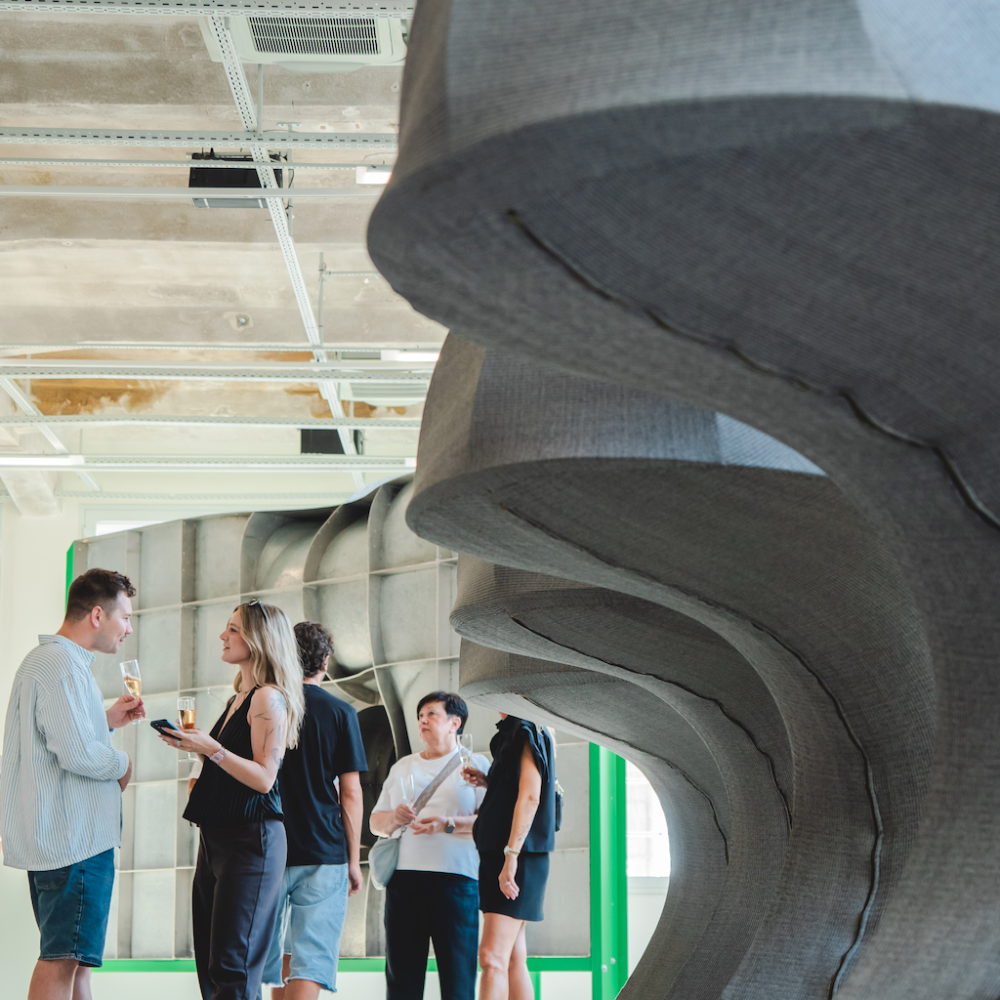
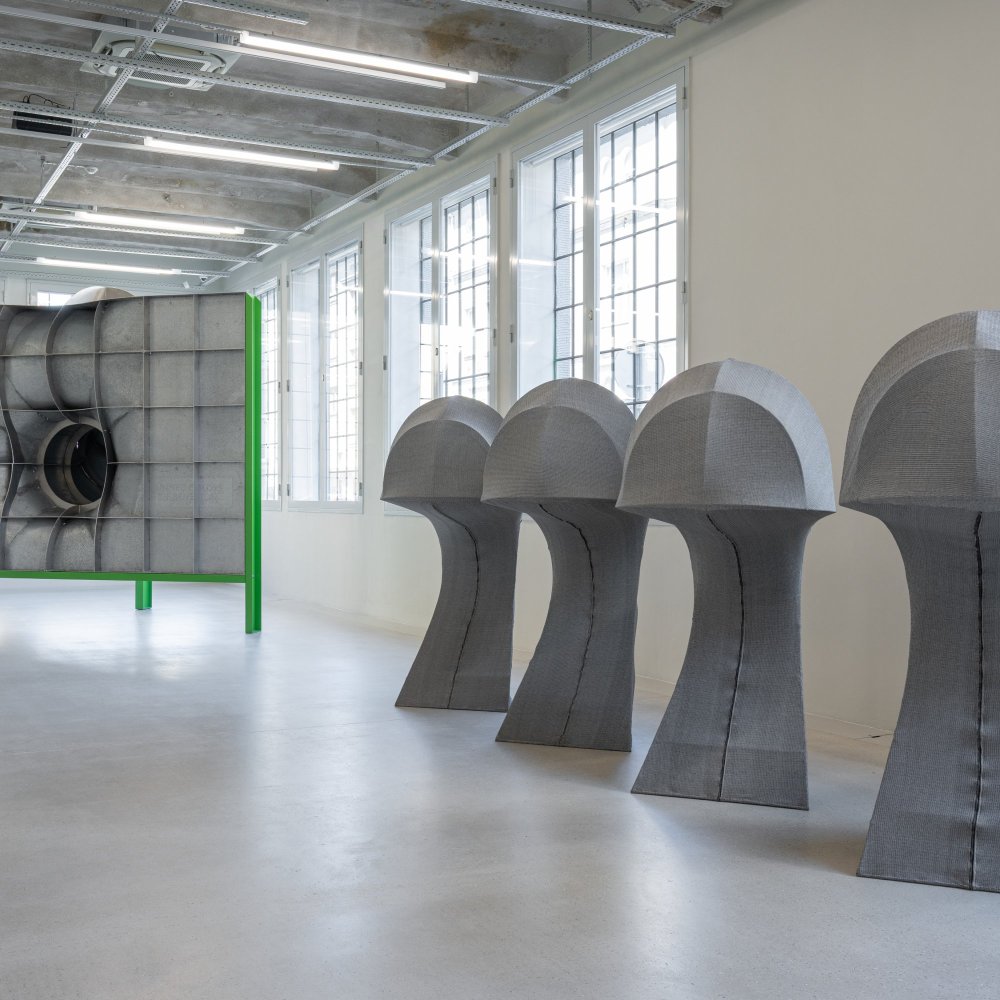
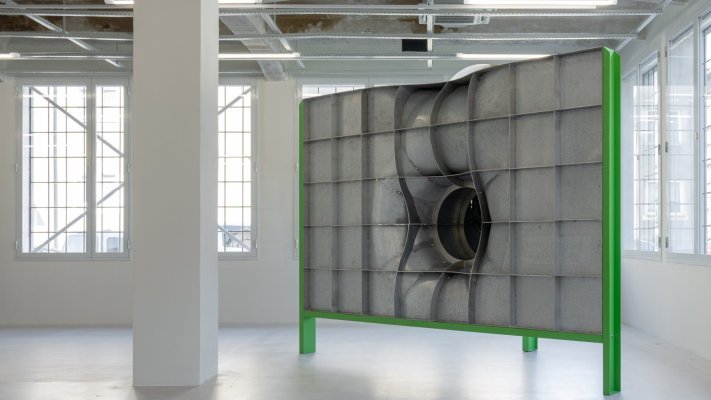
As part of the exhibition Signal V, his iconic early work from the Konstrukce series of objects, Billboard with the subtitle Klein Bottle, created between 1992 and 1994 is presented. The work serves as one of the exhibition’s major focal points. Thanks to its strategic placement in the corner by the windows, it is visible from both inside and outside the building, while the other large-scale objects are situated deeper within the interior. This positioning gives the viewer a unique opportunity to thoroughly examine this inherently double-sided object from both sides. While the open inner “hole” faces inward toward the exhibition space, the organic protrusion of the bottle’s body itself faces outward toward the windows.
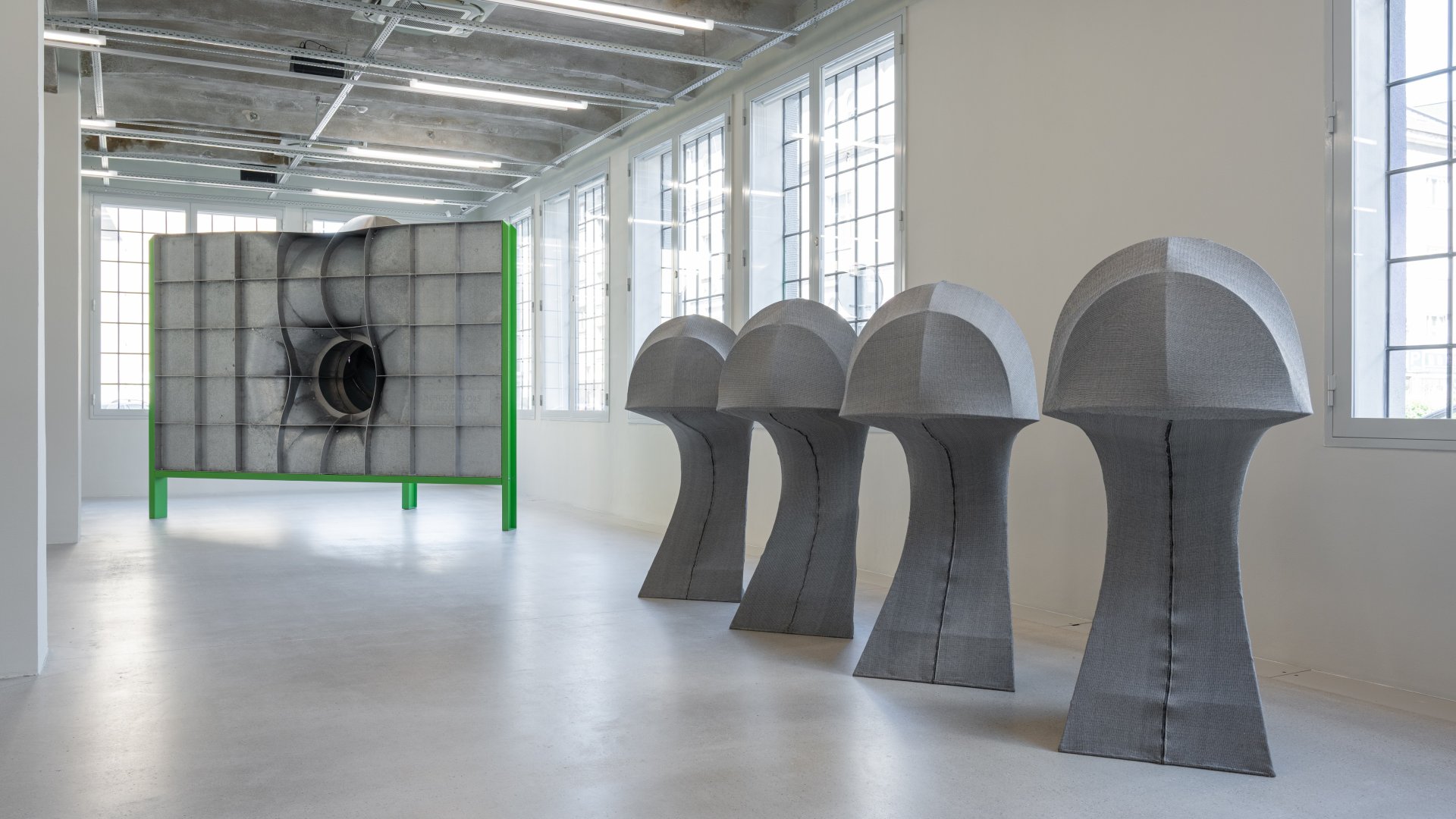
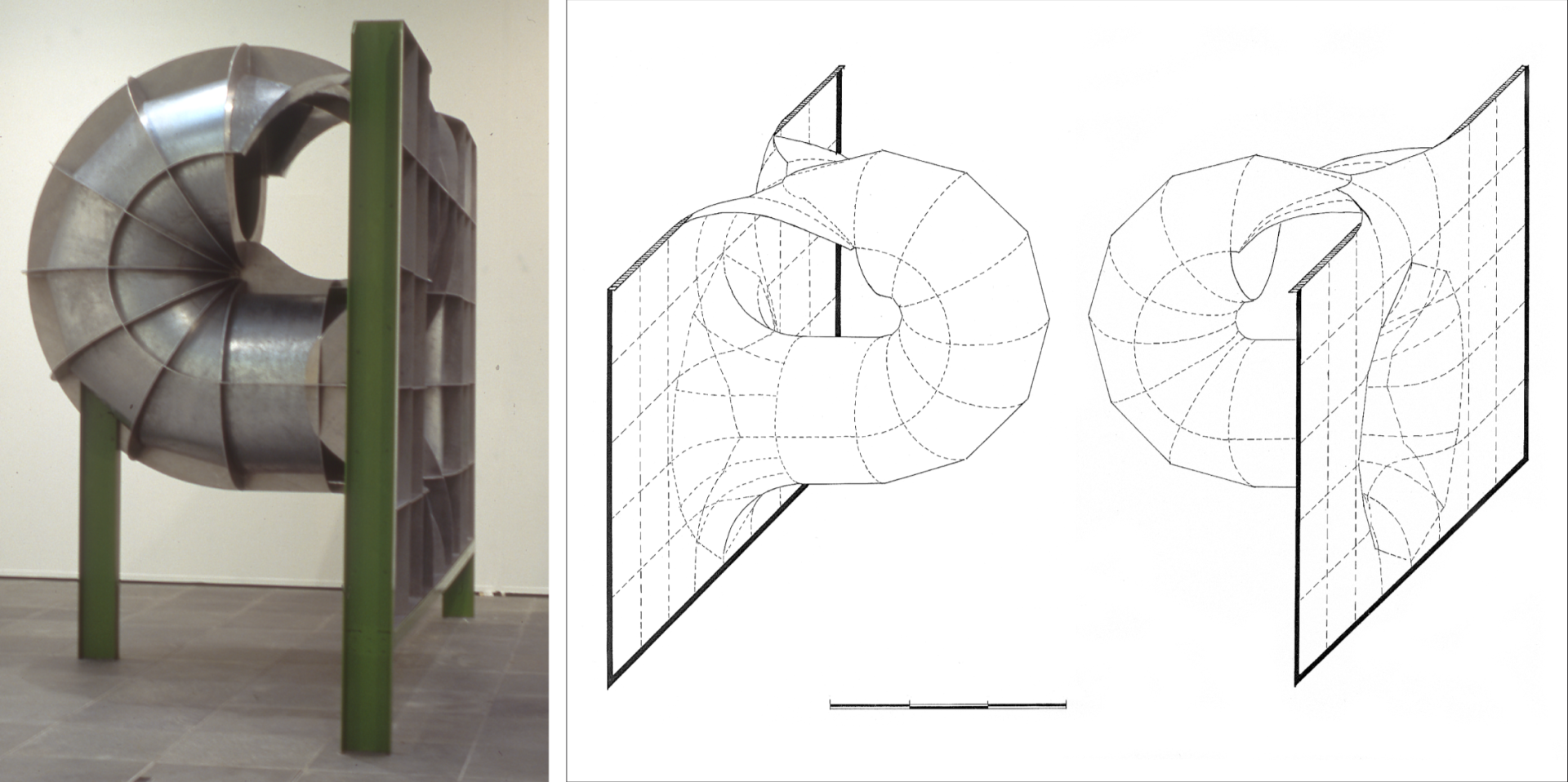
In this installation, Příhoda took a large-format commercial advertising panel made of steel and sheet metal and spatially curved it based on the mathematical topological principle of a one-sided closed surface—that is, the Klein bottle. The front thus appears as a single side and gradually transitions through a narrowed neck to the back. The result is a massive curved structure that has no classic front or back and blurs the boundaries between what is outside and what is inside—or, respectively, what lies in front of and behind the material. This advertising medium, which is typically designed for a front-facing and immediately legible message, has been stripped of its original function and transformed into an autonomous spatial object. This intervention can also be understood as a metaphor for the functioning and value of advertising media.
The work was created in the early 1990s, when large-format advertising billboards began to gain significant prominence in public spaces. Moreover, Příhoda had personal experience with this medium, as he was earning extra money at the time by hand-painting billboards, which was a cheaper alternative to large-format printing. He subsequently transformed this familiar advertising medium into a sculptural object, altering both its original function and the way viewers perceive it. In one version of the work, from 1994, he directly incorporated an image from the controversial Benetton campaign conceived by Oliviero Toscani onto the billboard. The photograph, taken by Therese Frare, depicts David Kirby dying of AIDS in the presence of his family. Its use in advertising raised the question of whether it was a socially engaged message or an exploitation of human suffering to promote a brand. Through this juxtaposition, the artist critically demonstrates that, despite the image’s progressive artistic value, it remains fundamentally an advertisement—one that seeks at all costs to capture our attention and sell us something.
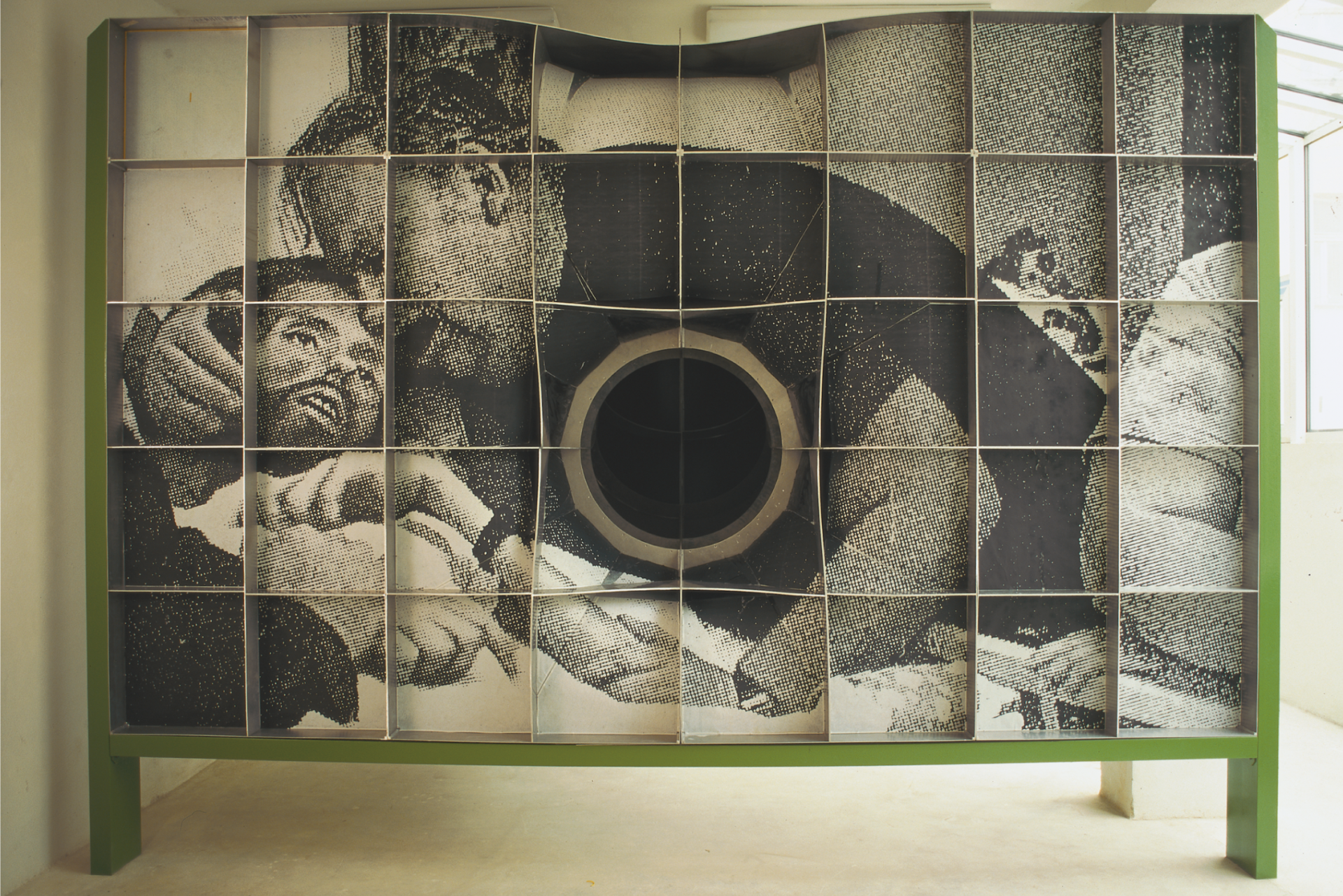
In this installation, Příhoda radically alters the traditional perception of three-dimensional space and transforms a common element of urban advertising into a conceptual play on the viewer’s visual orientation. The viewer is thus confronted with a fascinating surface that transforms a banal advertising medium into an autonomous architectural monument and prompts a reevaluation of the physical possibilities of a sculptural object.
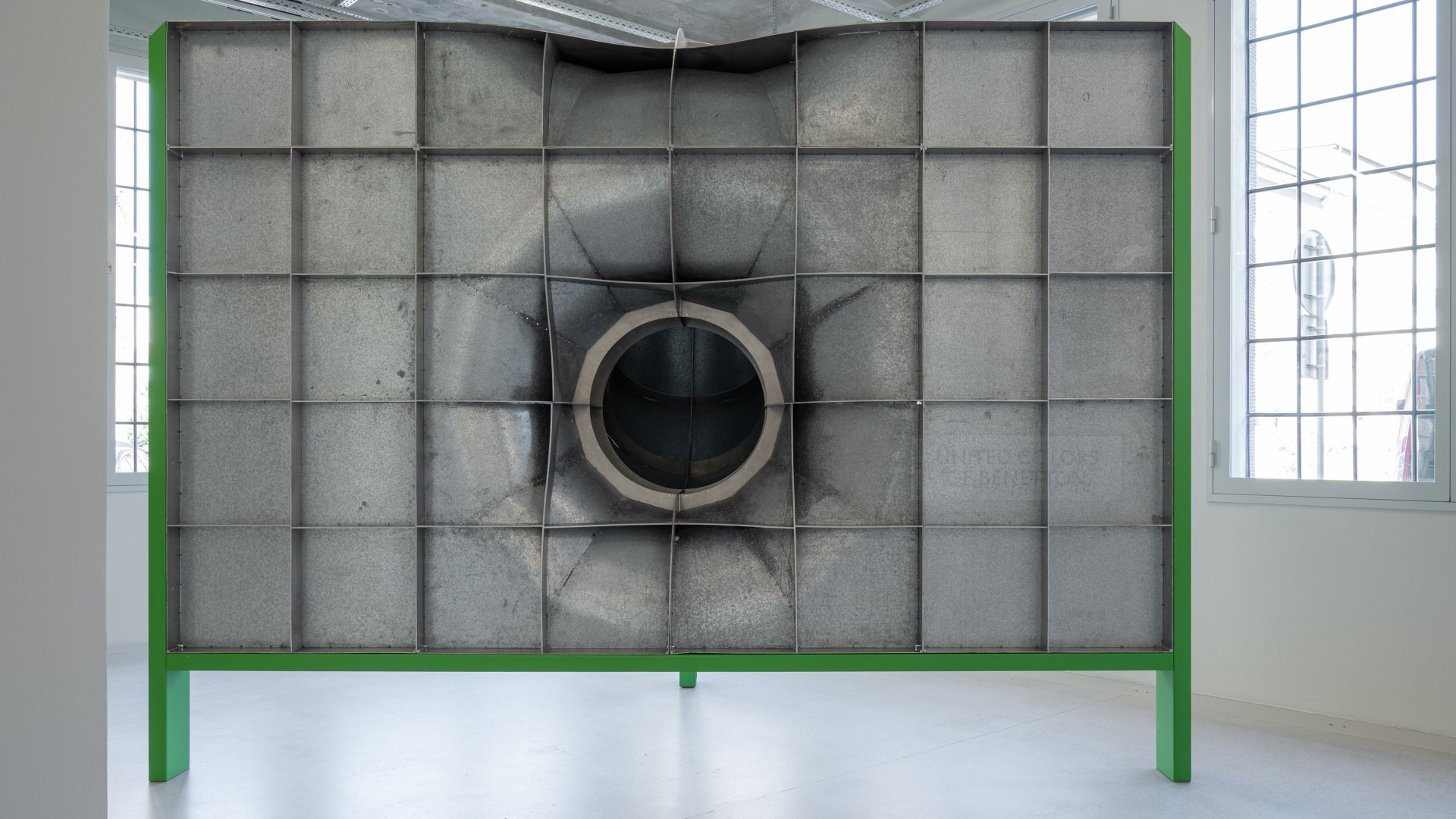
The billboard clearly illustrates how Příhoda works. It takes a familiar type of object as its starting point, disrupts its usual logic, and alters the way we orient ourselves in space. He also spoke about his work and other projects during a lecture at the Telegraph in May, which preceded the opening of the exhibition Signal V. A recording of the lecture is available online as part of the series Artist Presentation: Jiří Příhoda.
The exhibition Signal V: A Selection of Objects and Installations from the Robert Runták Collection can be viewed at the Telegraph Gallery through September 24, 2026.