Viktorie Štěpánová is a multidisciplinary designer who works at the intersection of fashion, video, graphic design and illustration. In her practice, she uses visual storytelling and symbolic layering as strategic tools to build cultural relevance and shape contemporary narratives. She is particularly interested in consumer culture as a space in which consumption becomes a form of production. She draws inspiration from the work of Olivier Toscani, platform capitalism and everyday life. Her previous film, the animated documentary Inside, was nominated for a BAFTA Student Award and screened at countless festivals around the world. Viktorie's current work focuses on creative direction and the use of fashion as a platform for meaningful dialogue.
The interview was created on the occasion of the TEFF26 film festival (Telegraph film festival), where the film Volklore, awarded with the Silver Student Oscar, will be screened on Thursday, November 12 at 6:00 PM. The screening will be followed by a discussion with the director.
You received the Silver Student Oscar for Volklore in Toronto in September. How did you experience that day?
It was beautiful and a little stressful at the same time - like when you're waiting for your idol, but somehow you never even hoped that it would be real to meet. Luckily, I brought my mom with me to Toronto, with whom I went for a morning walk to clear my head, and then we (my Volklore girls crew) had to prep for the evening glam look. We hired a professional make-up artist, filmed a short GRWM (Get ready with me) with Vivi at the Oscars for Vogue CS, and then I ran through the streets in my glam jersey by Nikola Novotná, just to make it to the ceremony.
Seconds before the handover, of course, my heart was beating for dear life, not because of the kind of metal I would get, but because I didn't slur my words, I didn't trip, my clothes didn't fall off... and finally we had a beautiful afterparty with the Oscar Jury members, Bill Kramer, our crews, just a well-deserved rest and a party that started to get a little bitter towards the end with the realization that we might never see each other again.
You studied at FAMU in the Department of Animation and the Center for Audiovisual Studies. Is there anything you brought from animation to Volklore?
Definitely! Probably the sense for detail - prop design, costume design... and especially post-production, which I conceived of in the film as after effects of animation. Mostly YouTube layout, graphics, etc. Although the film is a live-action film, for me it is a collage of processes, animations, fashion (or character design in animation parlance), diverse creativity, and a live-action film doesn't really fit into a rigid box.
You told Vogue that your family always borrowed costumes and that you wondered if you could have one too. How did this personal question become a film?
My question was not if, but what. It probably started with the controversy over who my community is, my region, its symbolism for which I could create a costume. Since I travel a lot, the real place and people didn't really fit, so I chose the phenomenon of influencers for the film - post-digital individuals whose channel is the region, the community of their followers, the costume the aesthetics they use, and the traditions the rituals they repeat themselves.
The costume became the aesthetics of the individual living in the city, the symbolism of the brandy he buys himself - as the city exchanged the fruits of nature for the fruits of consumption. The idea of the costume itself was thus overtaken by broader research, which required wrapping the original costume with an entire film and a story established in digital folklore.
You consulted with ethnologist and anthropologist Joe Grim Feinberg while preparing the film. What did you ask him?
I read his book Returning Folklore to the People , and since he is an American studying Central European folklore, I was interested in his approach to folklore, digital folklore, folklorism, and the romanticization of folklore in the present.
The film's guide is the fictional influencer Vivi, played by dancer and choreographer Monina Nevrlá. How did this character come about and why did you entrust it to her?
Finding Monina was a lifesaver, and I'm not exaggerating! We traveled with various actresses from Dam, my friends, and I even tried myself. Nothing worked, everything seemed contrived, until my manager, Nela Klajbanová, recommended Monina to me.
Monina is an elemental character in her own right - she knows what she wants, how to move, how to look, plus she comes from Haná, but lives in Prague. This aspect sounds insignificant, but thanks to her origin she was able to combine in her character Vivi slang traditional, so globalized Anglicist. Simply a great fictional influencer!
A very interesting element of the film is the language that Vivi speaks: a mixture of Moravian dialect, Anglicisms, and Generation Z slang, which you yourself called “social media dialect.” How did you find it?
I found it together with our scriptwriter and dramaturg Hermína Perič. We wanted to combine traditional folk slang with digital folk slang, and therefore globalized slang, including a multitude of anglicisms. Both are exaggerated and escalated into satire.
We start more traditionally, we end up with a globalized hodgepodge. Gradual commodification and globalization of even the languages themselves. And of course, I was inspired by both Moravia and the YouTube vlogs of Czech and American influencers.
This year's TEFF is dedicated to femme fatale women. How do you perceive the femme fatale character and do you think it suits Vivi?
Ugh, I definitely don't see myself as a femme fatale. On the other hand, Monina is definitely a femme fatale, because she is truly herself and does what she wants, I don't know about Vivi - I only half consider her a femme fatale. She is very influenced by the algorithm and trends, but she still says what she wants. A bit like Kim Kardashian. So a bit yes, but by the way, because of the work she does, she is also an on-life prosumer, influenced by the consumer calendar.
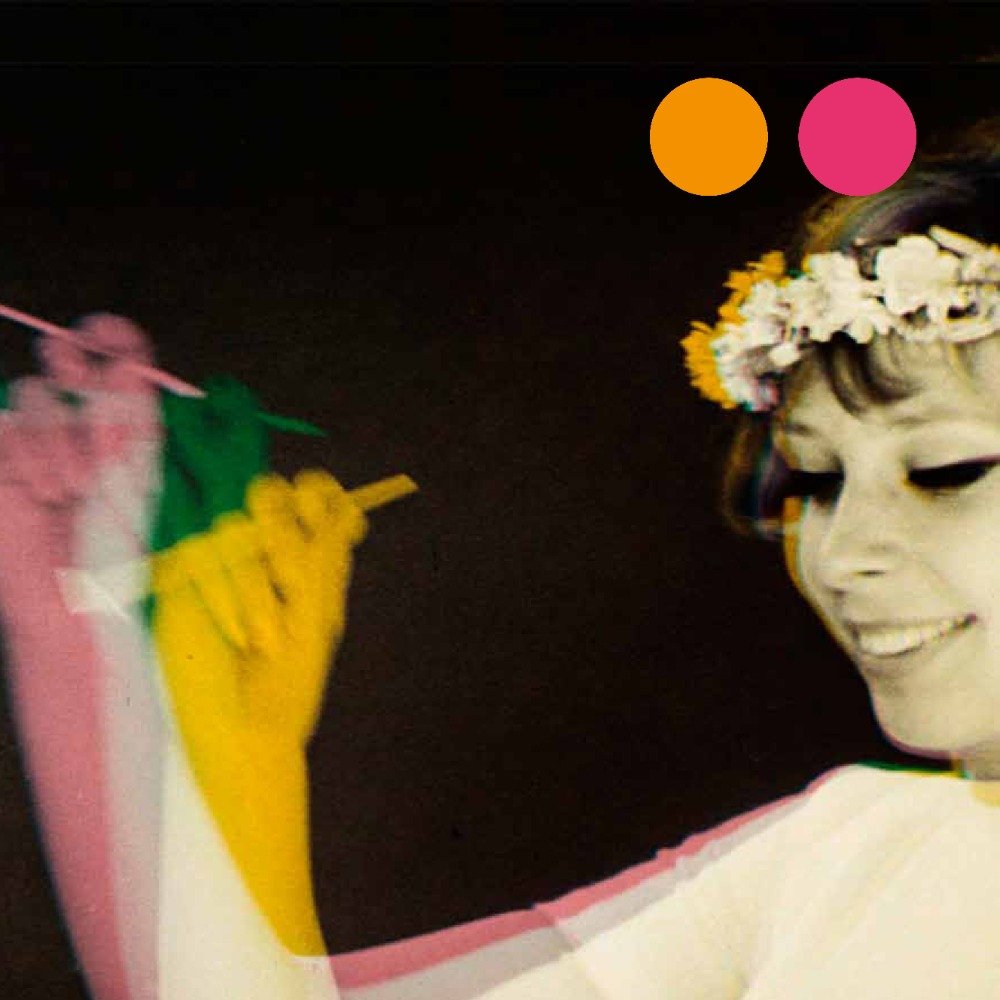
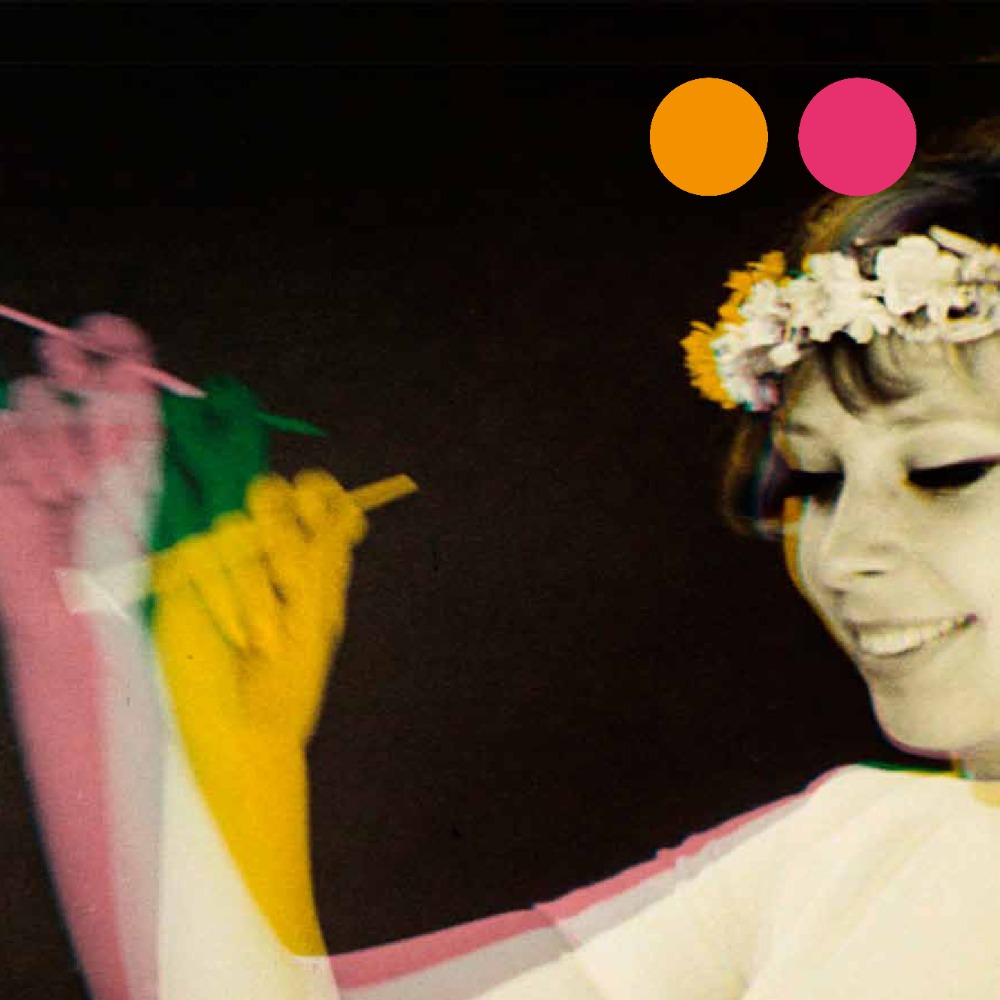
The festival opens with Věra Chytilová's Dedmikrásky, which is also featured among the inspirations for Volklore. What appealed to you about this film?
It's the first art film I've ever seen. I remember it was in Brno in an open-air cinema, I was eating chocolate cake and watching it with my dad. I really like the use of naivety as a driving force and empowerment in Sedmikráske, and also a certain glamorization of disgust. The subversion of things that we as a society consider negative, turned into advantages. And of course the incredibly beautiful set design, costumes and experiments in post-production.
Traditional holidays in the film are replaced by a fashion calendar, from fashion shows to the Met Gala, and the collection for the film was created almost entirely from upcycling. Why did you connect folklore with fashion?
I simply adore fashion and it intersects my whole life. At the same time, I wanted to connect the traditional folklore calendar with the traditions of the consumer calendar - and for me, the consumer line became the fashion calendar with its fashion weeks and other events.
I replaced important points in the traditional calendar like Easter with S/S fashion week, Met Gala with Seder dinner, and Harvest Festival with F/W fashion week. This allowed the costume to turn into a fashion collection. And that's why those collections were created.
Plus, I personally feel a great environmental grief from fast fashion, which is why the entire collection was created from upcycled materials - from Prague thrift stores, my own deadstock, or Vinted folklore remnants. The clothes are no longer made of linen and cotton, but of materials that surround us.
In addition to film, you also paint, and in your series Traditionalization of Commerce you record viral pop culture moments. How does this work intersect with Volklore?
It's nice that you mention it. Painting, unlike film, is relaxation for me. Staying in one moment for dozens of hours. What connects Volklore and my paintings is recording points of contemporary capitalist society. Social networks, brandy, logos, loss of identity. For me, recording a viral moment becomes a relic of history, just like we take the Věstonice Venus, for example. Only our history is no longer so artisanal, but influenced by consumerism and platform capitalism.
In an interview with Radio Wave, you talked about "digital villages" that are emerging today around a core, lore, or brand. Which one of them do you belong to?
Honestly, probably not to any of them, I enjoy observing and exploring them rather than fitting into one.
Volklore has grown from a film into a platform that you connect with the Slava project. How did that happen?
All costumes for Volklore were created in the space of Sláva! and our Easter fashion show, which you can see in the film, took place there. We have been friends with the owner Tereza Váchová ever since - we also share the same interests and desire to support and educate Czech and Slovak designer fashion. And since Sláva's premises were taken away by Prague and Volklore gained worldwide recognition, we decided to combine the two projects, with Volklore focusing on combining film and audiovisual with marketing and Sláva on educational programs.
We are currently working hard on our websites and looking for a coworking space where we could host events and create a community.
When you look back over the last few weeks, what has brought you the most joy?
That's actually a tough question.
I've been kind of overwhelmed by everything that's happening lately. But this autumn brings great joy to my soul - walking the streets of Prague, a date with coffee while observing life around, and evenings together at our apartment while watching Traitors. Oh, and also Vesna's concert at Forum Karlín, from which I felt an unexpectedly positive adrenaline rush.