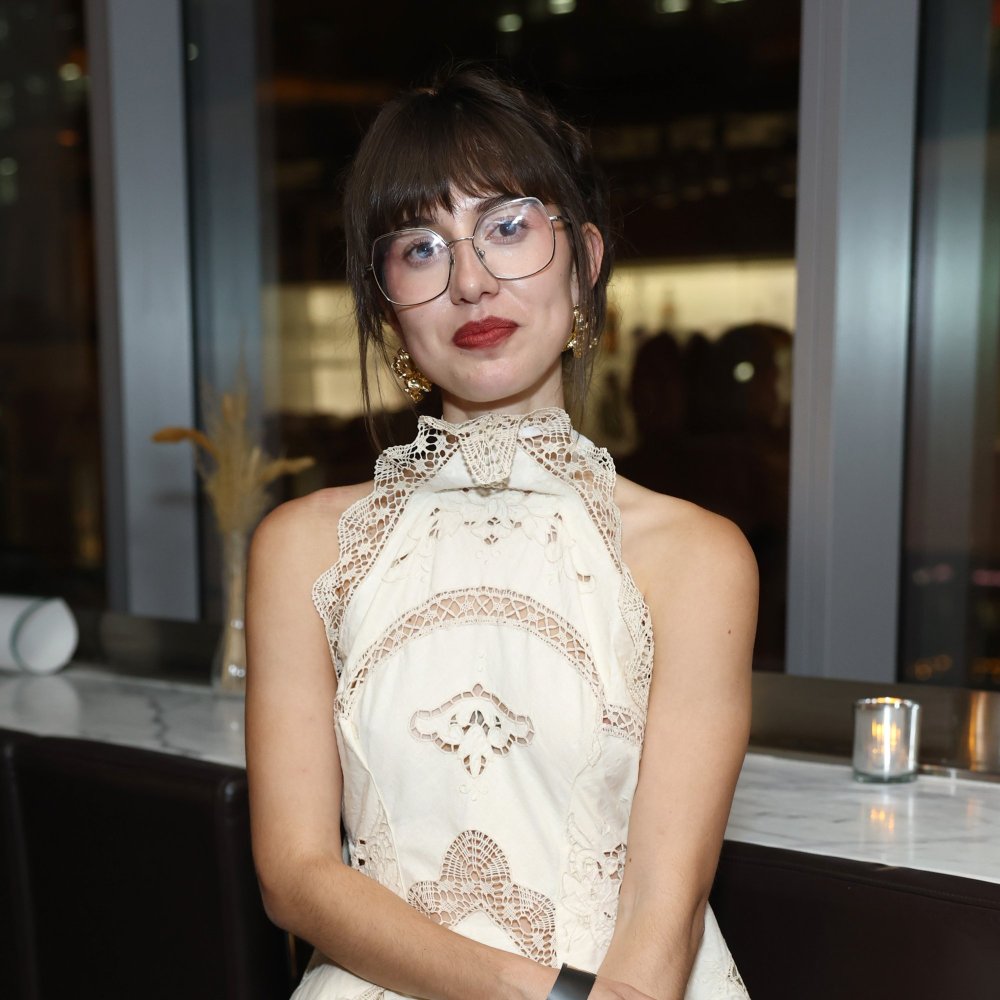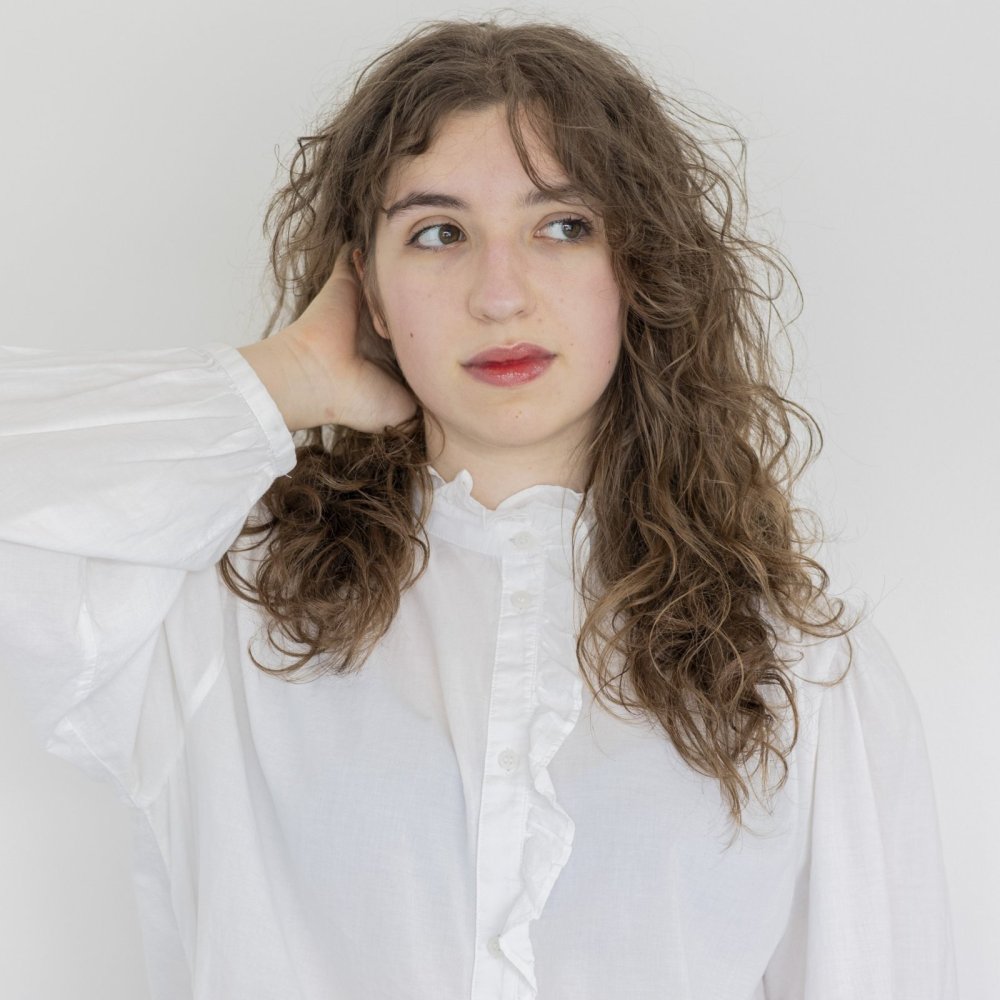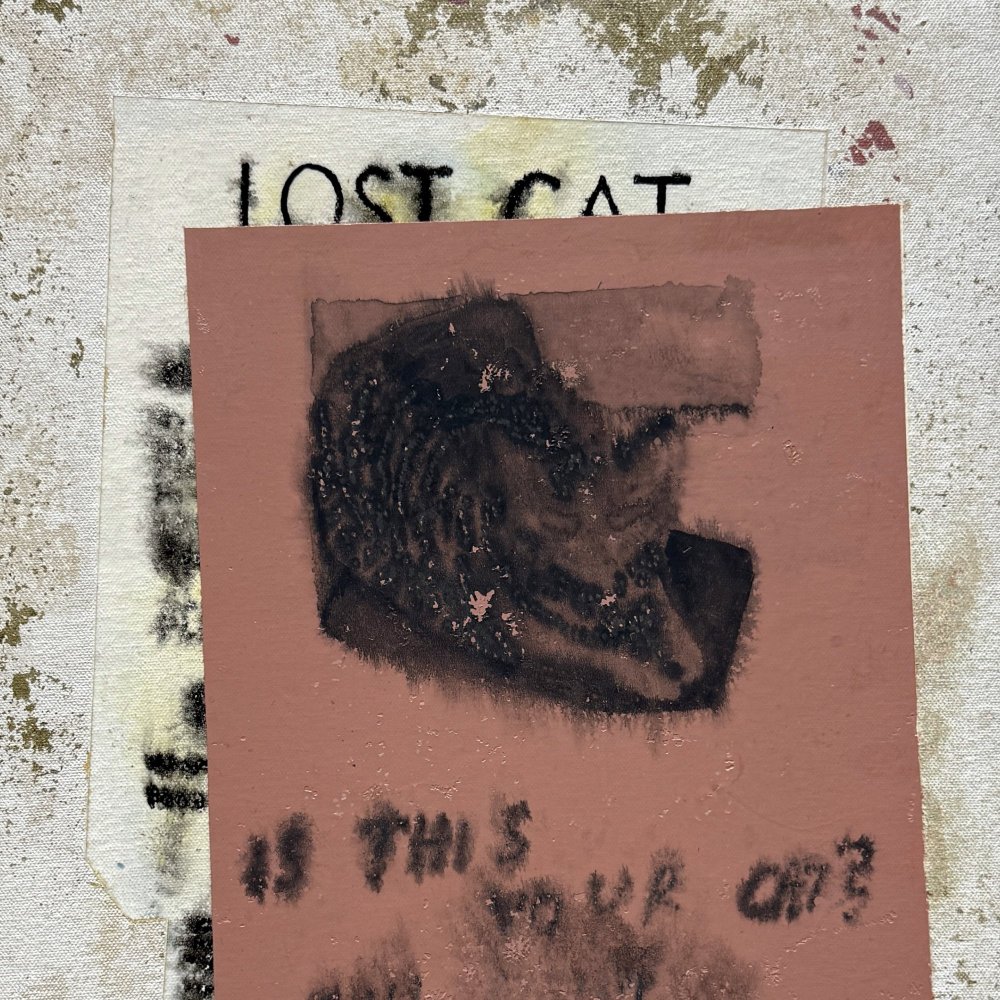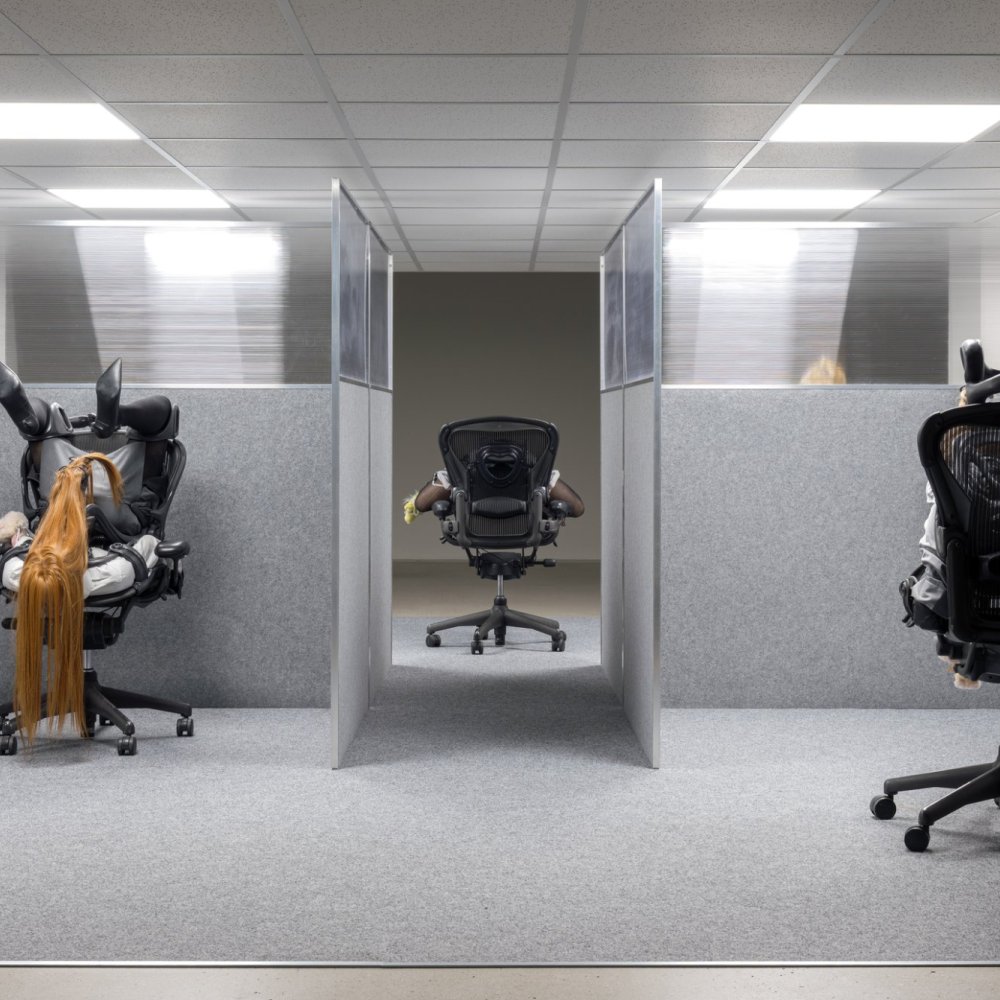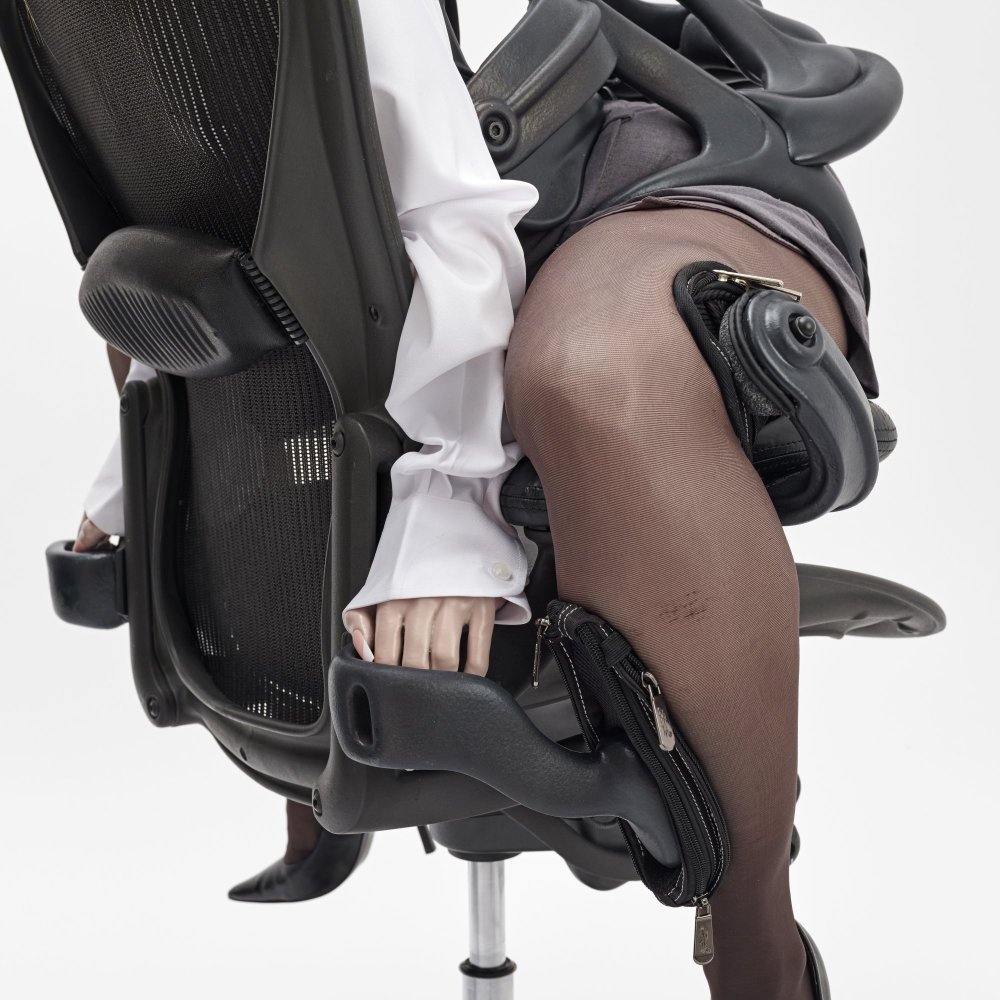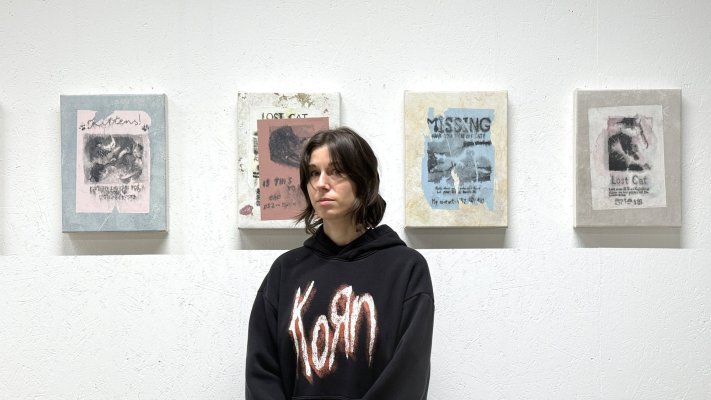
Ivana Bajec (*1990) is a Slovenian visual artist who combines drawing, graphics and painting in her work. She completed her bachelor's and master's degrees in painting at the Academy of Fine Arts and Design in Ljubljana and has presented her work at numerous solo and group exhibitions in Europe. Her paintings function as distinctive diary entries, in which abstract morphology meets whimsical figuration. With lightness and wit, they respond to the feelings and challenges of the present, from the uncertainty in which her generation is growing up, to the world of news, media and internet culture.
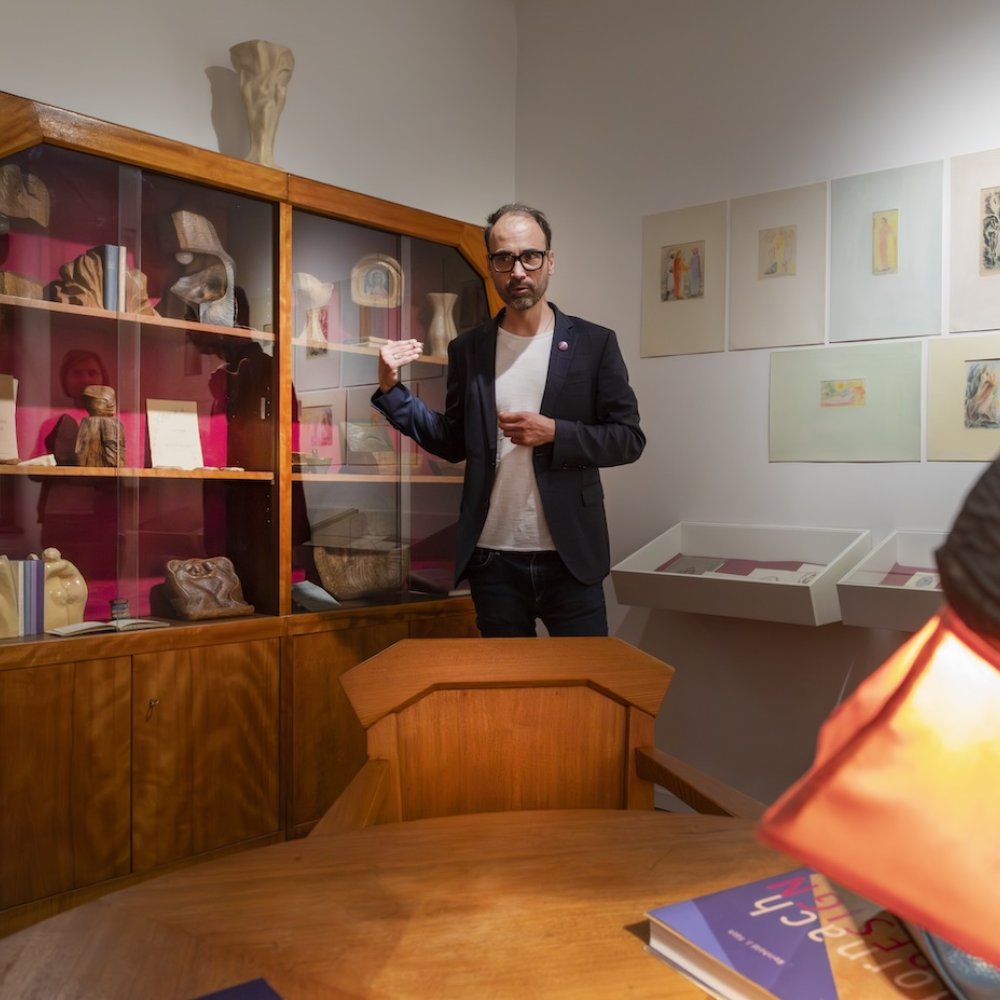
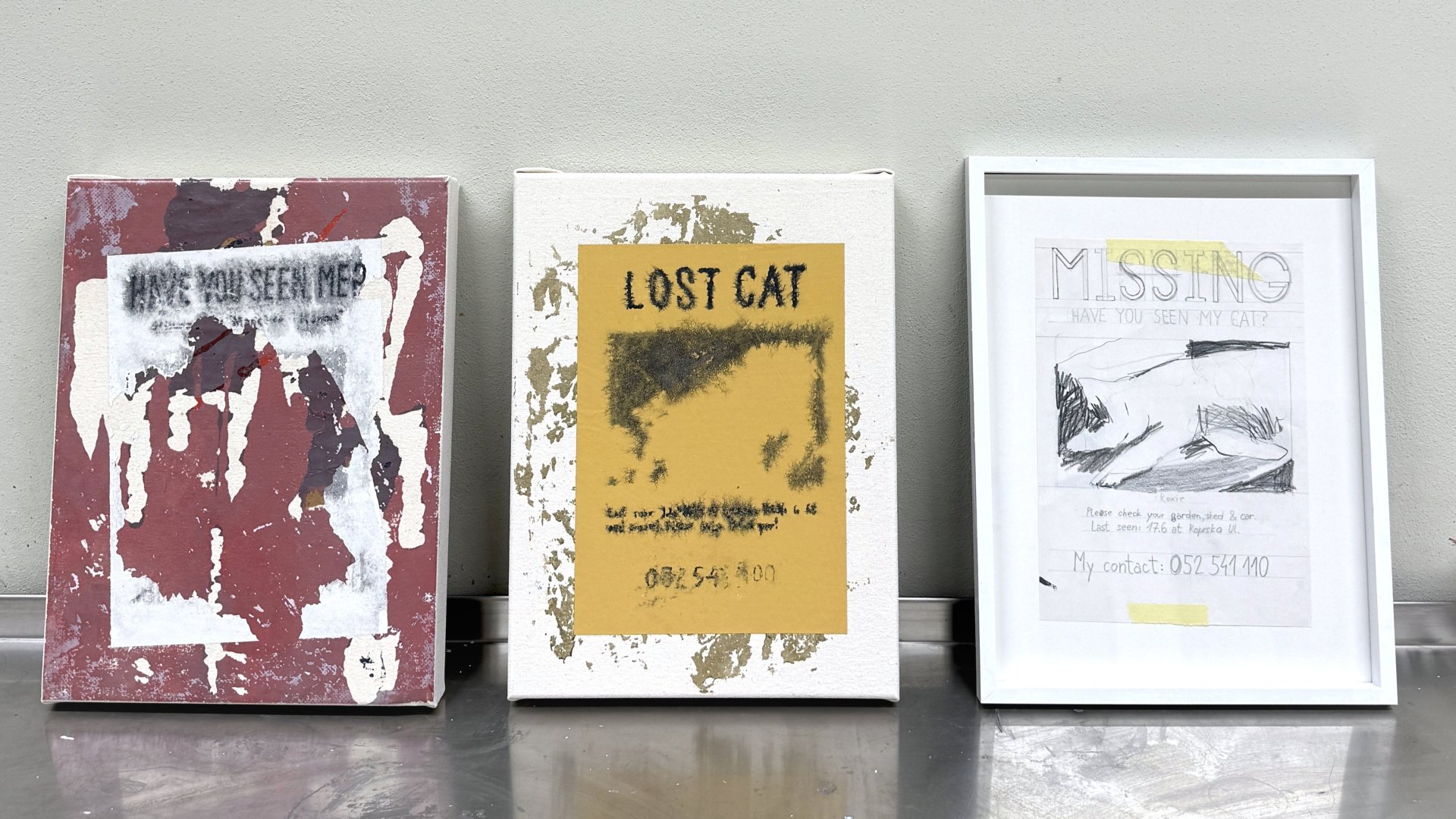
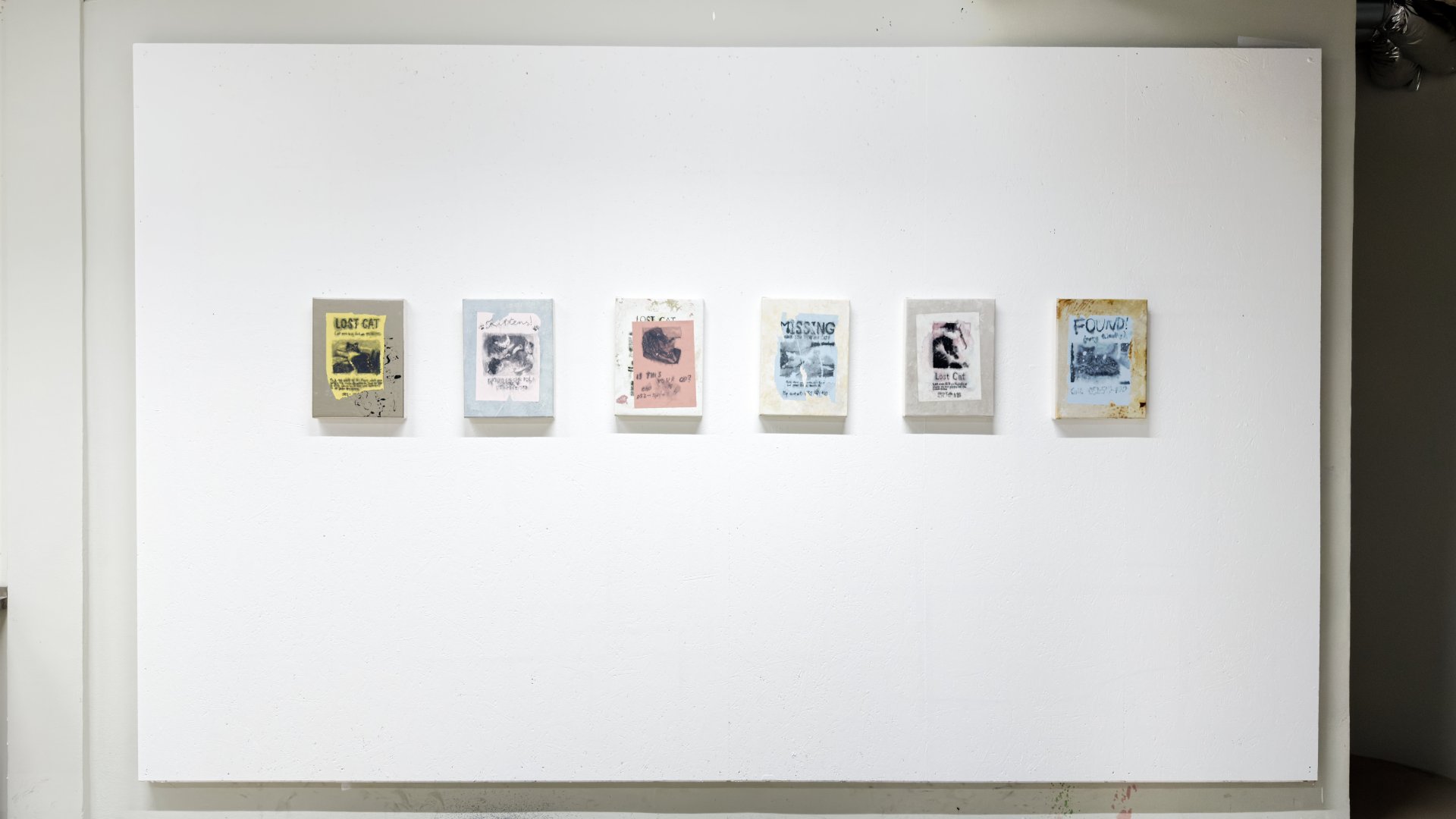
The interview was conducted during Ivana Bajec's residency at the Telegraph in Olomouc, where she spent September and October. She concluded the residency with an Open Studio , where she presented her work to the public on October 27th.
During September and October you were in residence at Telegraph, away from your usual environment in Ljubljana. What kind of work rhythm did you find during your stay in Olomouc?
The time and space I had there gave me the freedom to take my time, to think about my work, and to re-examine what really interested me. I really liked having a studio right outside my apartment door. I could start working almost as soon as I woke up, with my morning coffee and still in my pajamas. I would just roll out of bed and evaluate what I had done the day before.
Simple daily rituals and some distance from my usual environment allowed me to look at my own work differently, experiment and develop ideas without immediately feeling the need to turn them into something finished.
Everyday situations, memories and personal observations play an important role in your work. For example, the exhibition August (2021) was presented as a painted diary of one summer. How do such small stimuli become the subjects of your paintings?
I don't think I have a particularly clear process. Sometimes it's a situation I've experienced, something I've seen on the street, a private joke or memory. I collect these little insights in the form of doodles, screenshots, photos or notes on my phone. Then I scroll through them until something catches my attention enough to stick in my head.
I am drawn to ordinary things that can be a little funny or strange, or at least that is how I perceive them. I also like to leave room for fiction. The original inspiration can be real, but before it becomes a painting, it is usually transformed, exaggerated or mixed with something else. More than accurately capturing reality, I am interested in what happens to reality when it goes through the process of becoming a painting.
In a cultural portrait written about you in 2021 by Lara Paukovič for the weekly magazine Mladina, in addition to your fondness for internet memes, she also mentions the frustration that the online environment sometimes causes in you. What is your relationship with the internet today and how is it reflected in your paintings?
I don't think about it much anymore. I still have a weakness for internet humor, memes, and all the weird stuff that people put on the internet. But lately there's so much of it and it's so oversaturated that I'm not really interested in it anymore. It just flows through me and nothing sticks. It doesn't bring me the joy it used to.
Now I'm much more interested in slowing down and reconnecting with the tangible, physical world around me.
In 2024, you presented the exhibition Forget Forgot Forgotten at the Karpuchina Gallery in Prague, which, among other things, focused on mental health in the context of the digital world. What was important to you about this relationship?
I was interested in how our relationship with the digital world affects how we perceive ourselves. We are constantly exposed to the lives, opinions, images, and expectations of other people. And even if we realize that what we see is carefully selected or constructed, it can still affect us.
I also thought about how hard it is to switch off these days. The constant consumption of information and images can be quite exhausting. I wanted to approach these topics in a way that didn't make the result too serious or dramatic, so humor played an important role: it balanced it all out.
In connection with the exhibition Forget Forgot Forgotten, you spoke about doubts about whether painting has any meaning in the flood of online content. Since then, artificial intelligence-generated images have also joined that flood. Does this change how you think about the meaning of painting?
I had a long period where there was a lot of doubt and anxiety behind almost everything I created. I felt like the world didn't need any more paintings and that nothing I did had any real meaning. But since then I've come back to some of the core beliefs I've always had. Basically, they can be summed up as something that just needs to be done. There's no need to defend it. In the end, I'm better off painting than not painting, so who cares? Does the world need more paintings? I do. I need more of my paintings.
When it comes to AI-generated images, I don't think they can be compared to the physical aspect of painting. The atmosphere, the feel, the weight, the material, the smell of the colors, all of that can't be generated. For me, painting is as much about the time, the decisions, and the mistakes that go into making it as it is about the resulting image itself. I don't think it needs to compete with the speed or the quantity of digital images.
The exhibition Mental Health Walk, which you presented in 2023 at the RAVNIKAR Gallery in Ljubljana, was created in the context of the pandemic and social uncertainty. Humor and exaggeration were given a prominent place in it. How did you work with humor in this series and does humor play a significant role in your work?
Humor has always been quite important in my work. I think it's partly a way of coping with things that would otherwise overwhelm me. I sometimes joke that humor is my way of fighting off anxiety.
The Mental Health Walk exhibition emerged from the general anxiety and uncertainty surrounding the pandemic. I was also interested in the absurdity of all the wellness routines and self-improvement practices that were so popular at the time. As if we could somehow fix everything by going for a walk, meditating, or drinking enough water.
I enjoy taking ordinary or unpleasant things and exaggerating them until they become a little ridiculous. I don't necessarily want the viewer to know if something is meant to be funny or serious. Ideally, it can be both.
Although your paintings seem spontaneous, they can take quite a long time to create. For example, you worked on El Barco, which you presented at the August exhibition at the RAVNIKAR Gallery Space in Ljubljana in 2021, for several months. How do you know when a painting is finished for you?
I don't think I have a very reliable method for this. Sometimes I work on something for a long time, then I put it aside, come back to it, change something, and then put it back again.
At some point I have to admit that if I add or subtract something, the painting doesn't necessarily improve. It's mostly about a certain feeling. When I feel good, when I'm in the same room with the painting, and it makes me happy, it's done. It's probably not a very sophisticated method, but it works for me.
This year, you exhibited a series of drawings called Bed Rot at the NLB MUZA in Ljubljana, in which rest and inactivity are a conscious choice, not a reward for work. How did this series come about and why did you return to the black line on white paper this time?
The idea came from that aforementioned reluctance to create images. At that time, I was quite depressed and spent a lot of my free time in idle mode, where I was basically doing nothing, and I felt terrible remorse about it. It made me think about how rest has become something we have to earn, optimize, and turn into more productive activity.
Returning to black line drawings on white paper seemed like the most appropriate way to express the idea of the exhibition. I liked that the drawings didn't ask too much of me and that this seeming lack of effort could become part of the concept itself. For an exhibition about doing less, it seemed quite appropriate.
At the end of October, you had an Open Studio at the Telegraph. Do you prefer to talk about your paintings at such events or listen to what others see in them?
I guess a little bit of both. I'm very interested in what other people see in my work, what they find interesting about it, or even what they don't like about it. I enjoy hearing interpretations that I would never have thought of myself, and I don't necessarily feel the need to correct people or explain what something is supposed to mean.
I also like to talk about the process and materials. My process tends to be very playful and messy, so I always end up talking about it with such childlike enthusiasm.
Even the small moments of everyday life have their place in your paintings. When you look back over the last few weeks, what has brought you the greatest joy?
Definitely having such a beautiful and spacious place to work with big windows. It was also very special to have my friend, who is also an artist, visit me. It was the first time we both had the opportunity to work on our projects in the same space.
I also really enjoyed walking around Olomouc and how it slowly became a familiar, cozy place. At first, I felt completely lost and had no idea what my project would be. But the conditions of the residency gave me enough space to start noticing things again and to calmly explore something that I had always been interested in but had never really worked with before. I think that is what I appreciate most about this stay.