David Možný (*1963) is a contemporary Czech visual artist from Brno. He graduated from the Faculty of Education of Masaryk University in Brno in the field of Art Education. Until 2000, he devoted himself to abstract and processual drawing with ink and angle and followed the electronic music scene in parallel. Later, he began to use computer programs, mastered 3D animation and focused on digitally processed videos. In 2015, he completed his first spatial installation and since then this medium has predominated in his work. In 2023, he represented the Czech Republic at the Prague Quadrennial with the installation Limbo Hardware , which won the award for best concept in the main category of Exhibitions of Countries and Regions.
In his work, he works with digital images, video, objects and spatial installations. He also uses found objects, which through precise structural interventions he strips of their normal function and places in new situations. He thereby disrupts the usual perception of architecture and creates environments that affect not only the visual but also the physical orientation of the viewer.
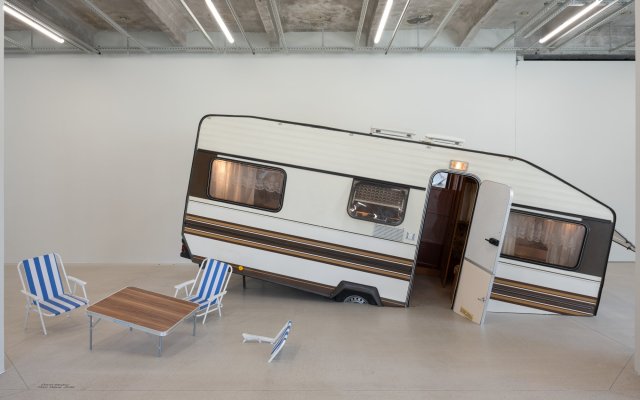
As part of the exhibition Signal V is presenting his installation Heat Wave from 2018. The work is located in the left rear part of the exhibition hall and forms one of its main spatial dominants. Its base is a real residential caravan significantly tilted from the horizontal position. Two camping chairs and a folding table are also placed in front of it at the same inclination, the lower parts of which disappear below floor level. The entire recreational assembly thus appears as if it were gradually falling into the gallery space.
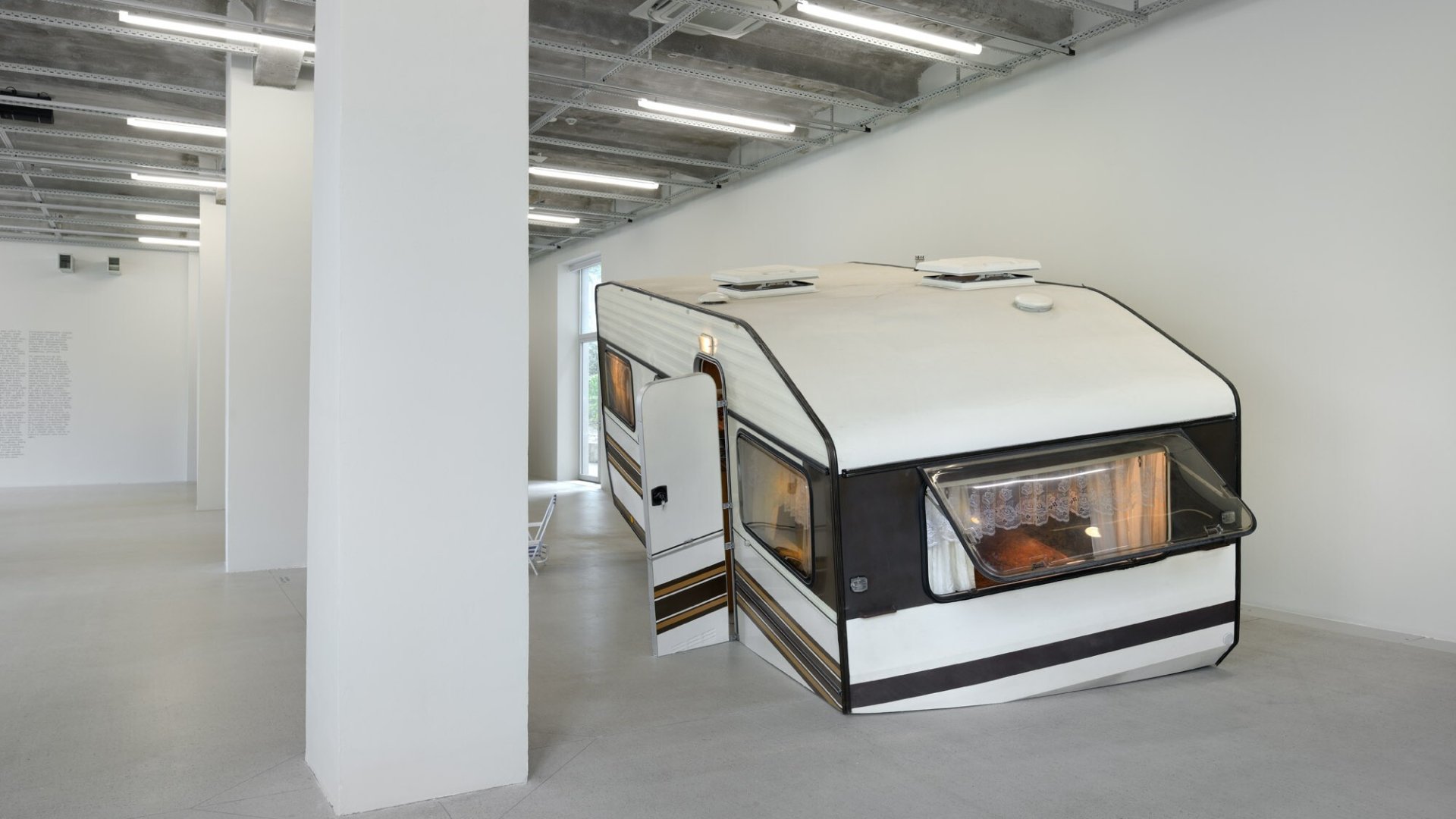
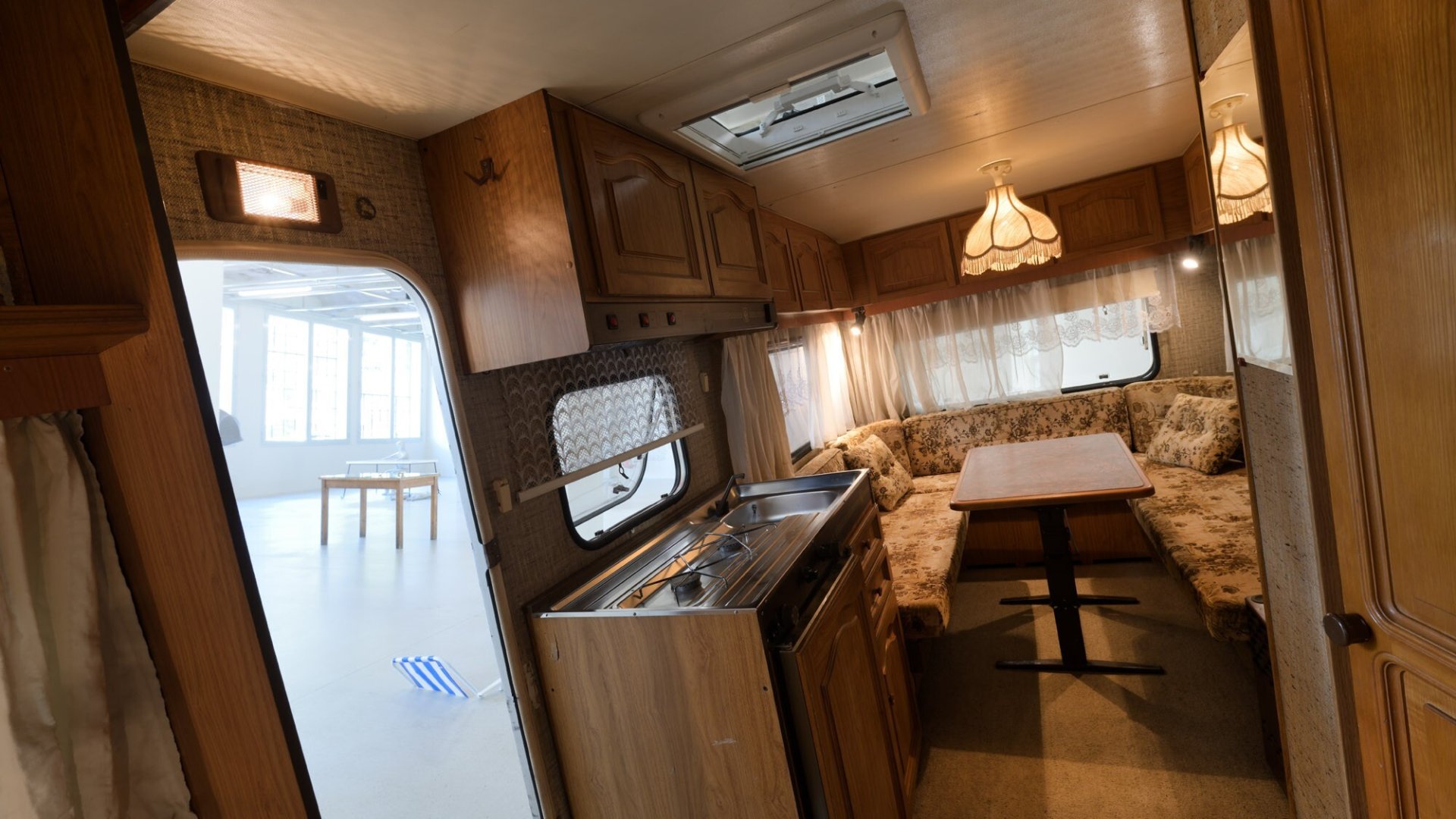
The entire interior of the caravan, including windows, doors and original furnishings, is also tilted. The visitor can enter, where they have to cope with the significant slope of the living space. The eye perceives the interior as a familiar and orderly environment, while the body reacts to its unusual position. This contradiction can cause a loss of spatial certainty or dizziness. It can thus interfere not only with the appearance of the object, but directly with the way in which a person physically experiences it.
The work was first presented at a solo exhibition at the Blansko City Gallery, which took place from December 2018 to January 2019, curated by Jan Zálešák. At its premiere, Možný created the work as a closed immersive environment divided into two parts, where the initial installation of a caravan with a camping table and chairs, along with a street lamp, was complemented by dark scenography, the sound of crickets and the second part of the exhibition with a follow-up video from an empty parking lot. The objects were adjusted lengthwise and set into the floor at a different level, so they appeared as if they were sinking or sliding. In the Telegraph Gallery, however , Heat Wave is presented in a completely different context. Without the original blackout, the sound and video components also take on a new dimension. In the open, evenly lit hall, the theatrical illusion recedes and the construction of the object itself, its physical relationship to the flat floor and, above all, the newly emerging communication with the surrounding exhibited works come to the fore. By connecting with other dominant elements of the exhibition, the tilted caravan acquires new networks of meaning and resonance within the overall concept of the exhibition.
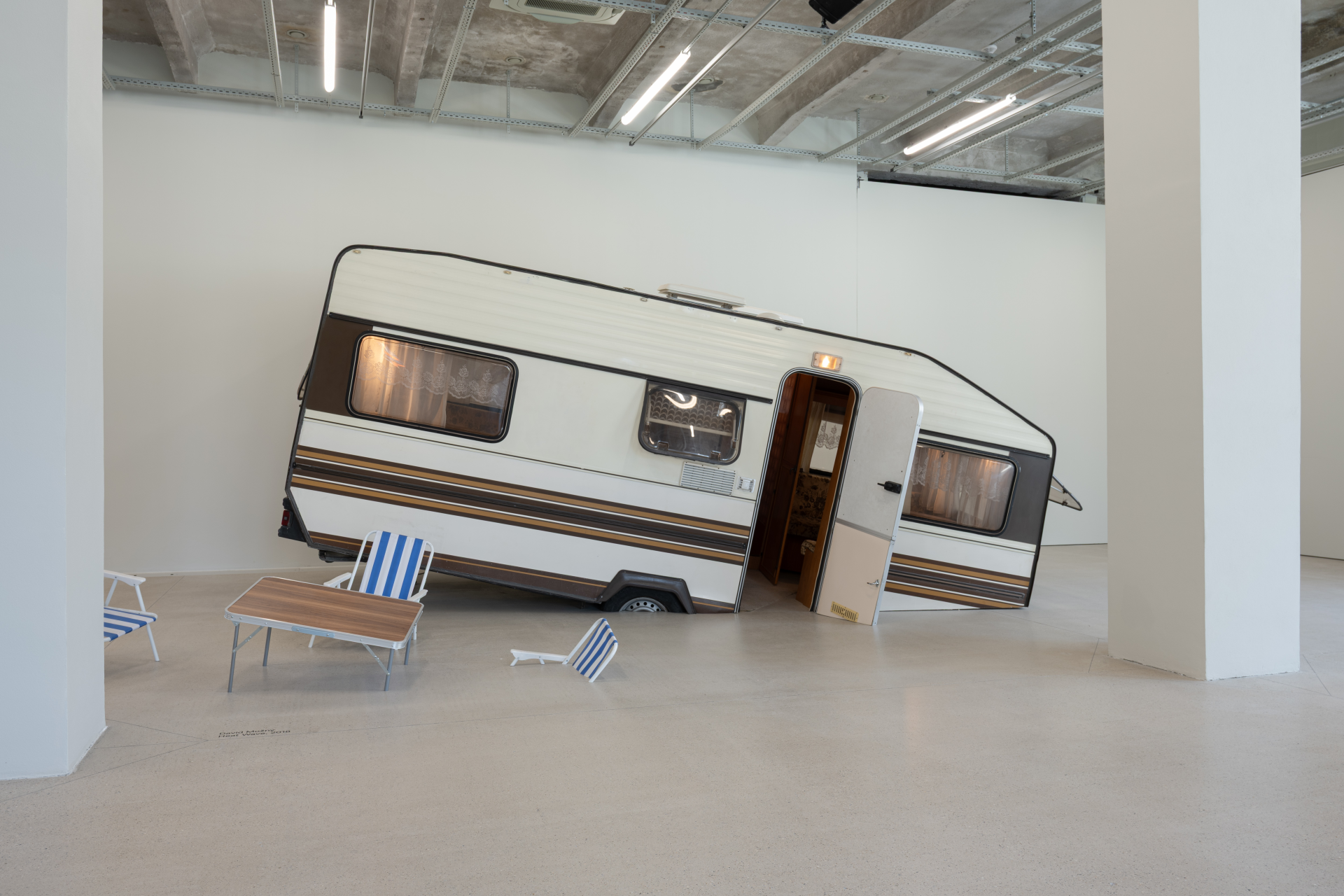
The name Heat Wave refers to a wave of extremely high temperatures as an emergency that disrupts the normal functioning of humans and their environment. At the same time, it changes the perceived meaning of the caravan as a symbol of summer vacation, travel and escape from everyday life. The familiar holiday home remains the same at first glance, but its tilted position makes it difficult to live in.
David Možný also spoke about his work and other projects during an April lecture in the Telegraph as part of the Artist Presentation series.
The exhibition Signal V: A Selection of Objects and Installations from the Robert Runták Collection can be visited at the Telegraph Gallery until September 24, 2026.