Anna Hulačová (*1984) is a sculptor and intermedia artist. She graduated from the Academy of Fine Arts in Prague in the studios of Jaroslav Róna and Jiří Příhoda and completed an internship at the Korean National University of Arts in Seoul. In 2016, she became a finalist for the Jindřich Chalupecký Award, where she won the Audience Award. She has presented her complex spatial installations at a number of domestic and international exhibitions, including the Fondation Louis Vuitton in Paris, the Kunstraum in London, the Brno House of Arts, and galleries in Berlin, Lisbon, and Santander. In her figurative work, she uniquely connects Czech folklore, rural rituals, and masks with influences from East Asian art, science fiction, and surrealism. By deliberately combining organic natural materials (beeswax, wood, grain) with technical materials (concrete, silicone), and flat photography, she creates tension between the rural and industrial worlds. With humor and disturbing detachment, he explores the relationship between man, nature, and the universe.
Anna Hulačová's work is represented at the Signal V exhibition by Breakfast of a Teenager , which carries elements of mystery and the search for universal archetypes. In this installation, Hulačová processes Czech folk traditions and rituals originating from the rural environment, which she complements with influences from sci-fi, art brut, and East Asian art.
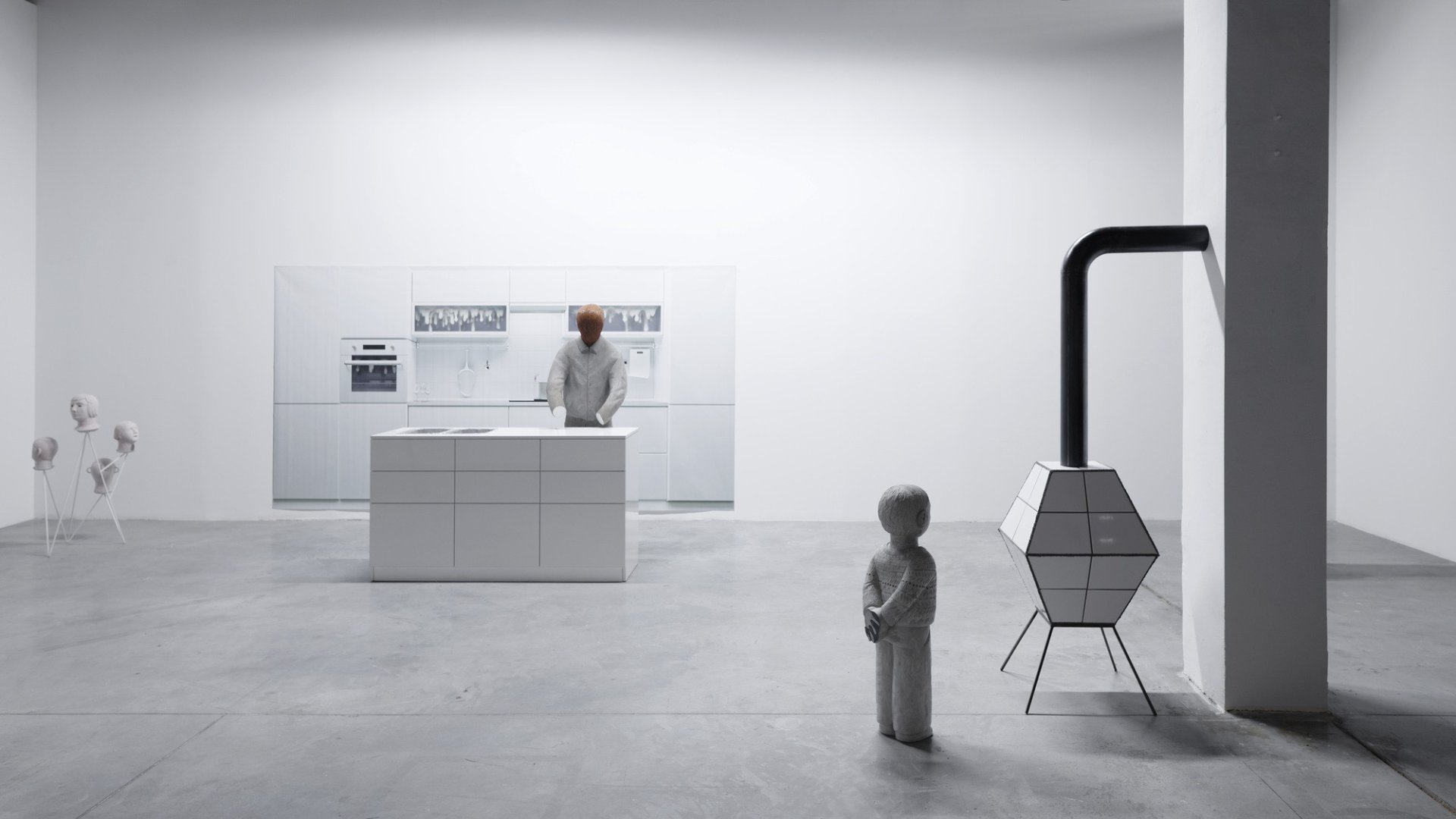
Breakfast of a Teenager was created in 2018 as part of a larger sculptural installation Good Morning Morning created for the group exhibition CHILDHOOD: Another Banana Day for the Dream-Fish at the Palais de Tokyo, a contemporary art center in Paris. Hulačová had a separate room at her disposal, which she transformed into a strangely familiar home interior. It featured a stylized kitchen unit, concrete reliefs, and a table with figurative objects. At first glance, the environment referred to an ordinary household and family life, but individual objects and figures disrupted this familiar situation with their deformations, unusual materials, and fantastical details. The work was thus originally set in an exhibition context dedicated to childhood, the formation of identity, imagination, but also the fears and anxieties associated with this period.
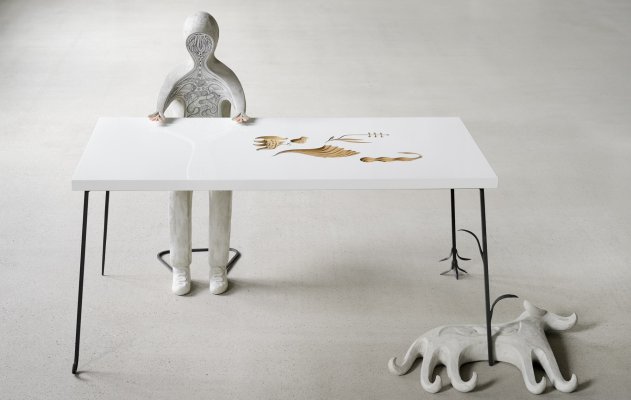
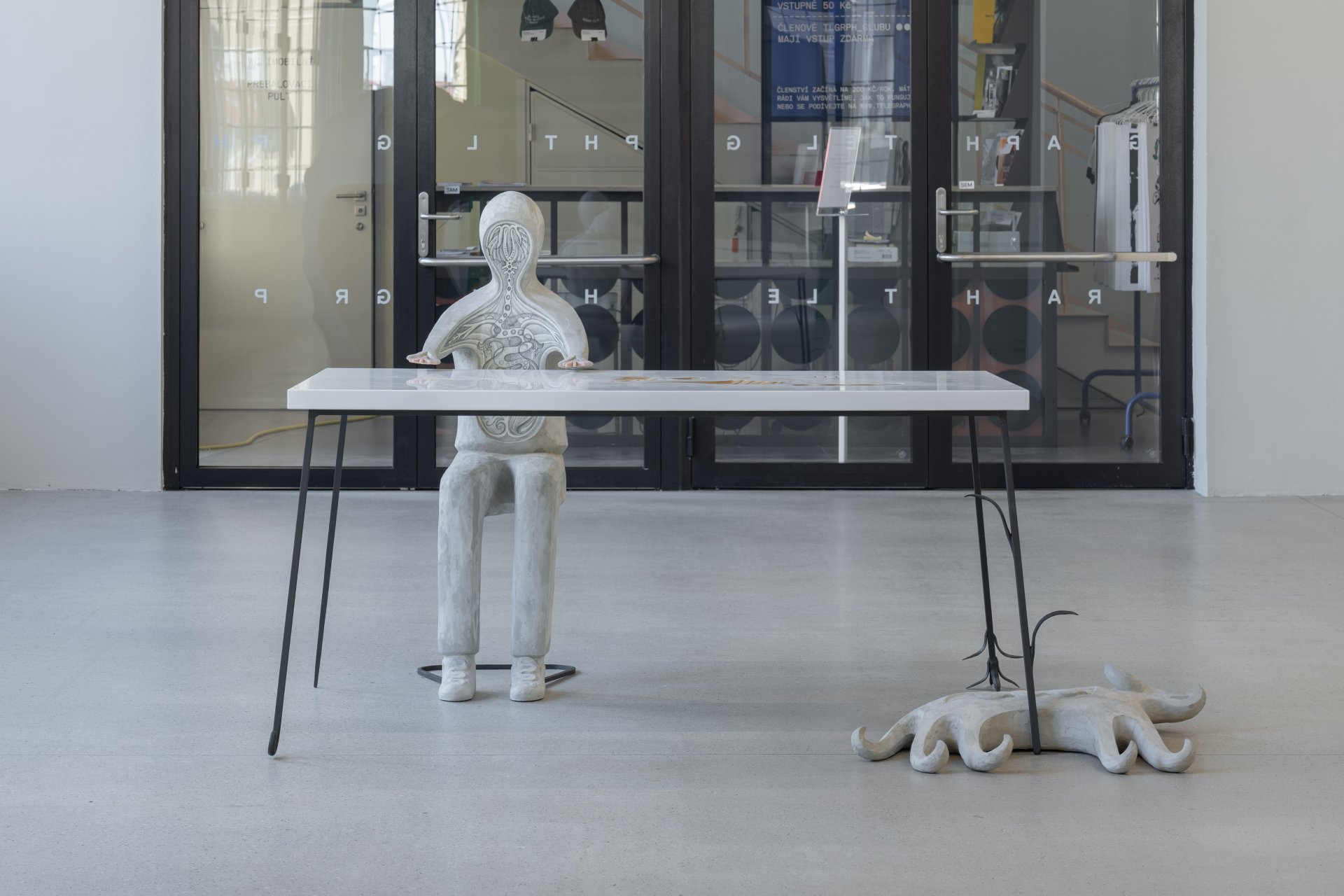
The object depicts a white table with a boy and a lying dog. The work offers the viewer an extraordinarily detailed experience to explore. Each part is elaborated in a different way. At first glance, the boy appears ordinary without any superfluous modifications, but the opposite is true. The front of the boy's concrete body is flat with drawn ornaments, and protrusions of a different material than the rest of his body come out of his hands. The glossy white surface of the table has been carved, revealing the wooden base of the tabletop. The figure of the dog, on the other hand, is covered in delicate reliefs. Hulačová also works with playfulness of form and asymmetry: each of the table's legs is different, from straight or curved lines to organic growths resembling leaves.
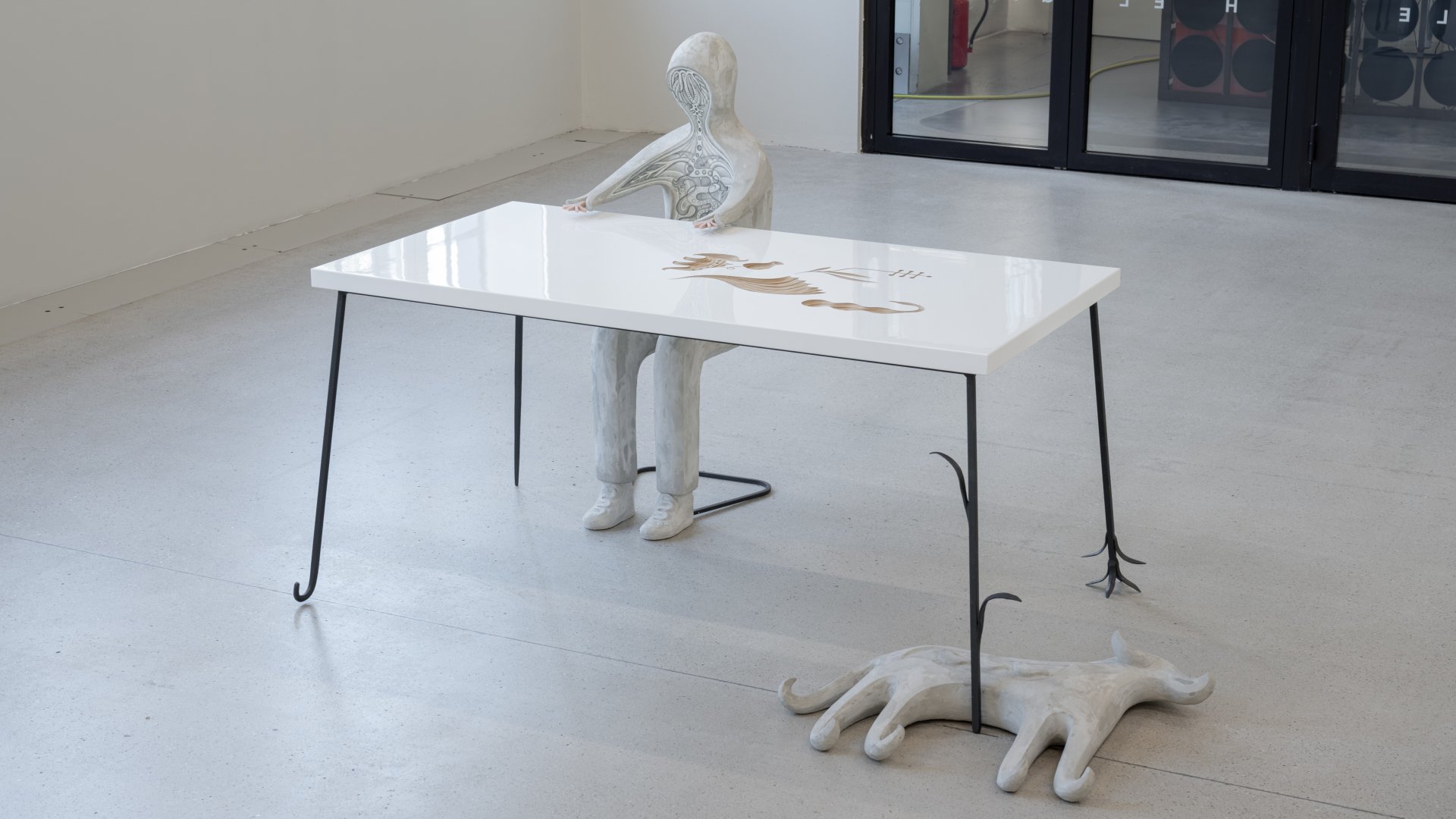
The author draws on motifs from everyday life, which she simplifies in form and shifts into a distinctive abstraction. By freeing seemingly familiar situations from their unambiguous meaning and combining them with unexpected visual elements, she deprives the viewer of common interpretive certainties. She thus creates an autonomous environment on the border between the past and the future, which leaves maximum space for the viewer's own imagination.
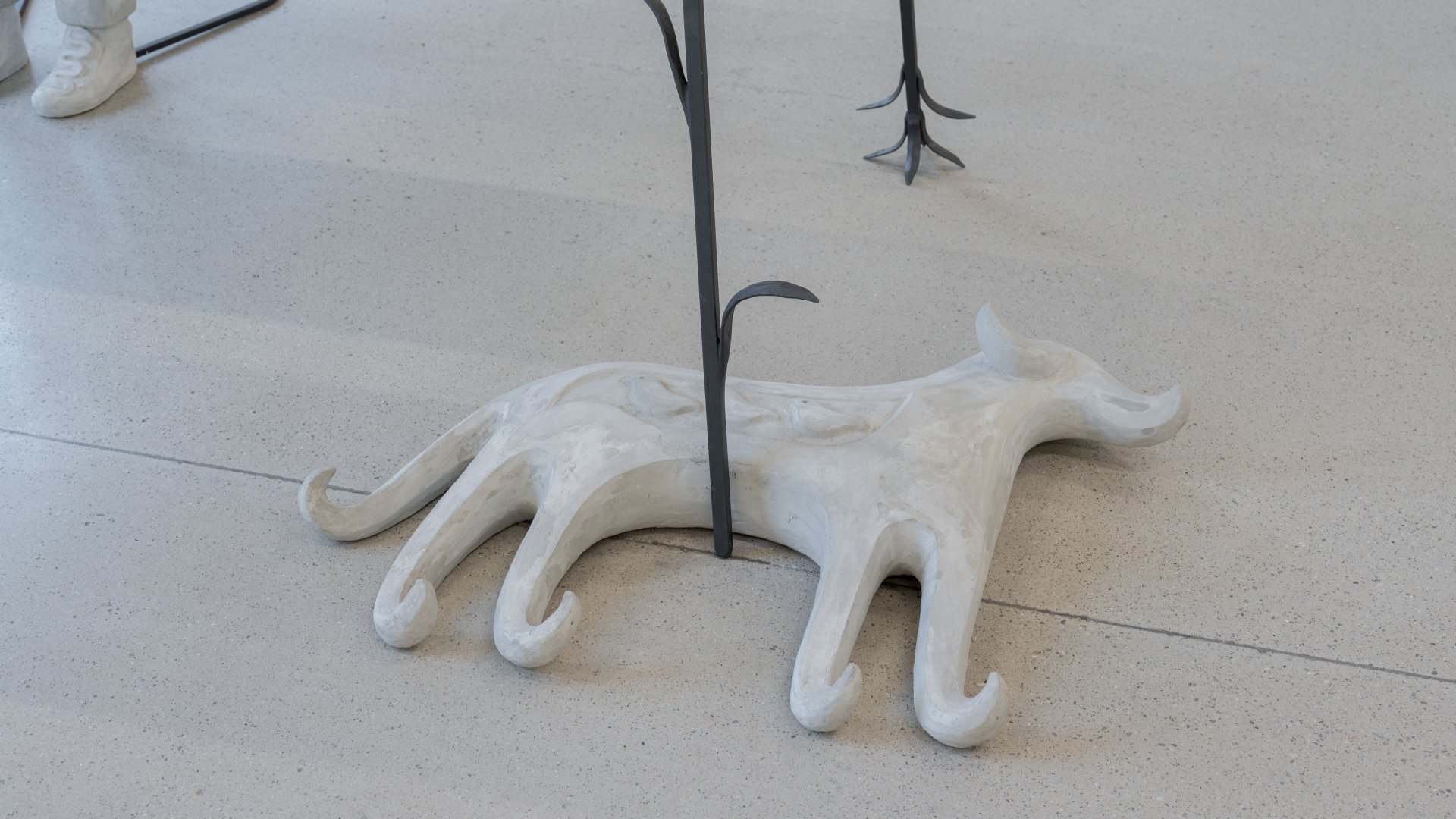
In the Telegraph Gallery architecture, the object is situated close to the entrance to the gallery space. It functions as the first visual and spatial point of contact that a visitor encounters upon entering the exhibition, offering an immediate invitation to take a close-up look before walking through the entire exhibition.
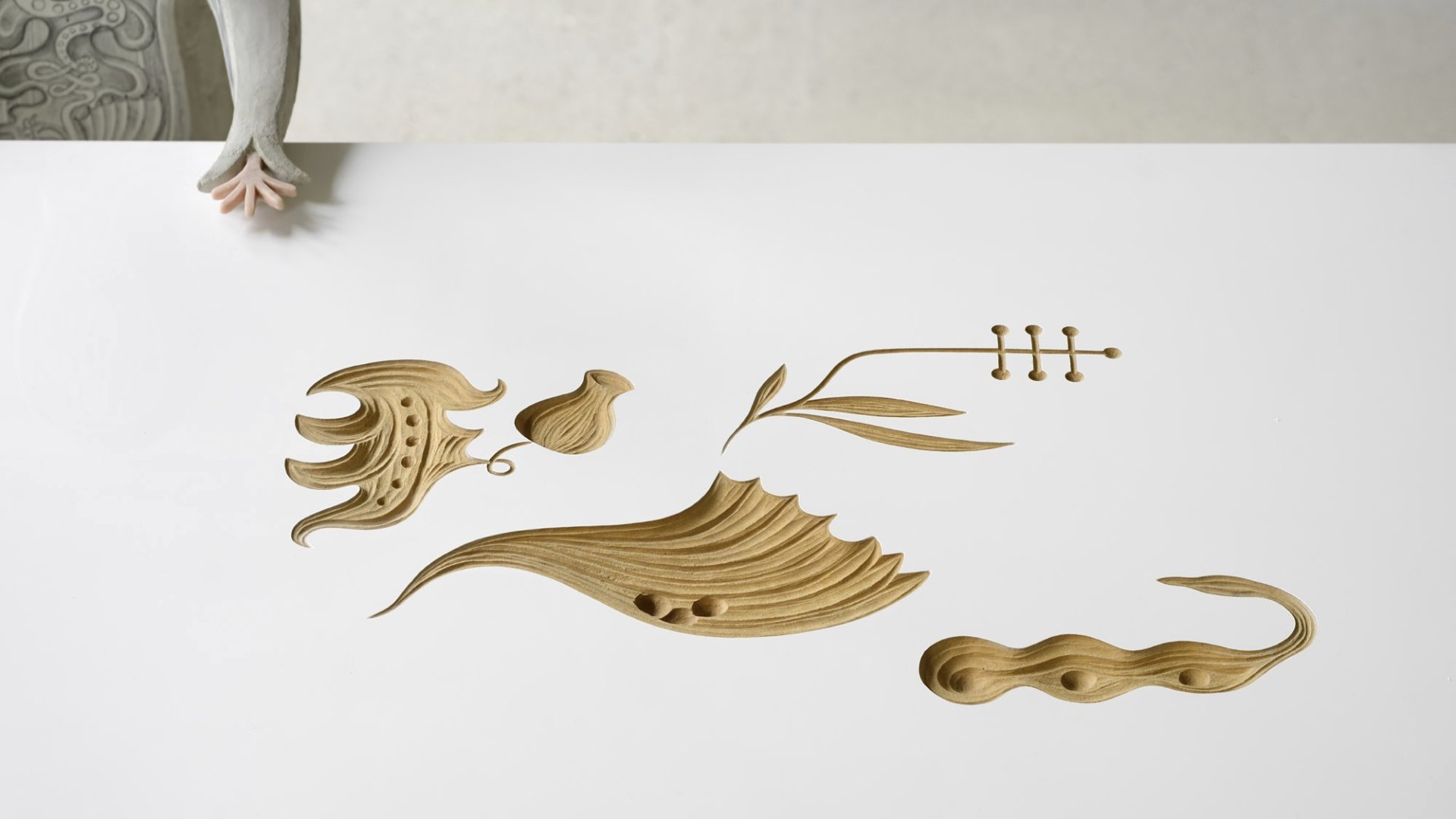
The exhibition Signal V: A Selection of Objects and Installations from the Robert Runták Collection can be visited at the Telegraph Gallery until October 1, 2026.