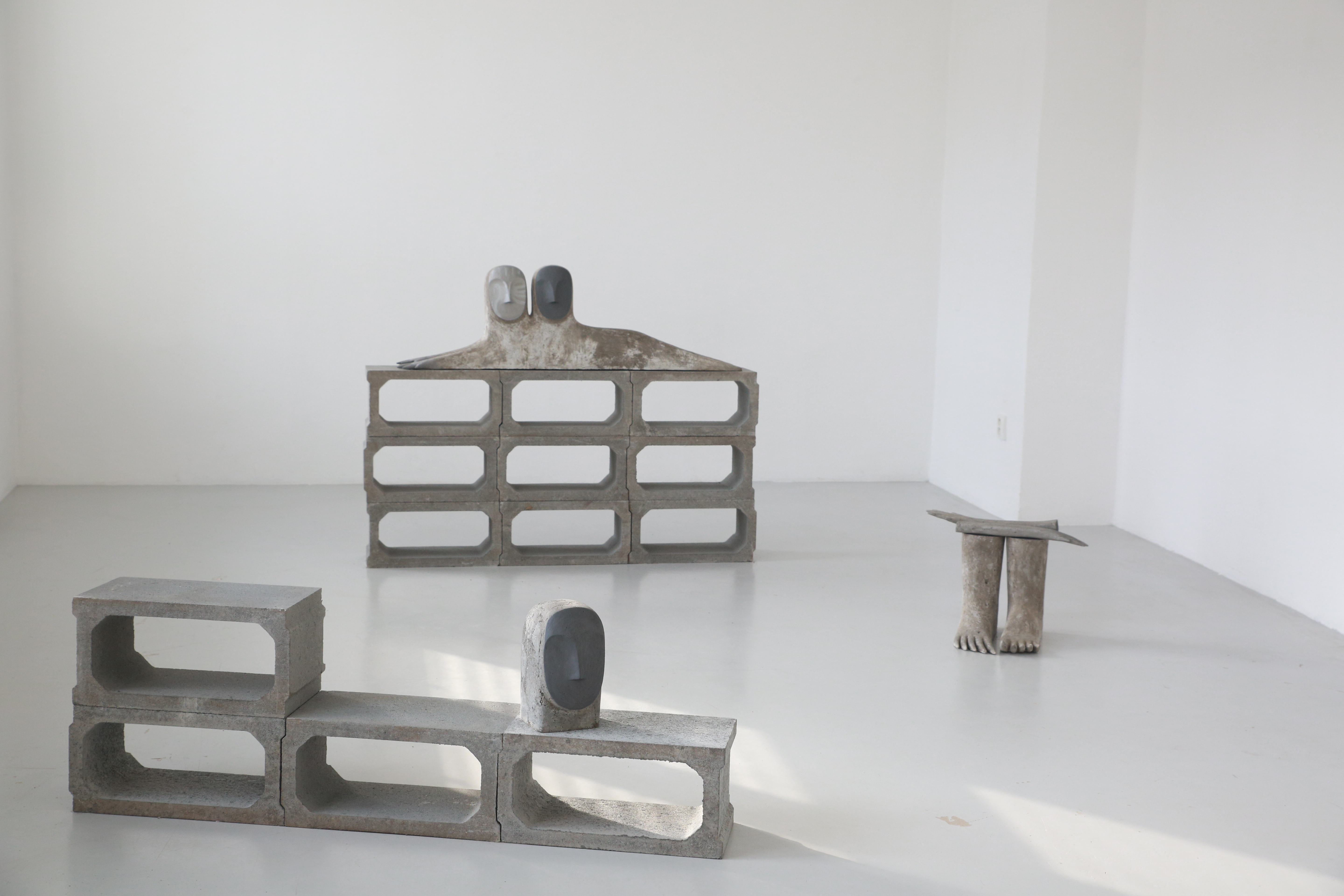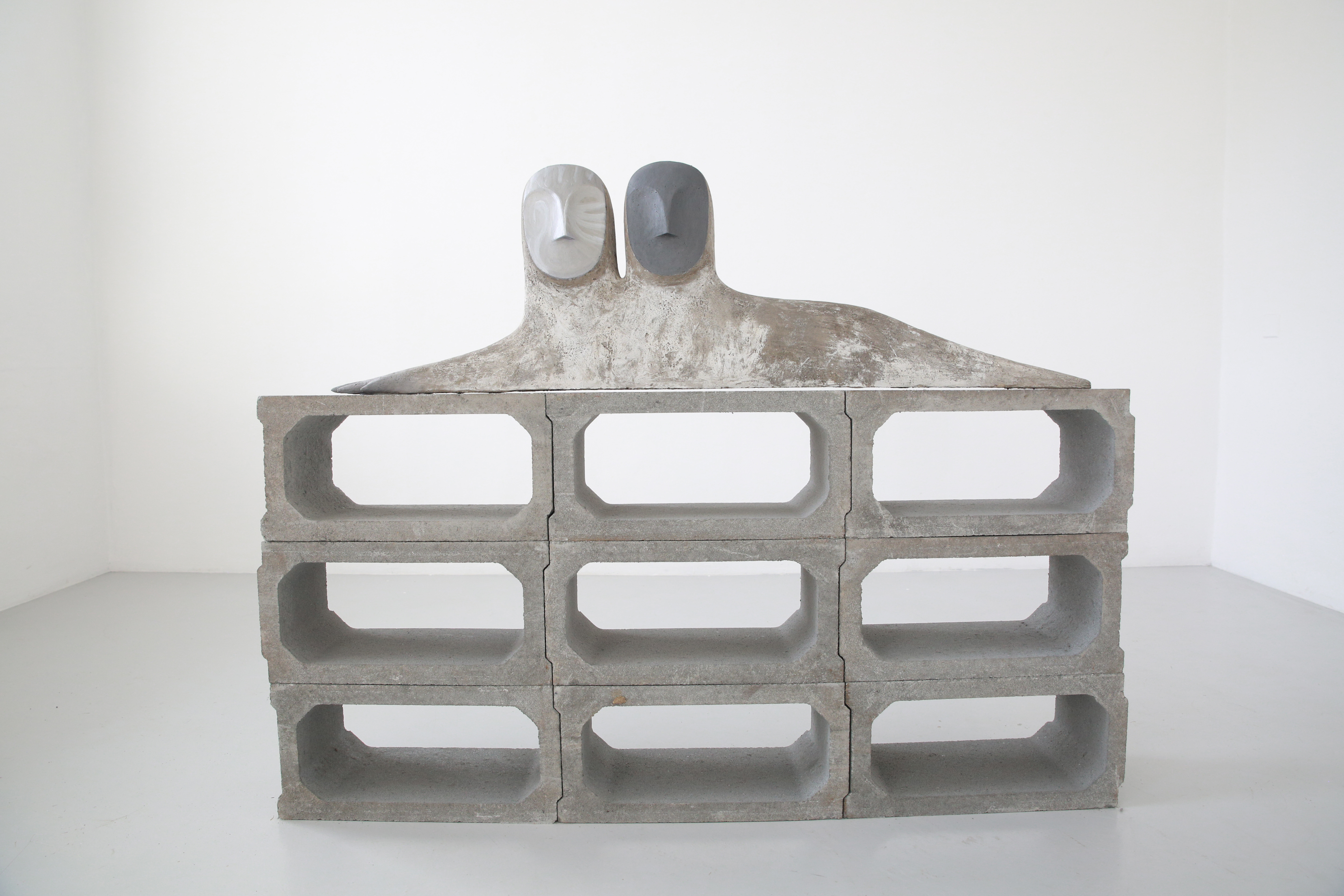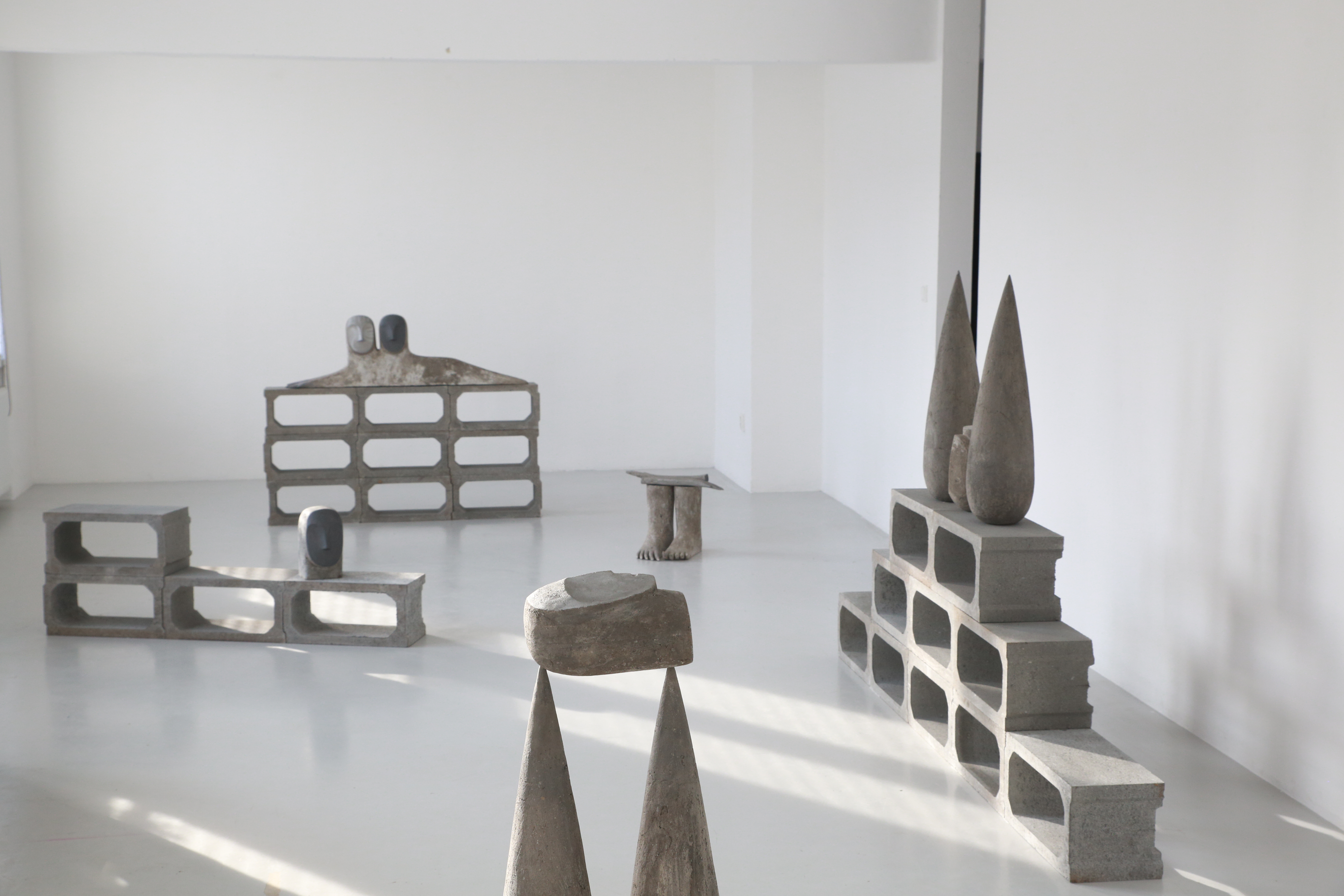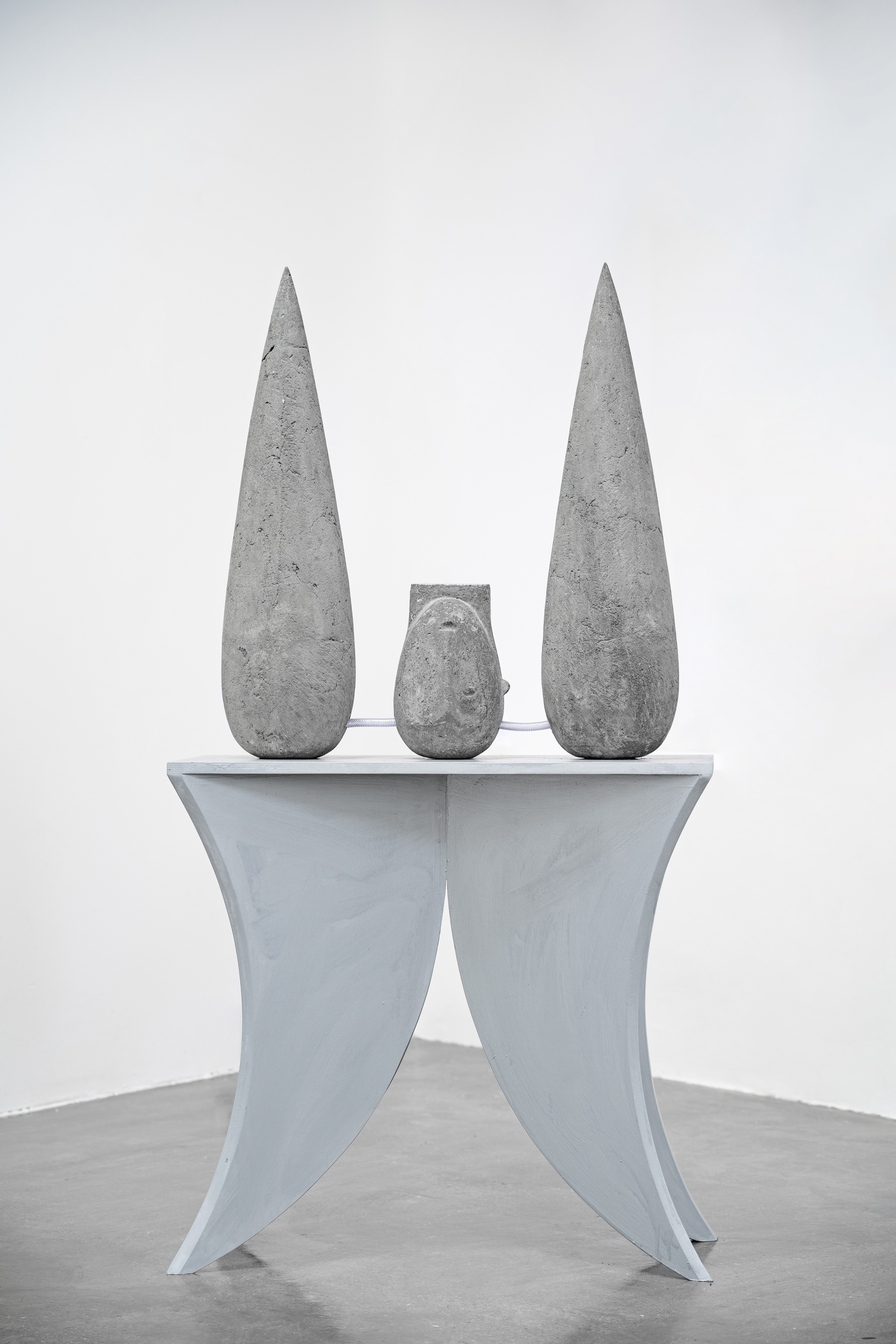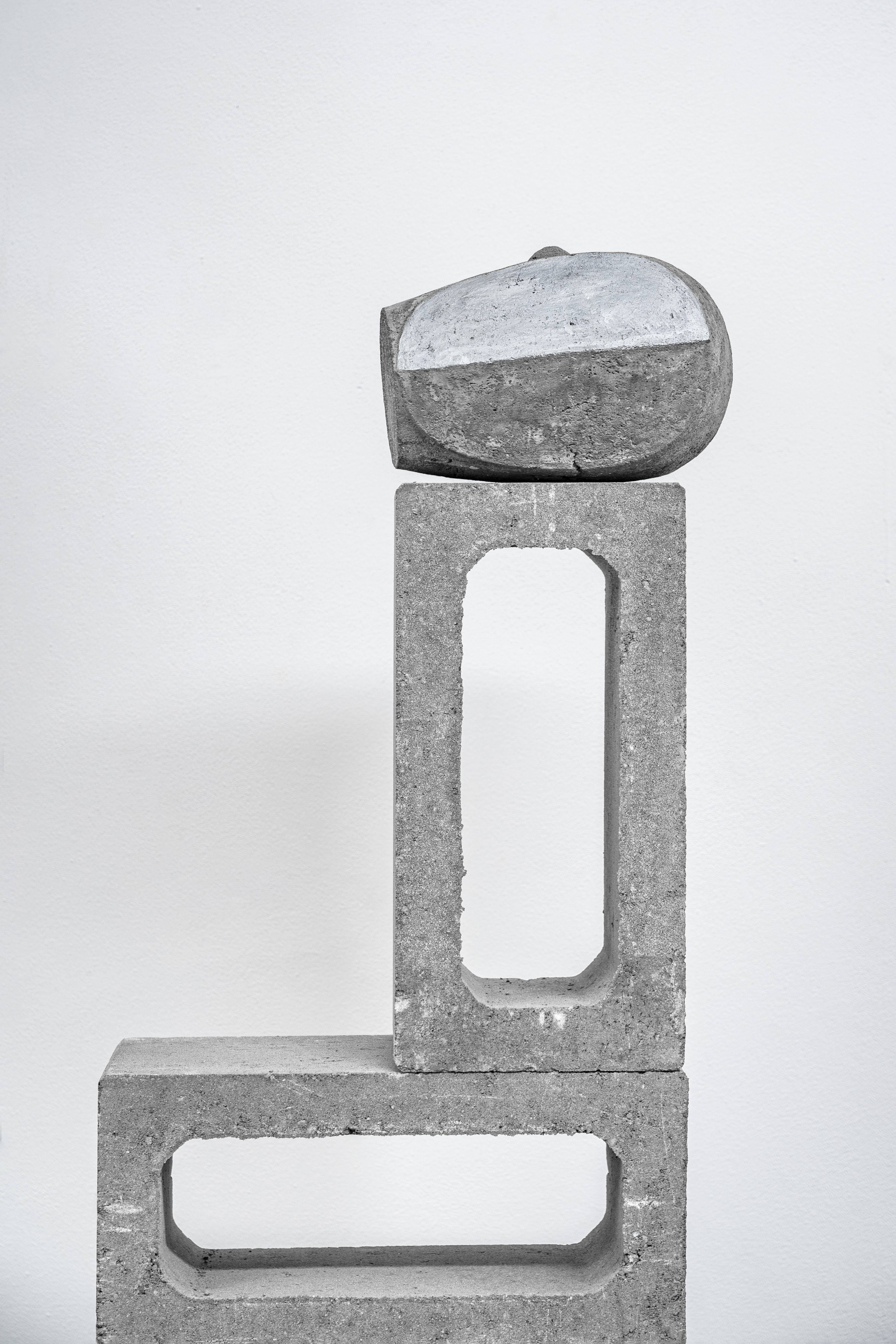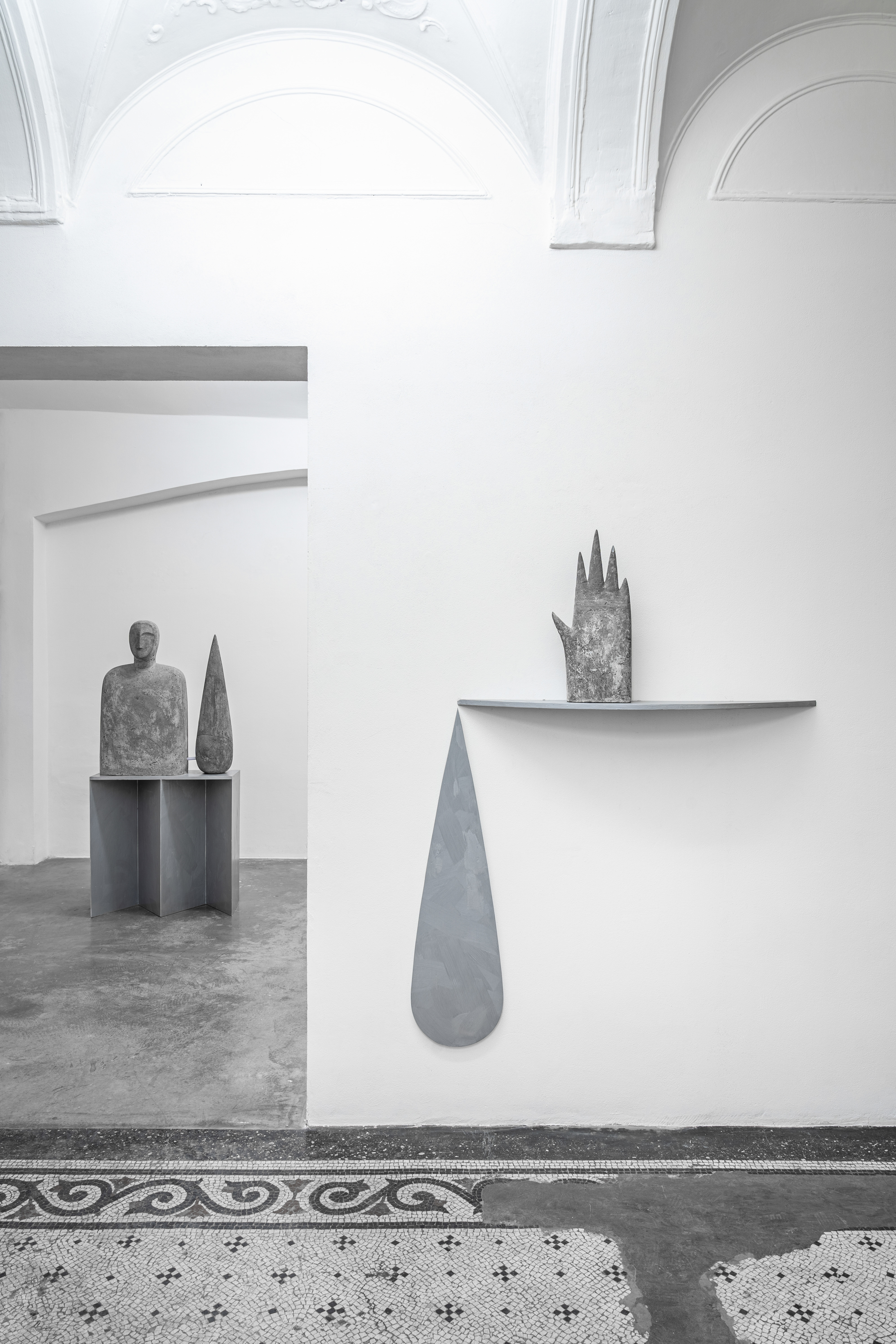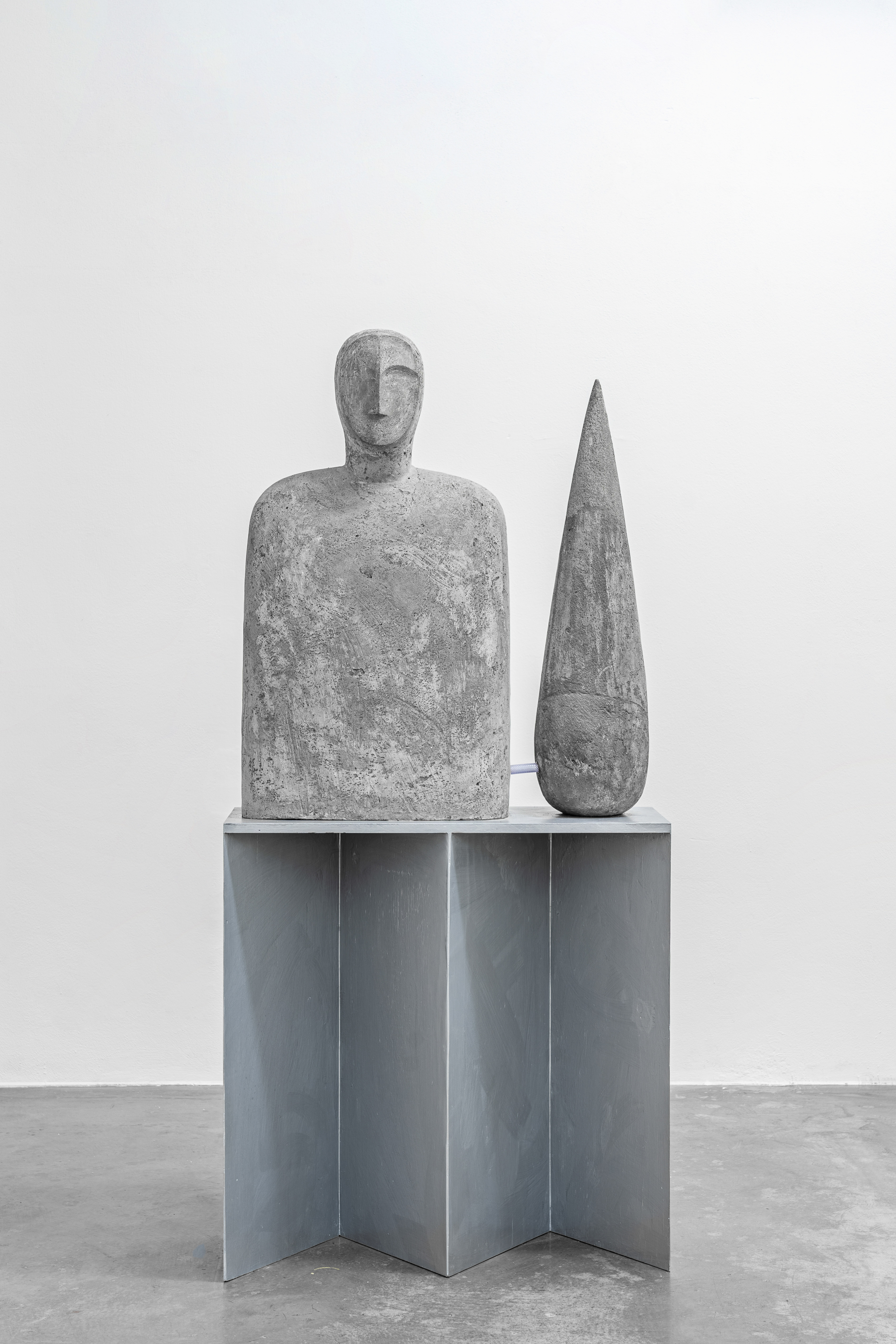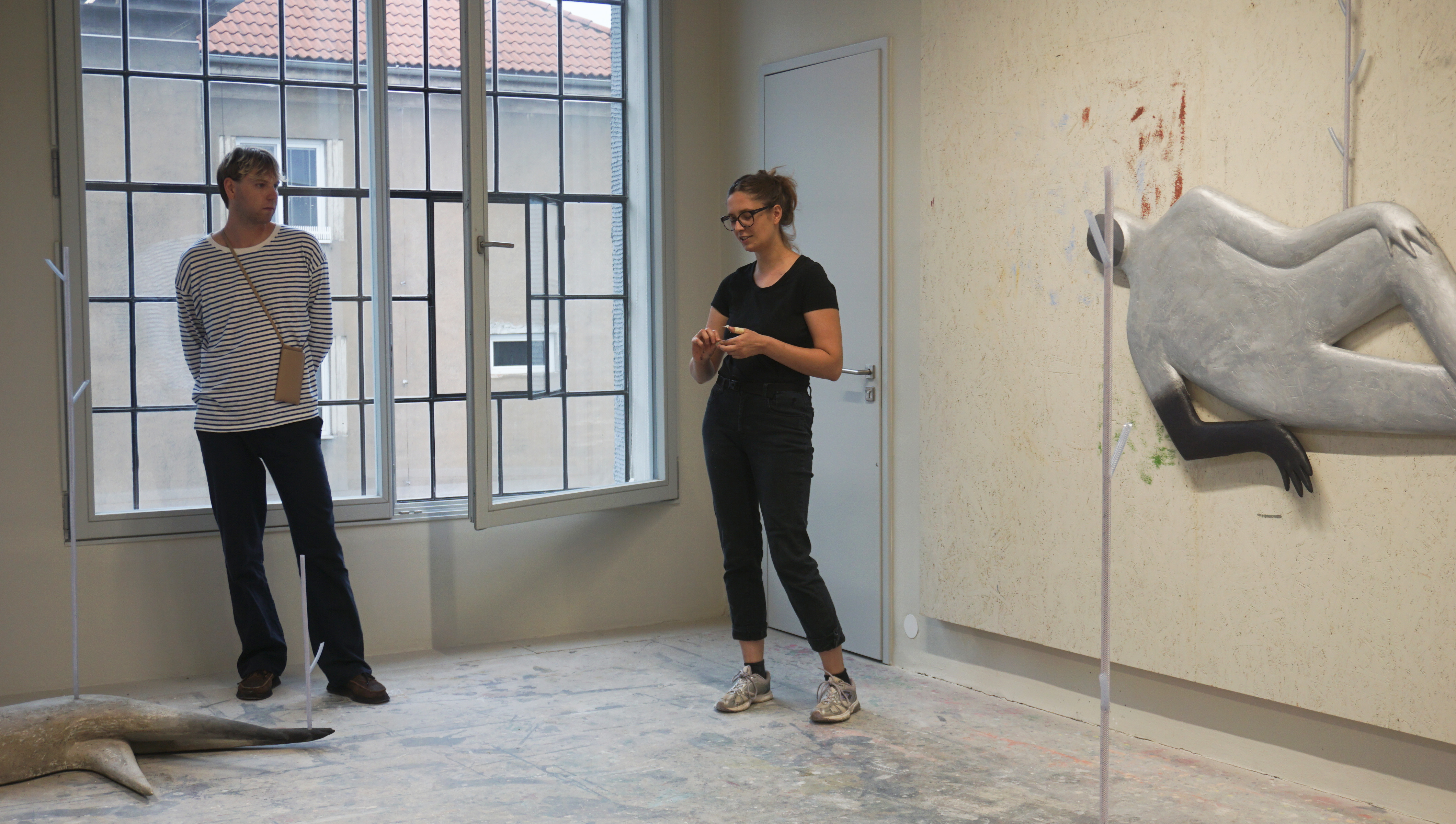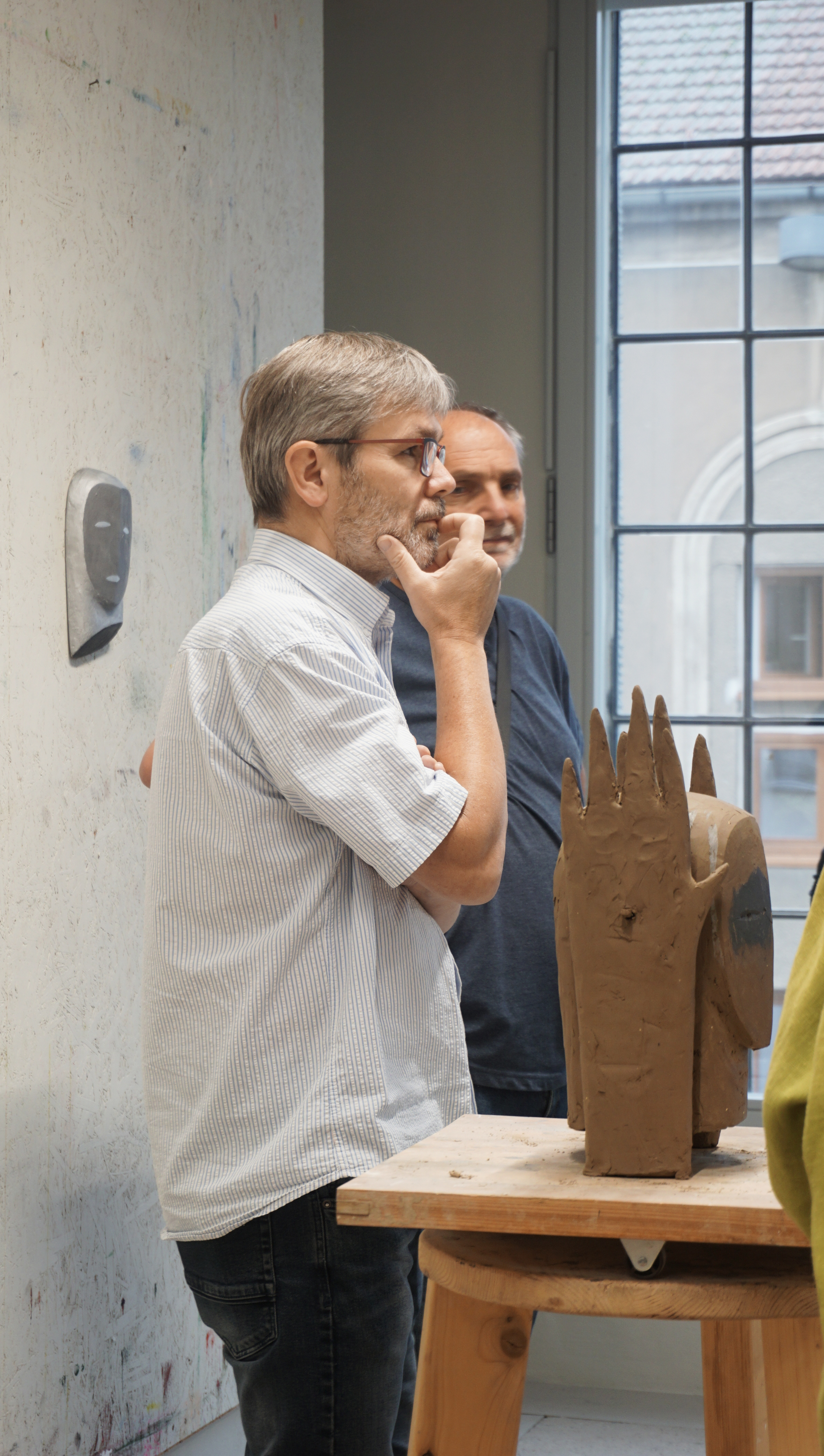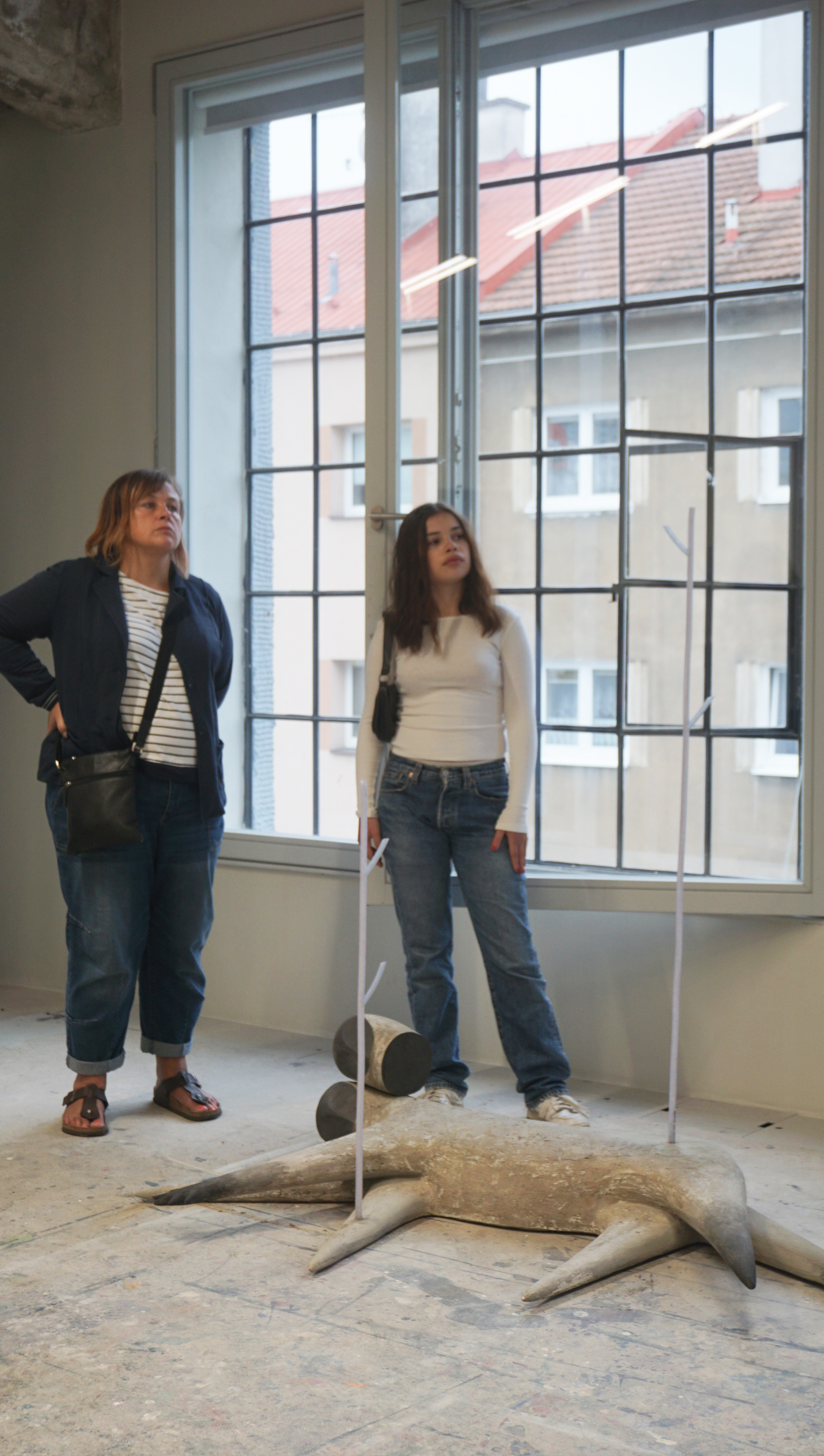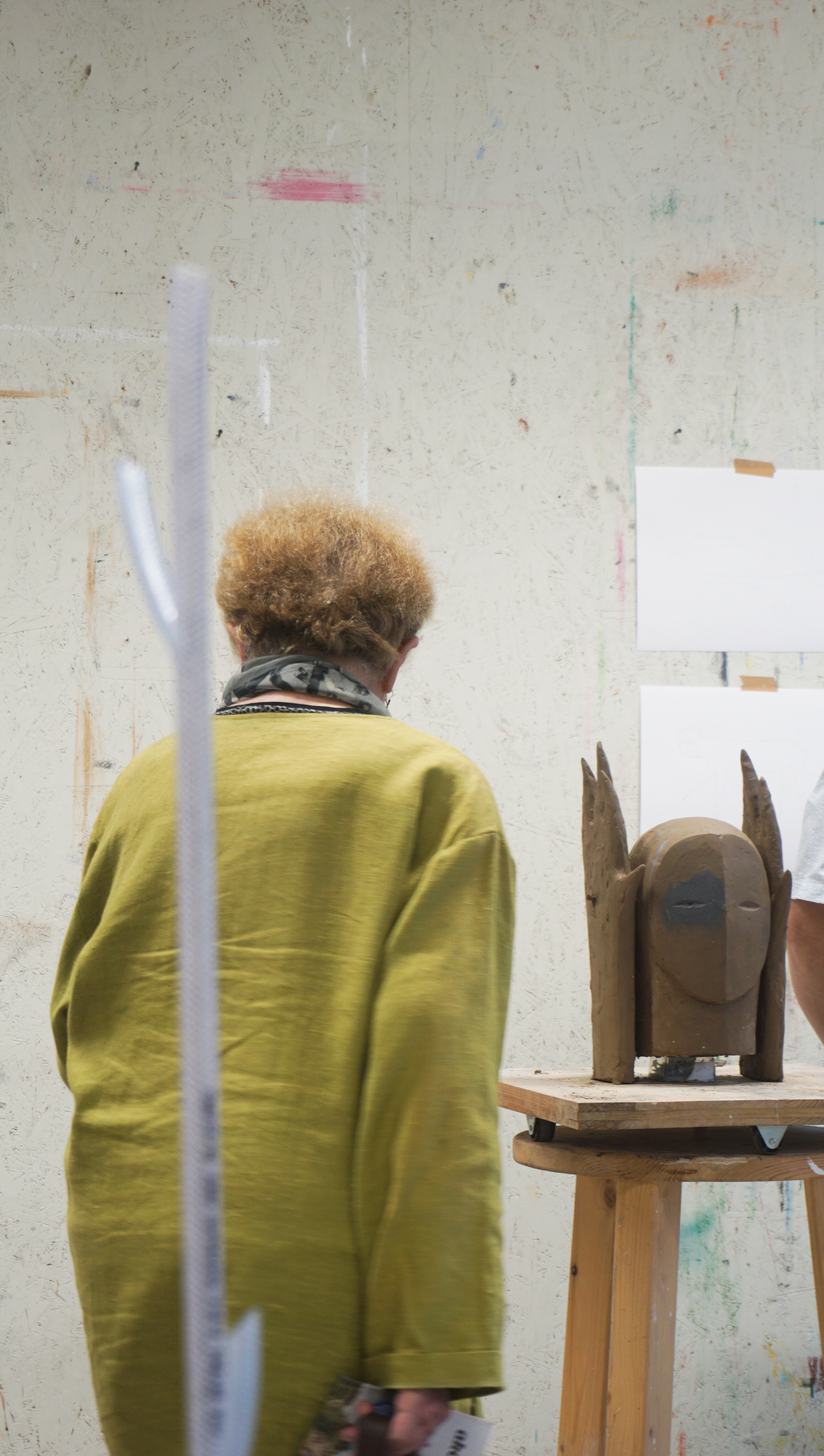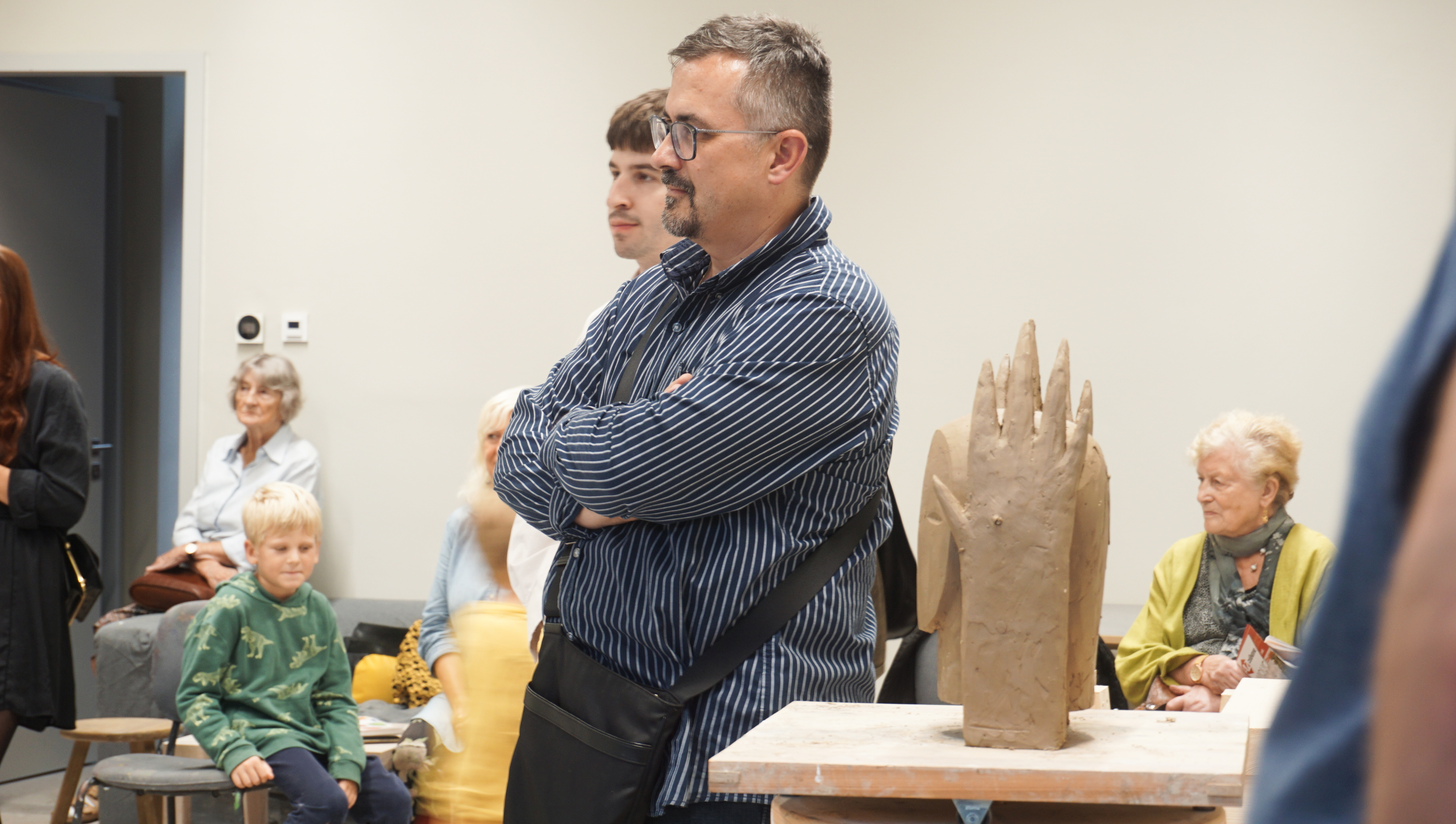
The exhibition of Sabina Knetlova at Prague's Karpuchina Gallery gives the impression, from the entrance, of a precisely balanced setting that requires no superfluous commentary. The space is clean, clear and slowed down. It is not cluttered with a multitude of objects, but structured by their placement, distances and the tension that arises between them. It is this "between" that becomes one of the key carriers of meaning - the silent field in which the relationship between body, space and viewer takes place. The very title of the exhibition suggests a shift. This Is No Longer The Place Where I Was does not speak of a departure in the dramatic sense, but of a subtle yet fundamental repositioning - a different alignment of body and mind in relation to each other and to the environment. 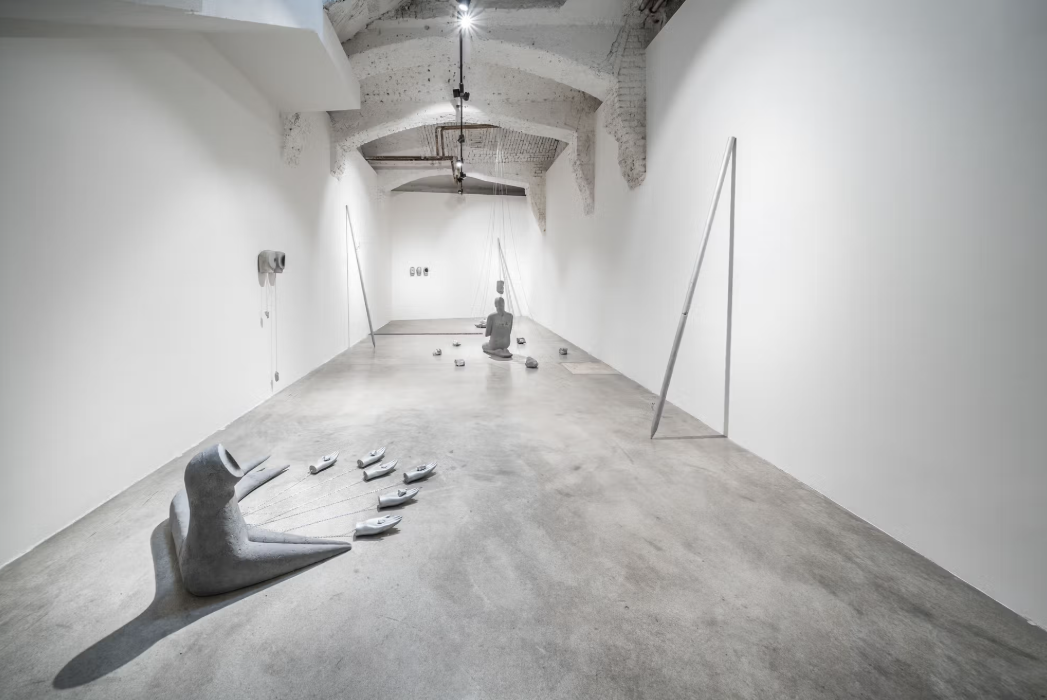
The installation works with slowness and clarity. Here the viewer is not led from one object to the next in a linear sequence, but rather moves through space, moving around the bodies, perceiving their scale and the relationships that emerge between them. Each object has its own space, but at the same time is clearly part of the whole. The gallery is not overwhelmed by meanings or forms - on the contrary, the space is slowed down and opened up, allowing for a focused perception of the details and the overall rhythm of the installation.
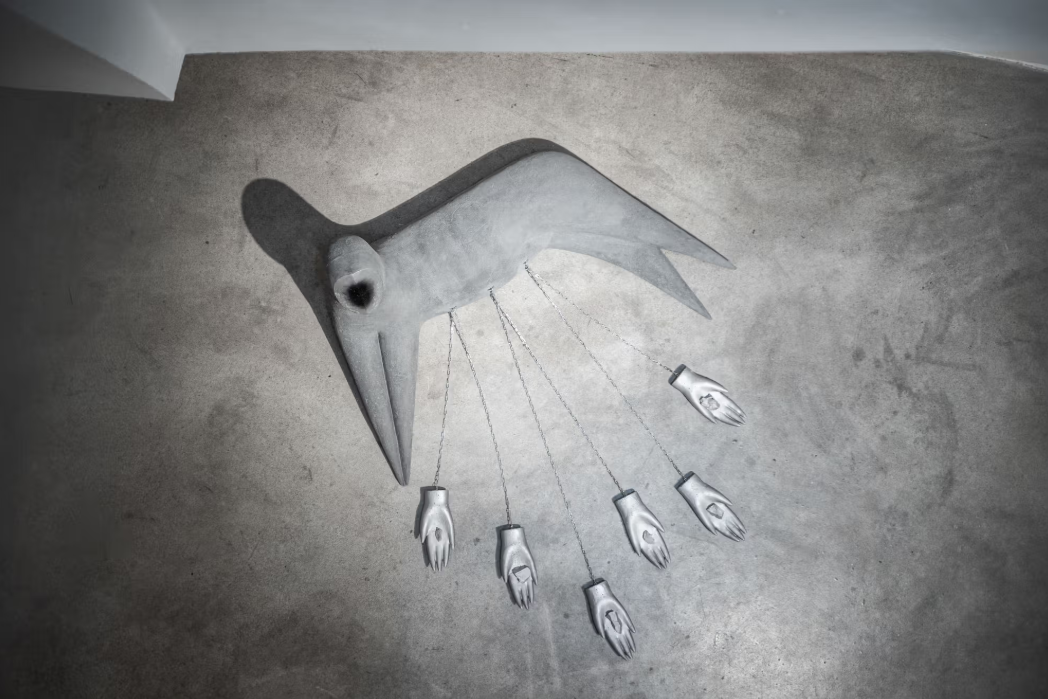
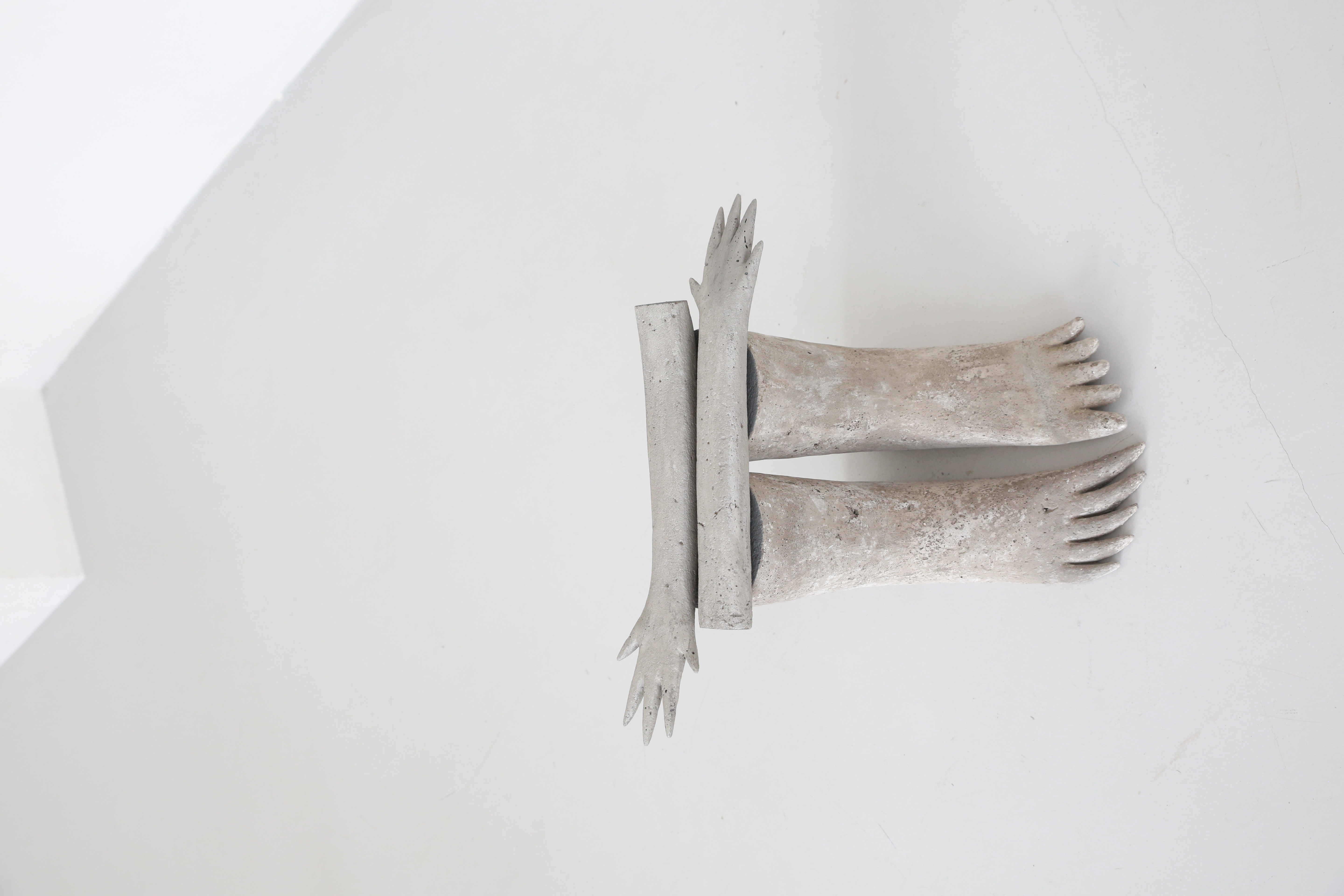
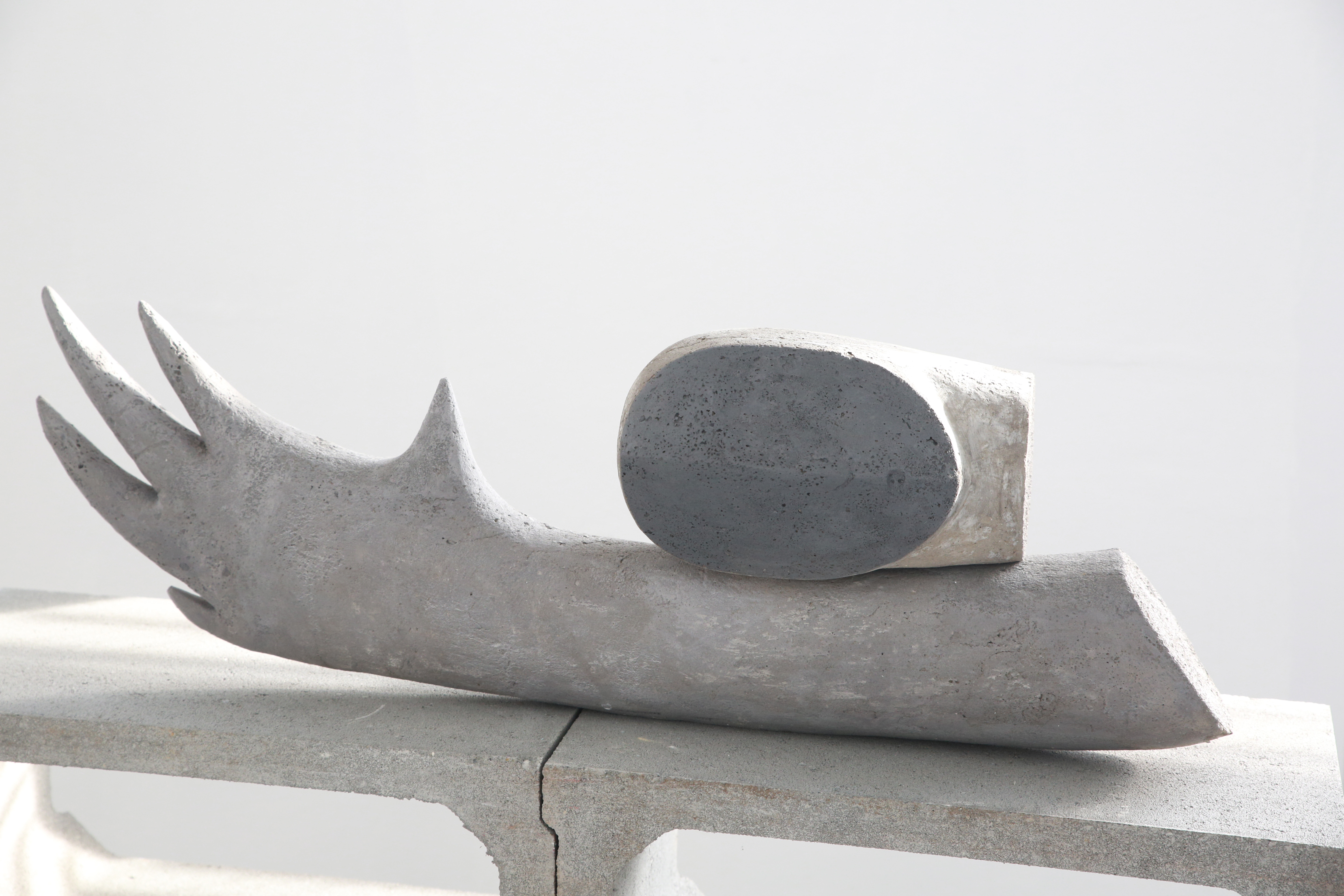
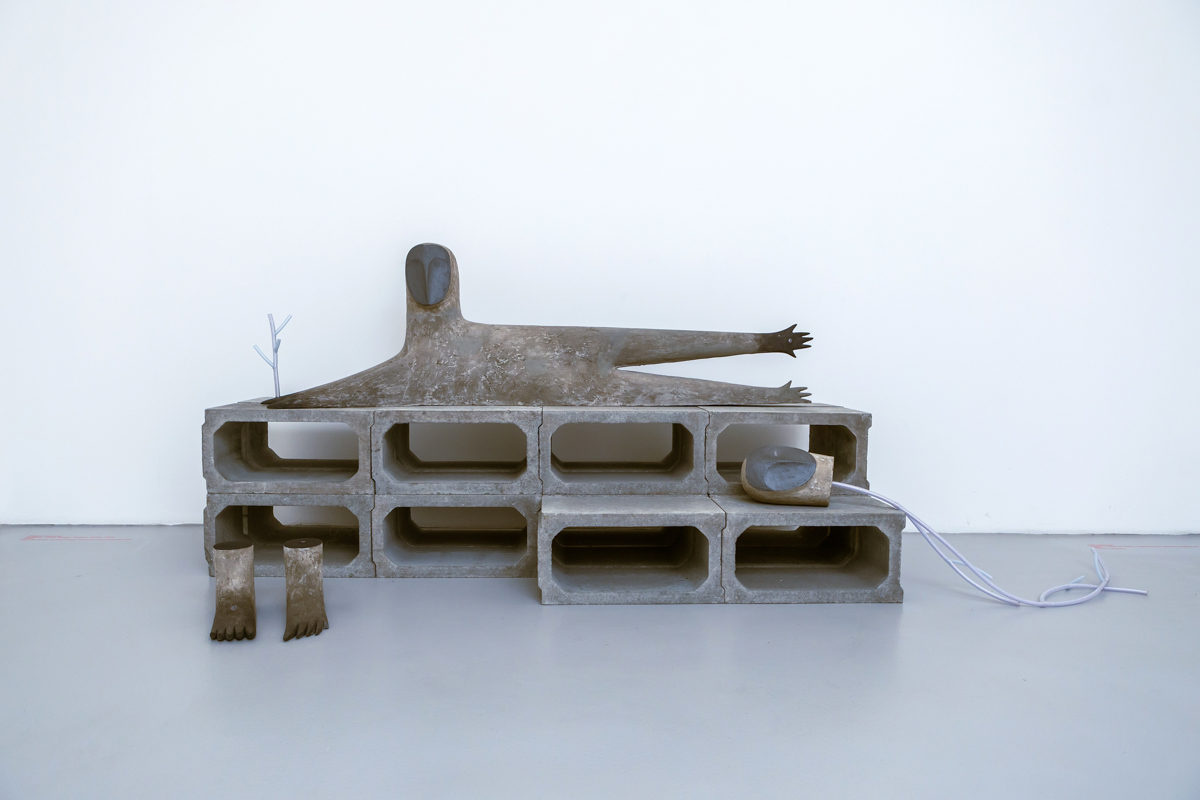
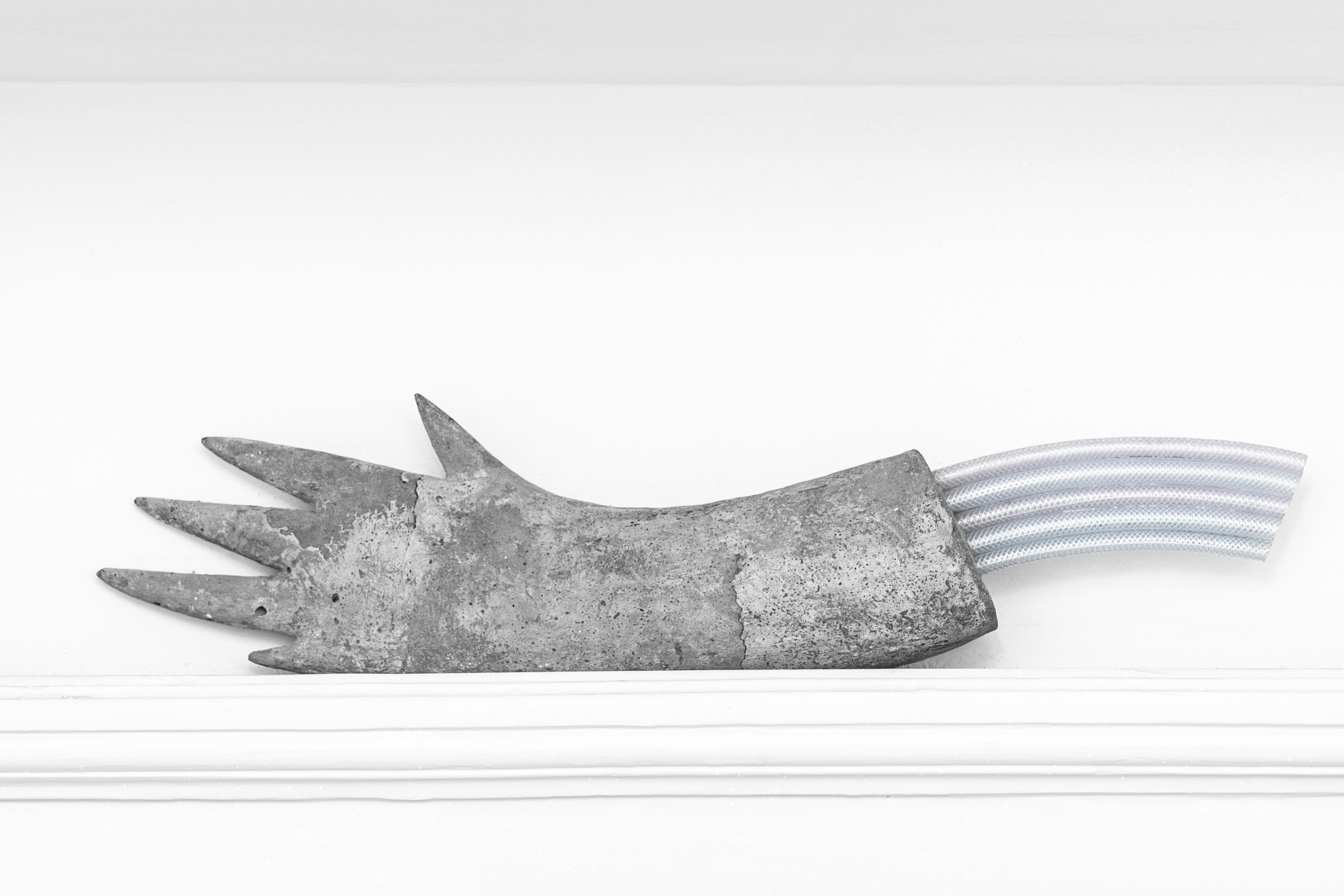
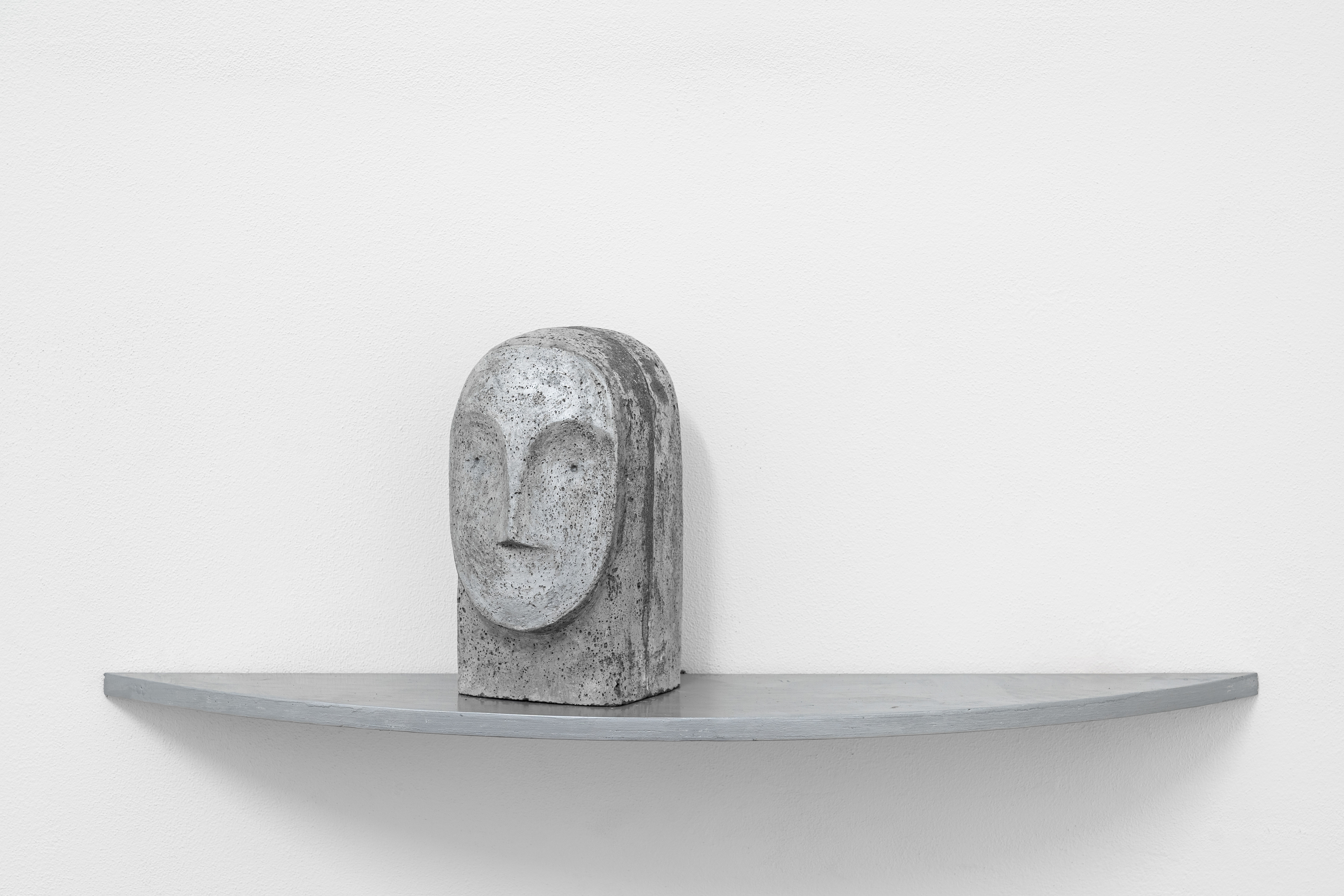
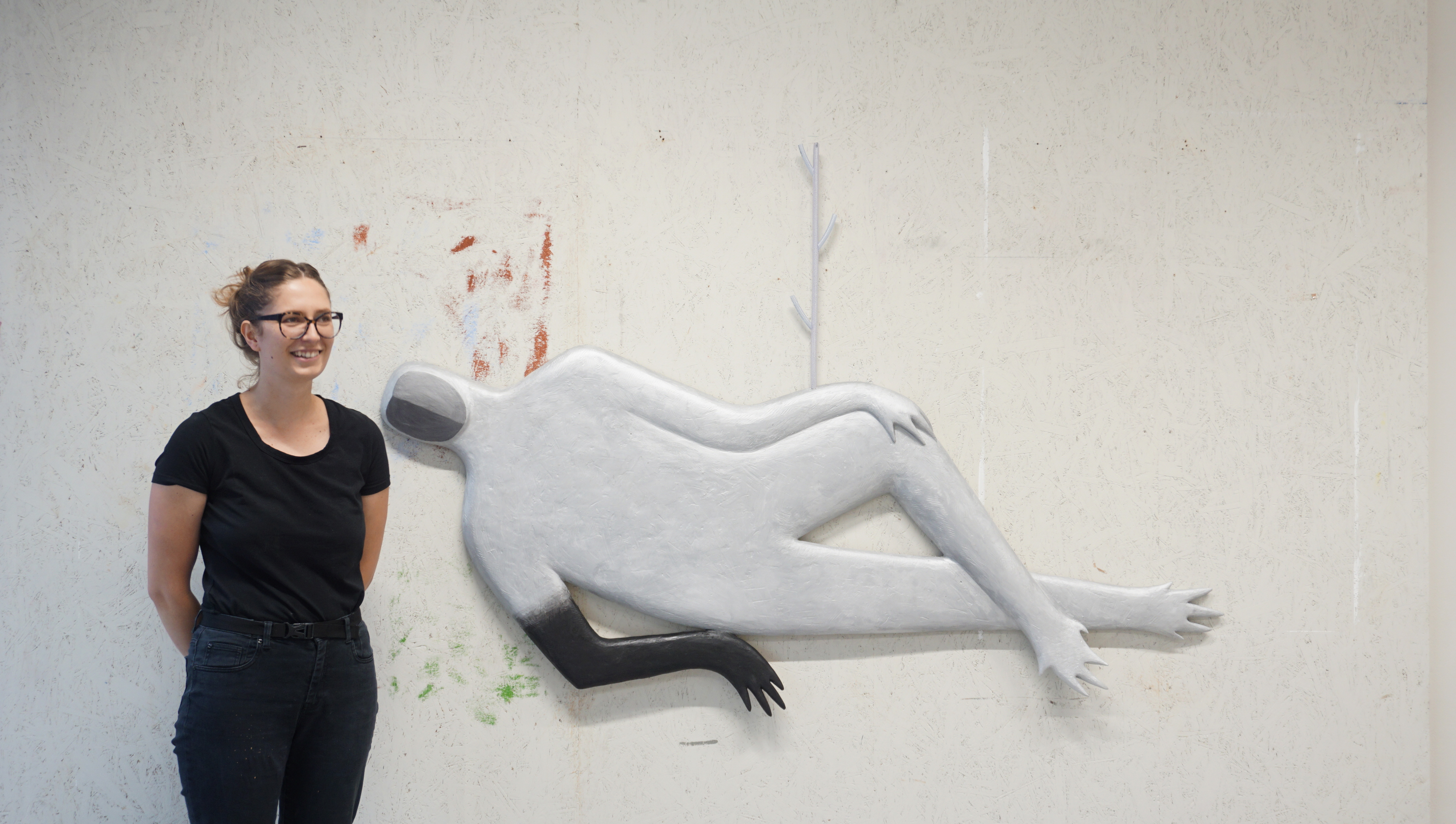
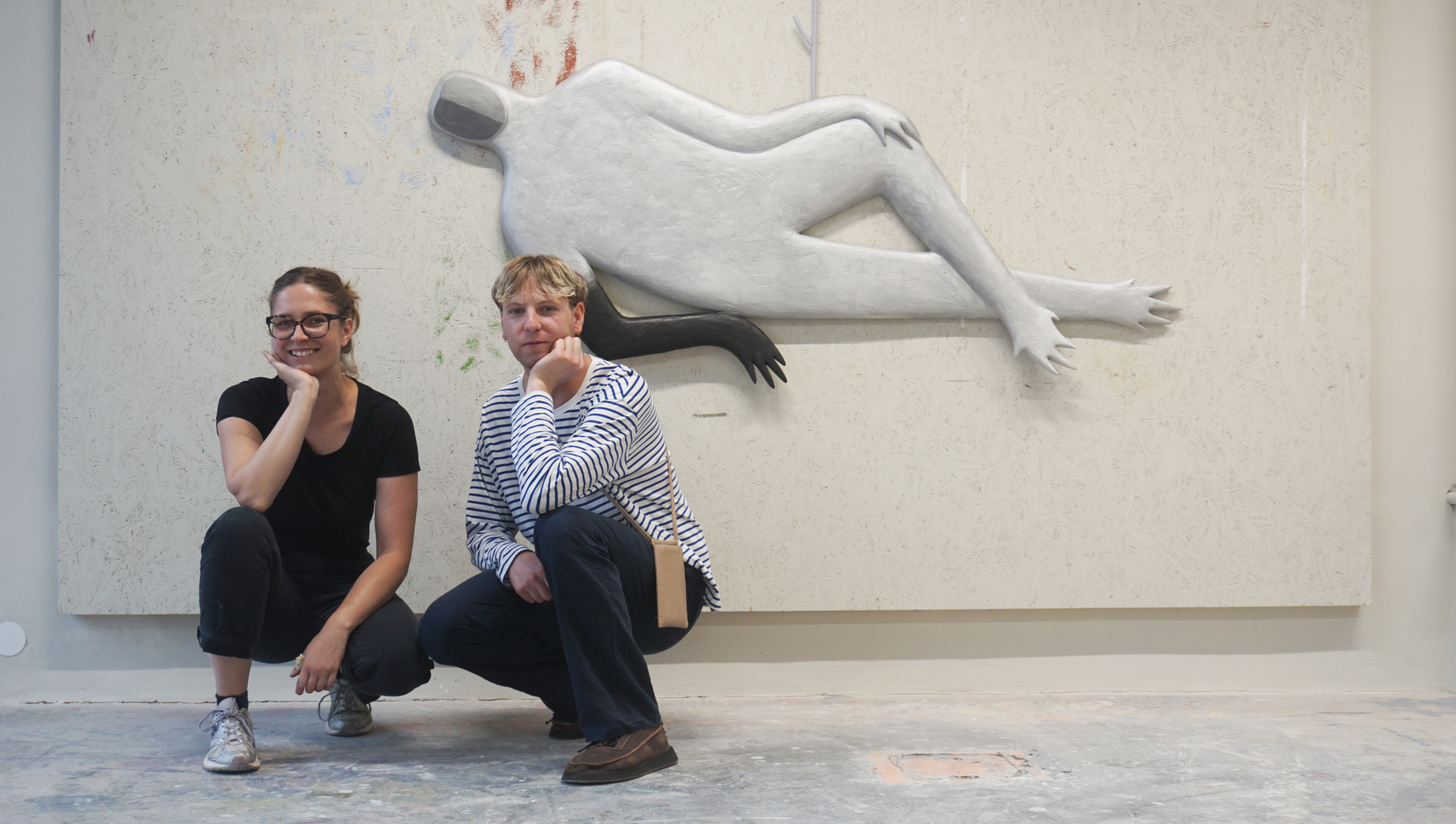
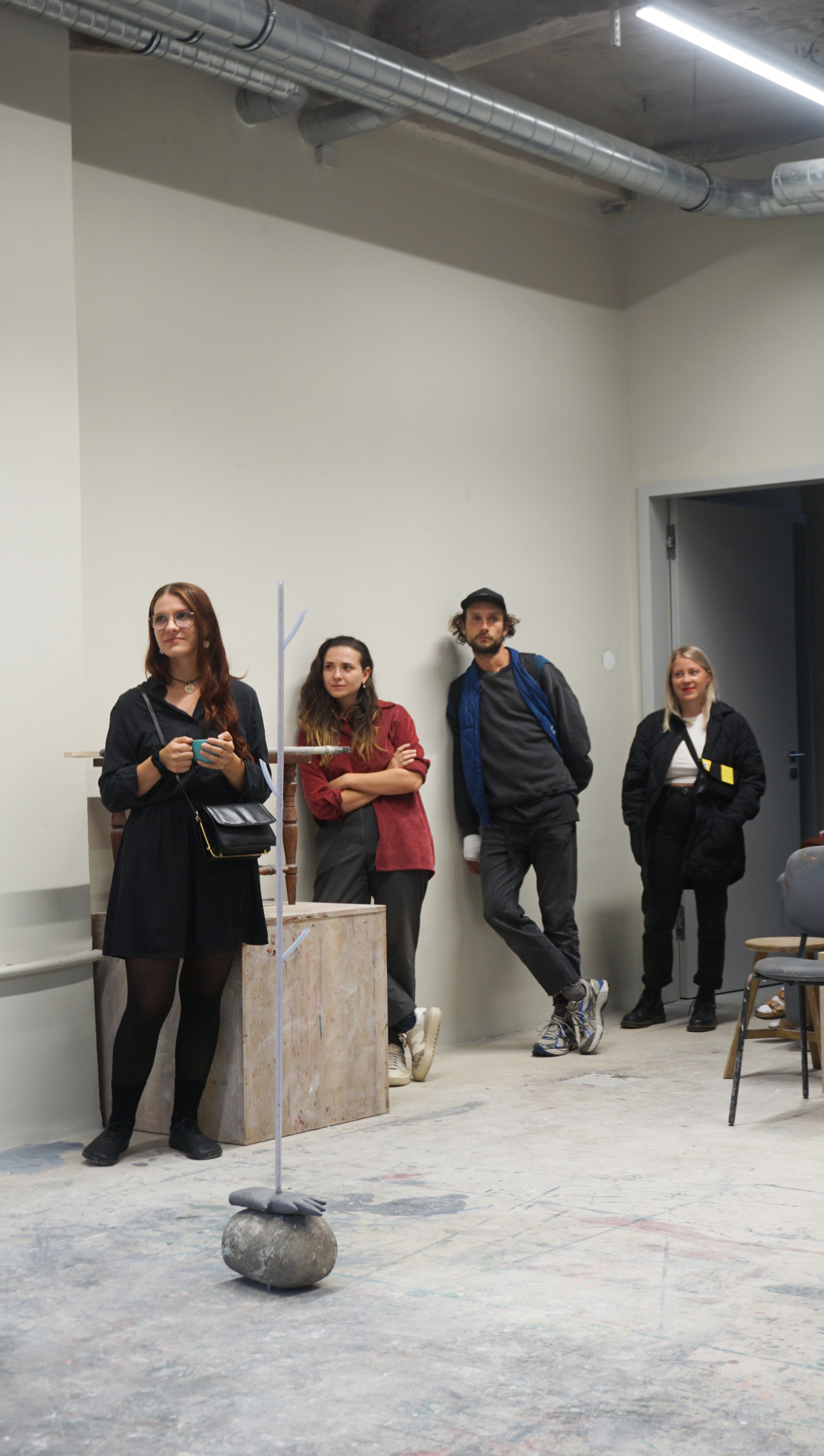
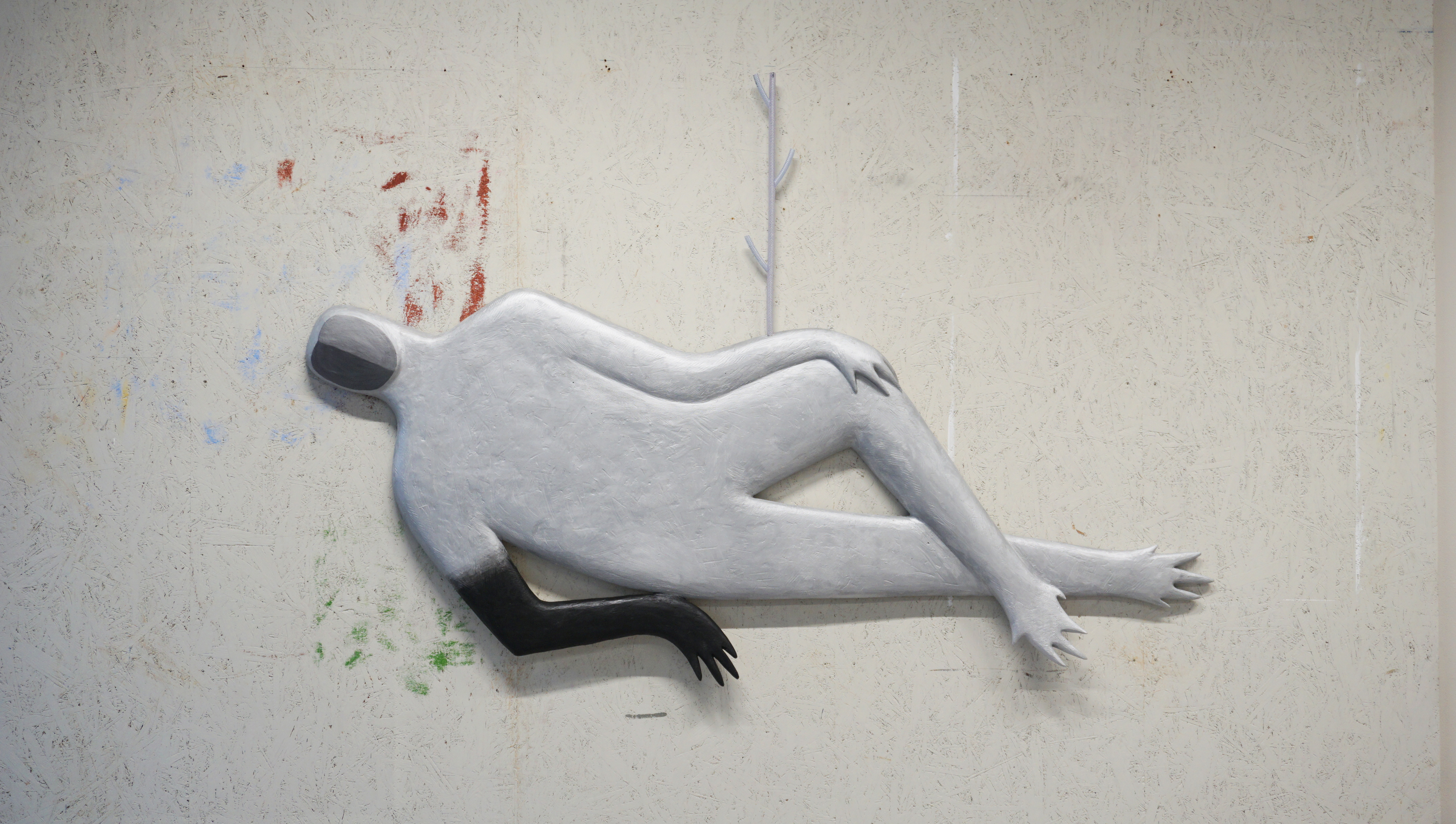
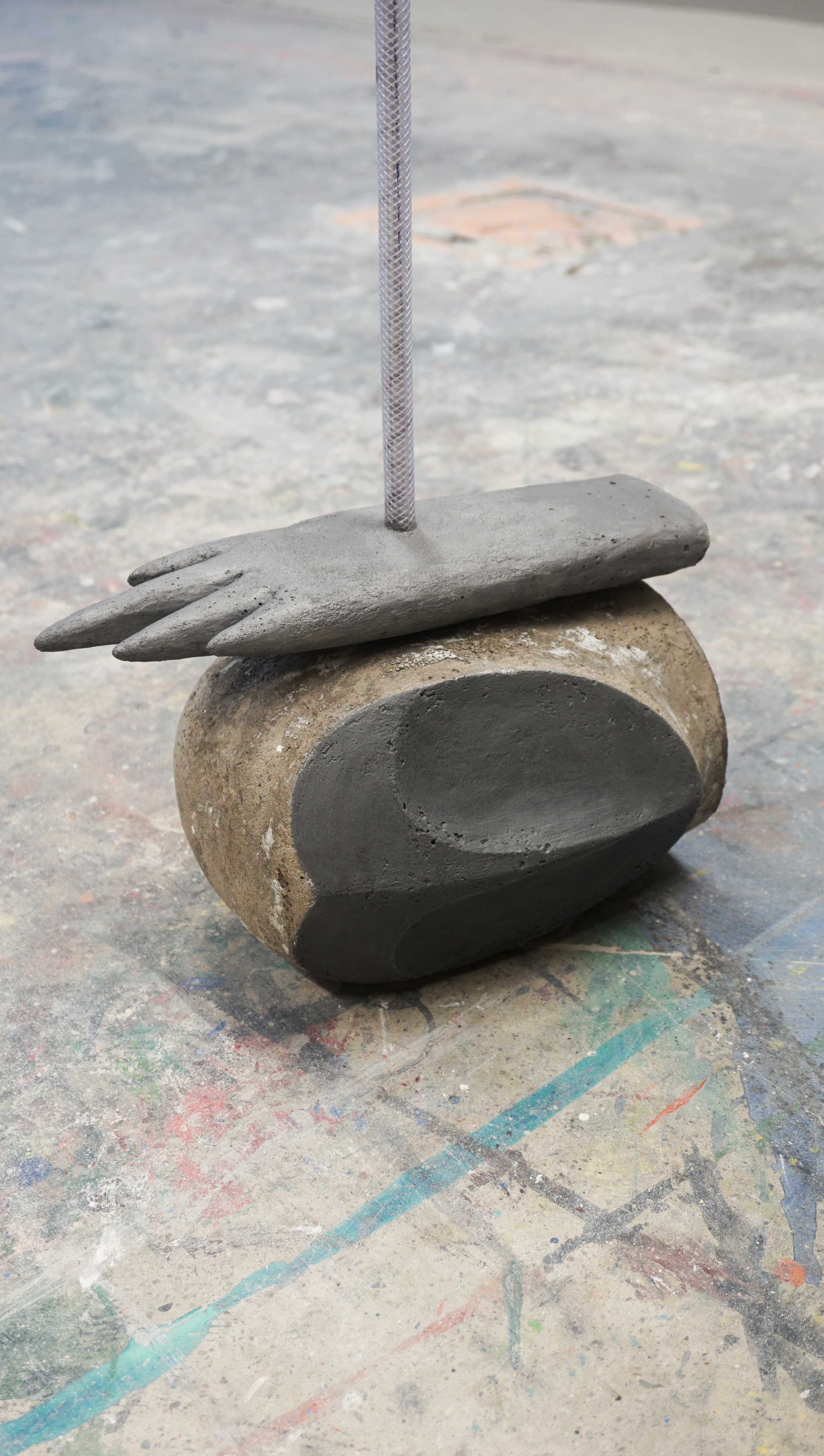
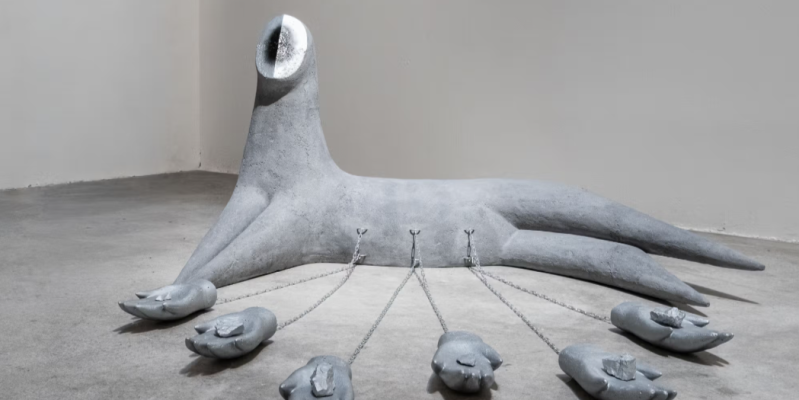
The focal point of the exhibition is a kneeling figure made of concrete, suspended in a network of thin chains that connect it to the stones spread across the floor. The figure's face is obscured and her hands are brought to her body in a gesture that can be read as protection, concentration and inner dialogue. The chains here do not act as traditional shackles but as bonds: delicate, taut lines of relationship that anchor the body in space while allowing it to exist. The body is neither free nor shackled - it is in relationship, in constant tension between stability and movement. The reduction of the face to a dark opening shifts the identity of the figure beyond concrete features. Expression is not transmitted through the face, but through gesture. The hands placed against the body function as a protective element, but also as a gesture of listening - to oneself and to the other. This motif appears in various variations in other parts of the installation. The body is gradually fragmented: separate heads with dark, burnt holes appear, isolated hands placed on the ground, torsos stretched horizontally, from which chains ending in palms emerge. Each of these fragments acts independently, but always remains legible as part of a larger, collective body that exists only through its parts and their interconnections.
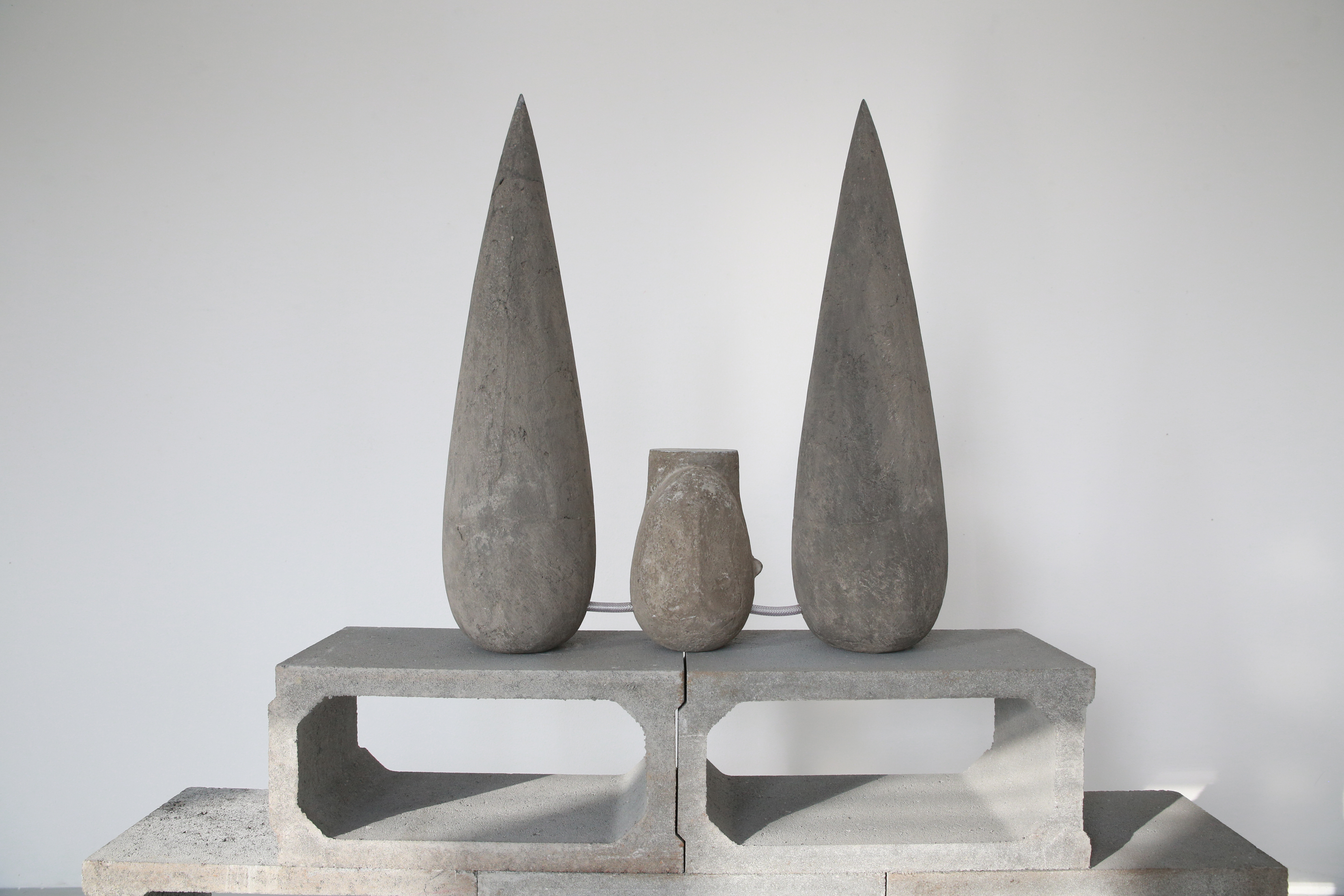
Materials play a crucial role in Knetlová’s work. Although concrete is heavy, solid and at first sight inflexible, in her rendering it appears surprisingly calm and light. The surfaces are neither aggressive nor raw, but subdued, at times even meditative. Here, concrete does not become a symbol of brutality or heaviness, but a carrier of calm and inner energy. In combination with metal, chains and stones, a tension is created between stability and fragility, between solidity and the possibility of movement. The installation is airy and leaves the viewer with plenty of space - physical and mental - to experience it for themselves.
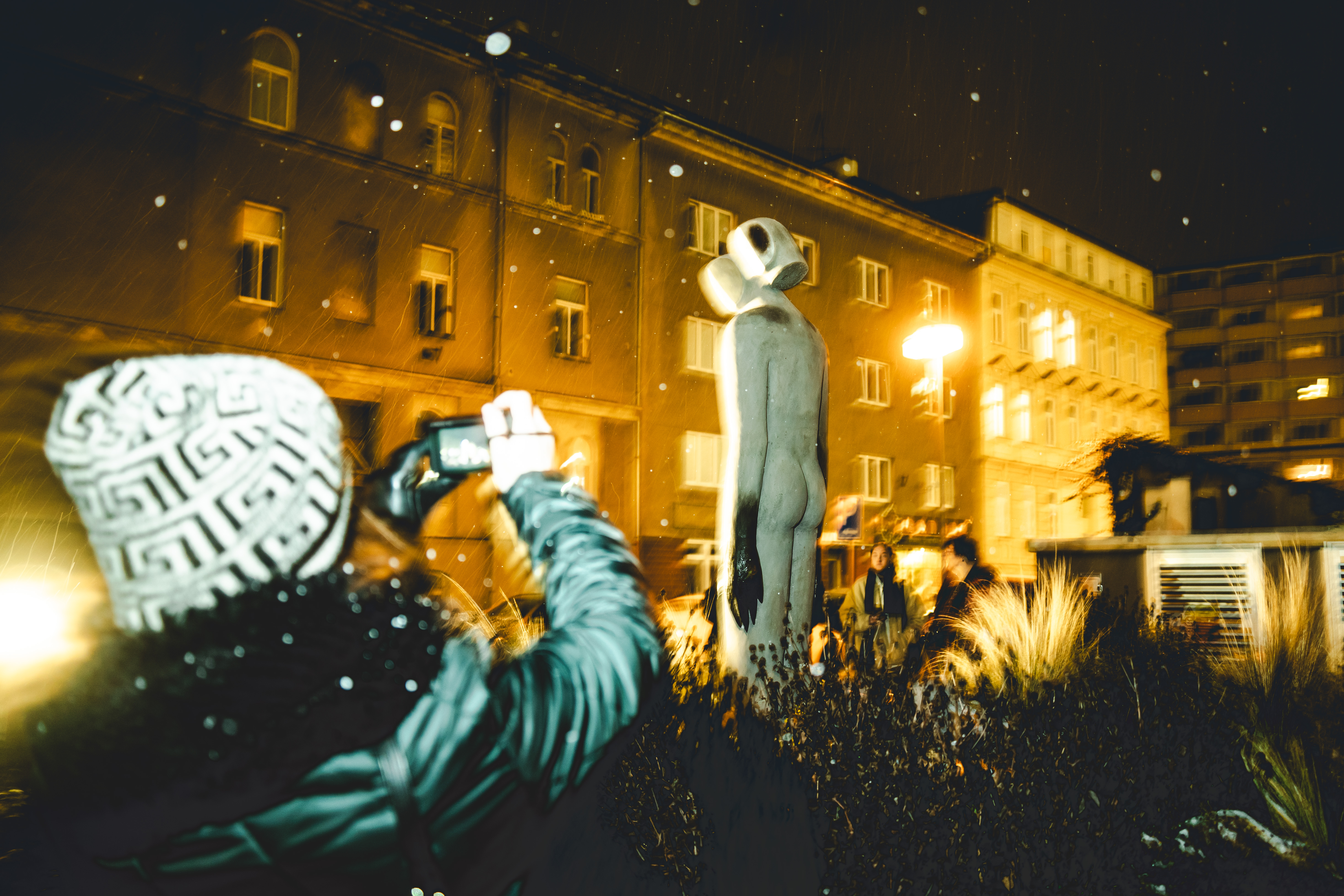
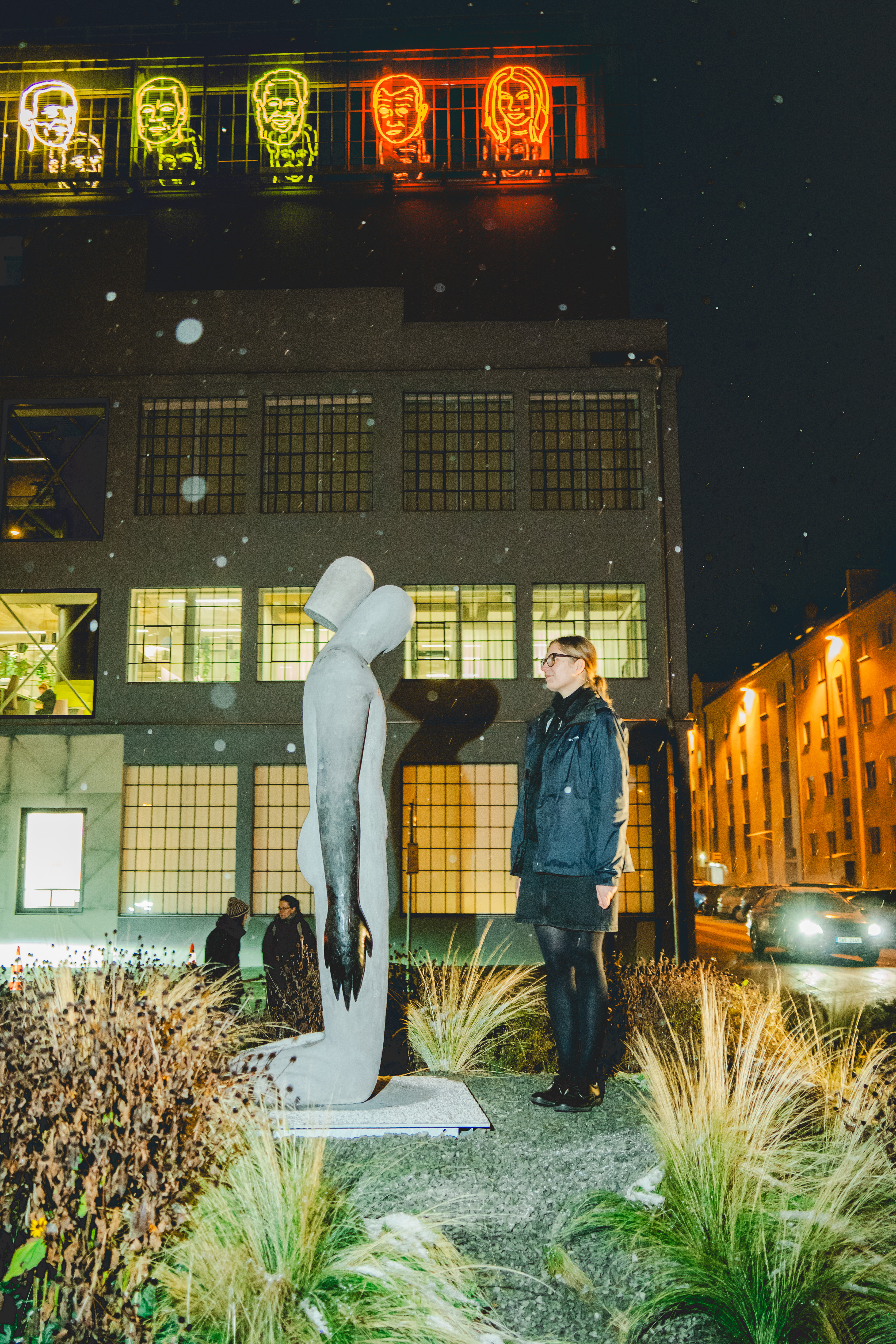
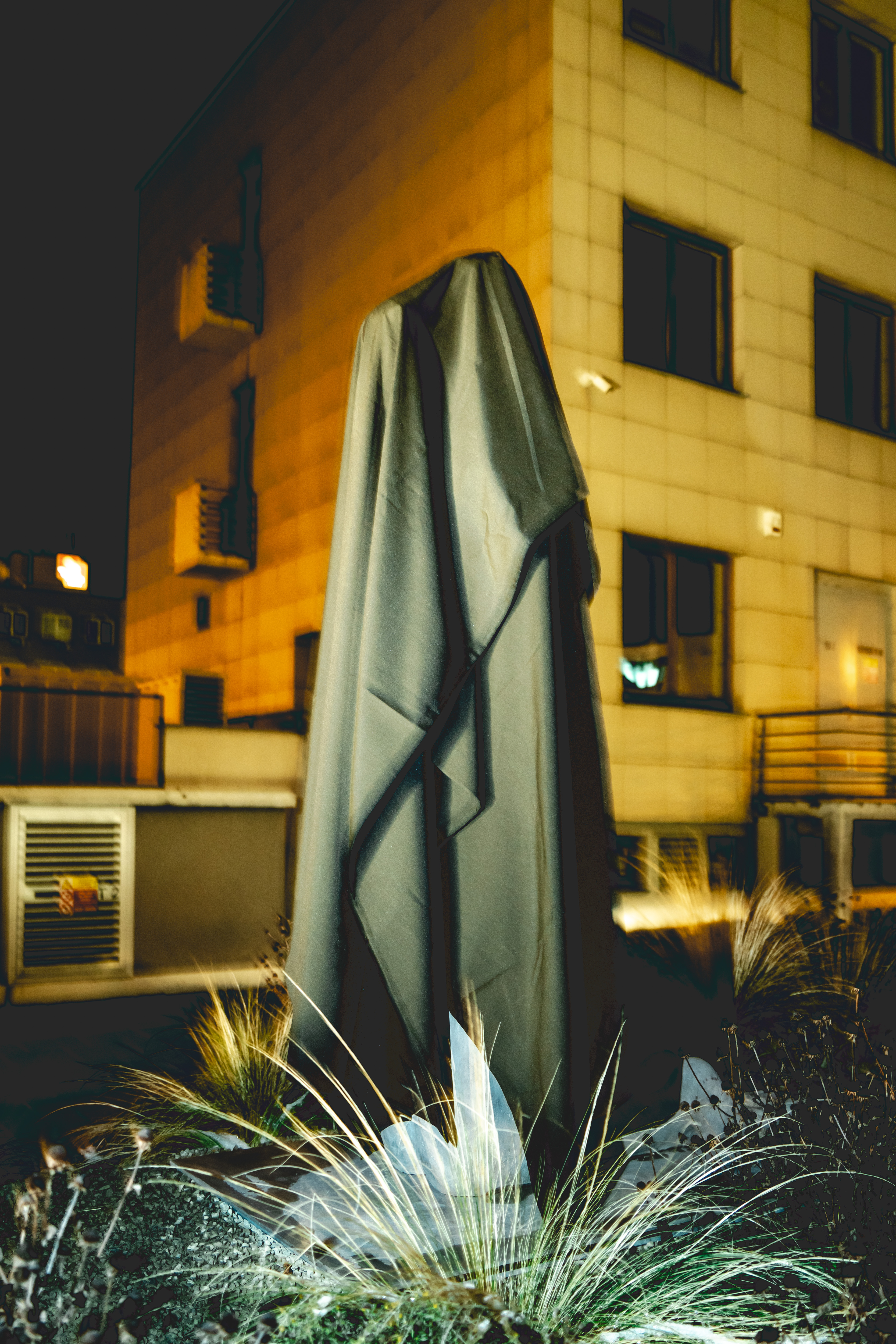
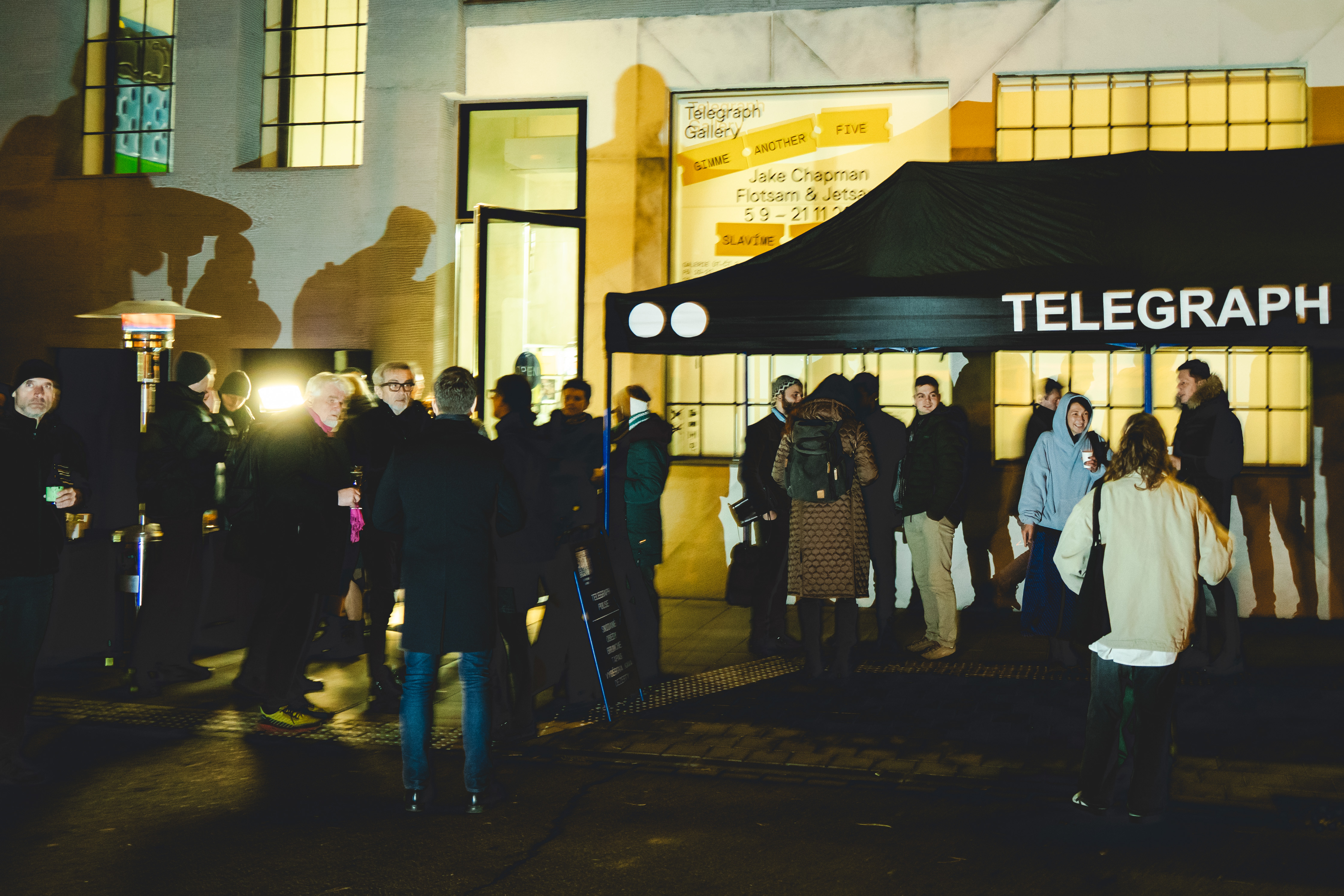
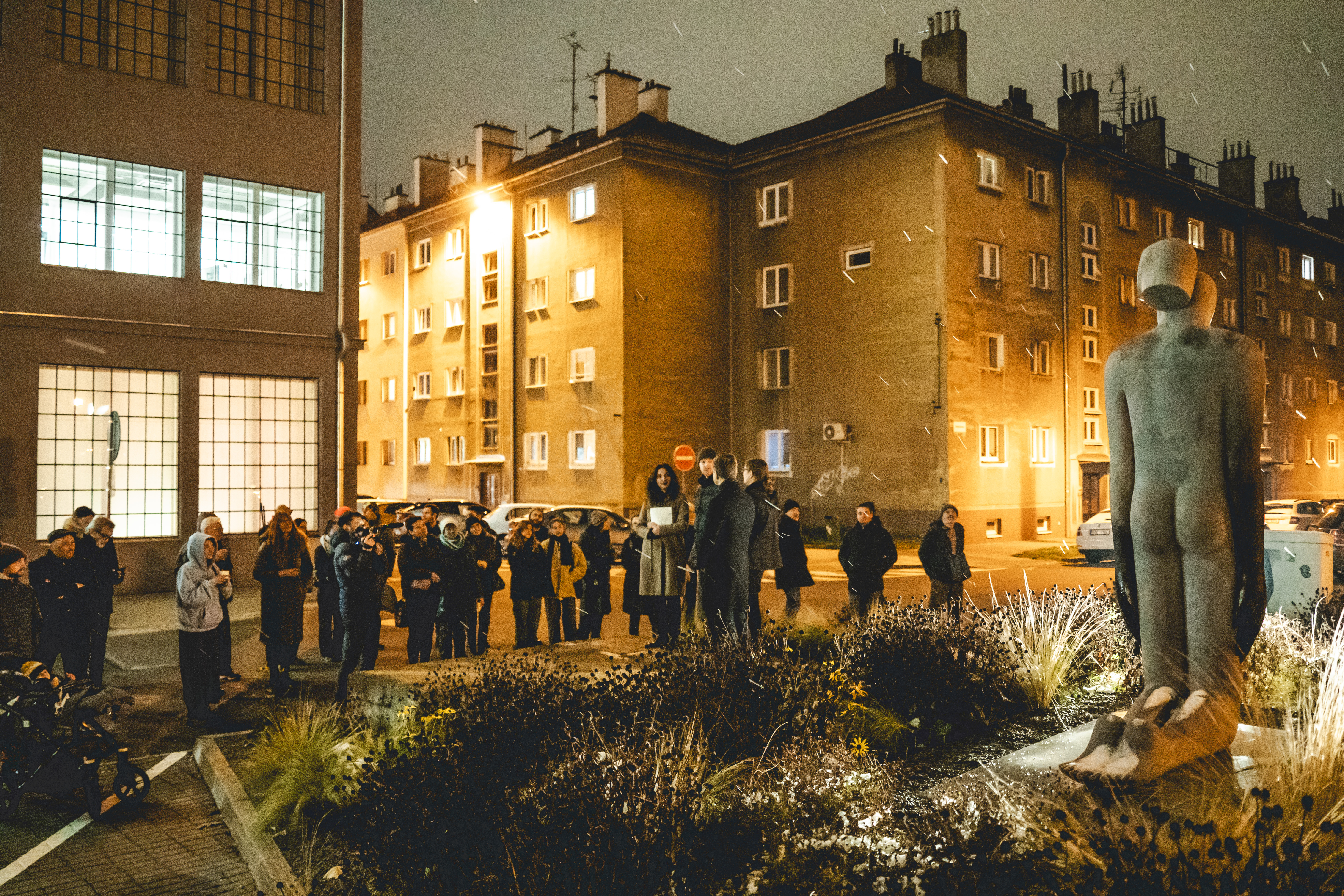
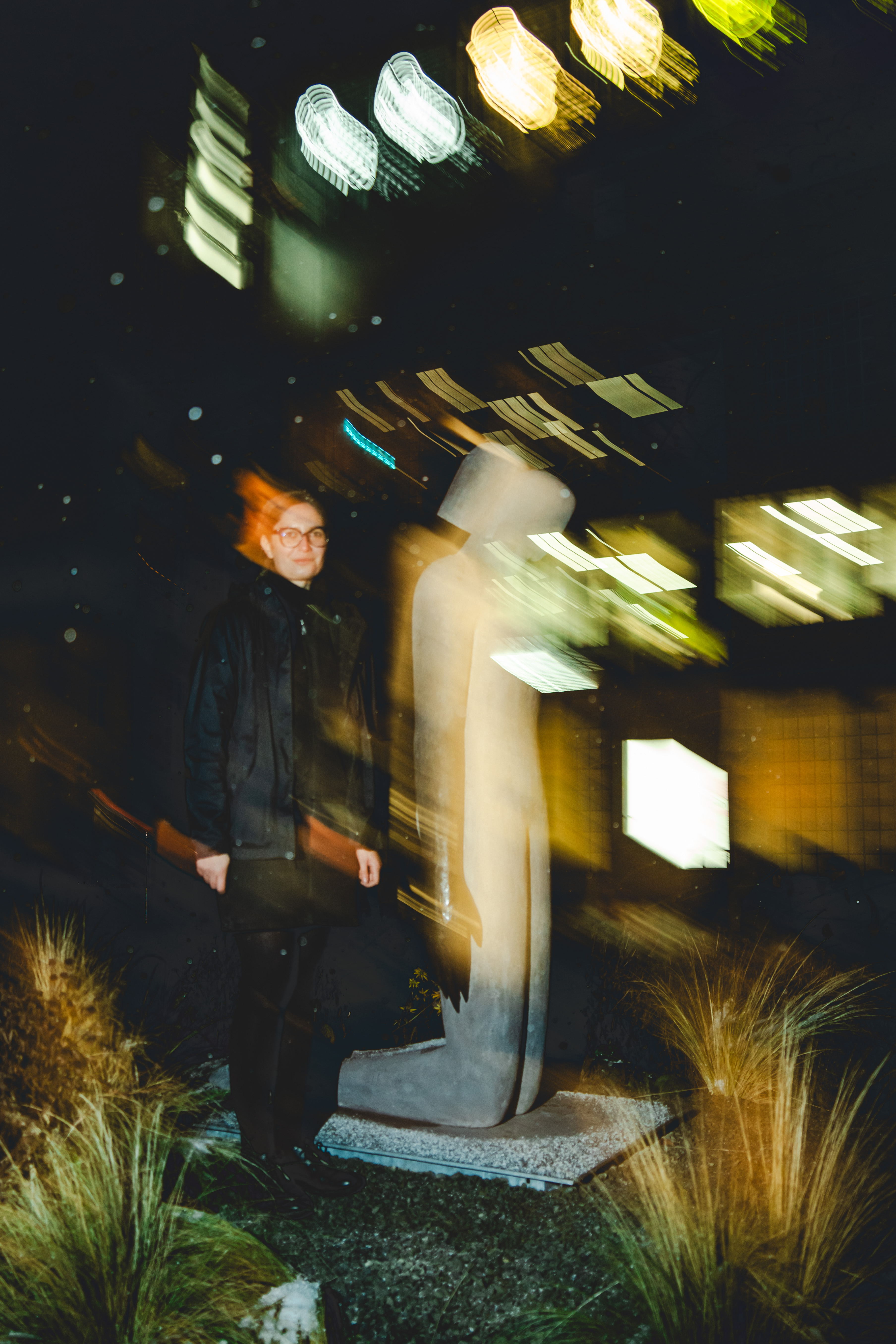
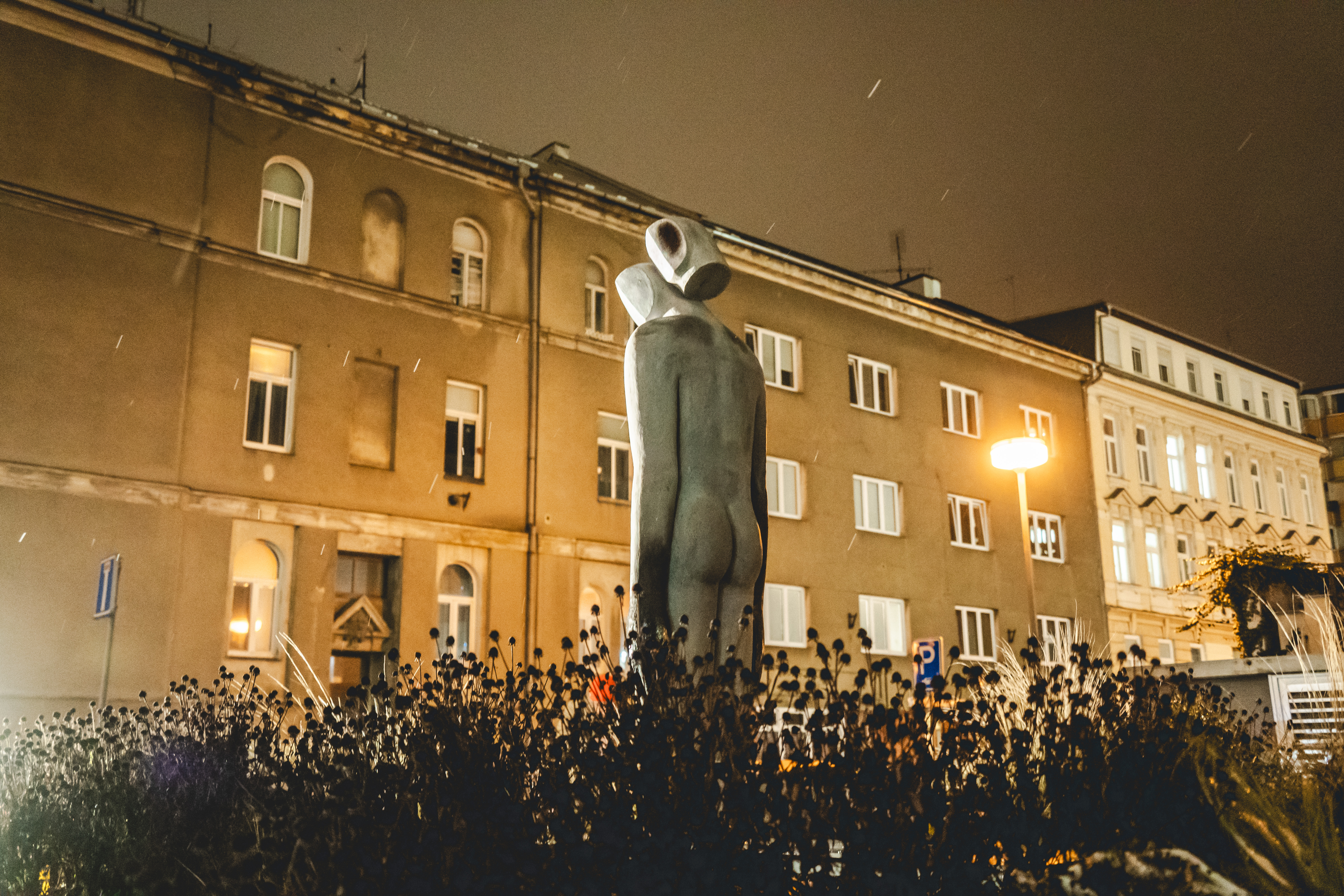
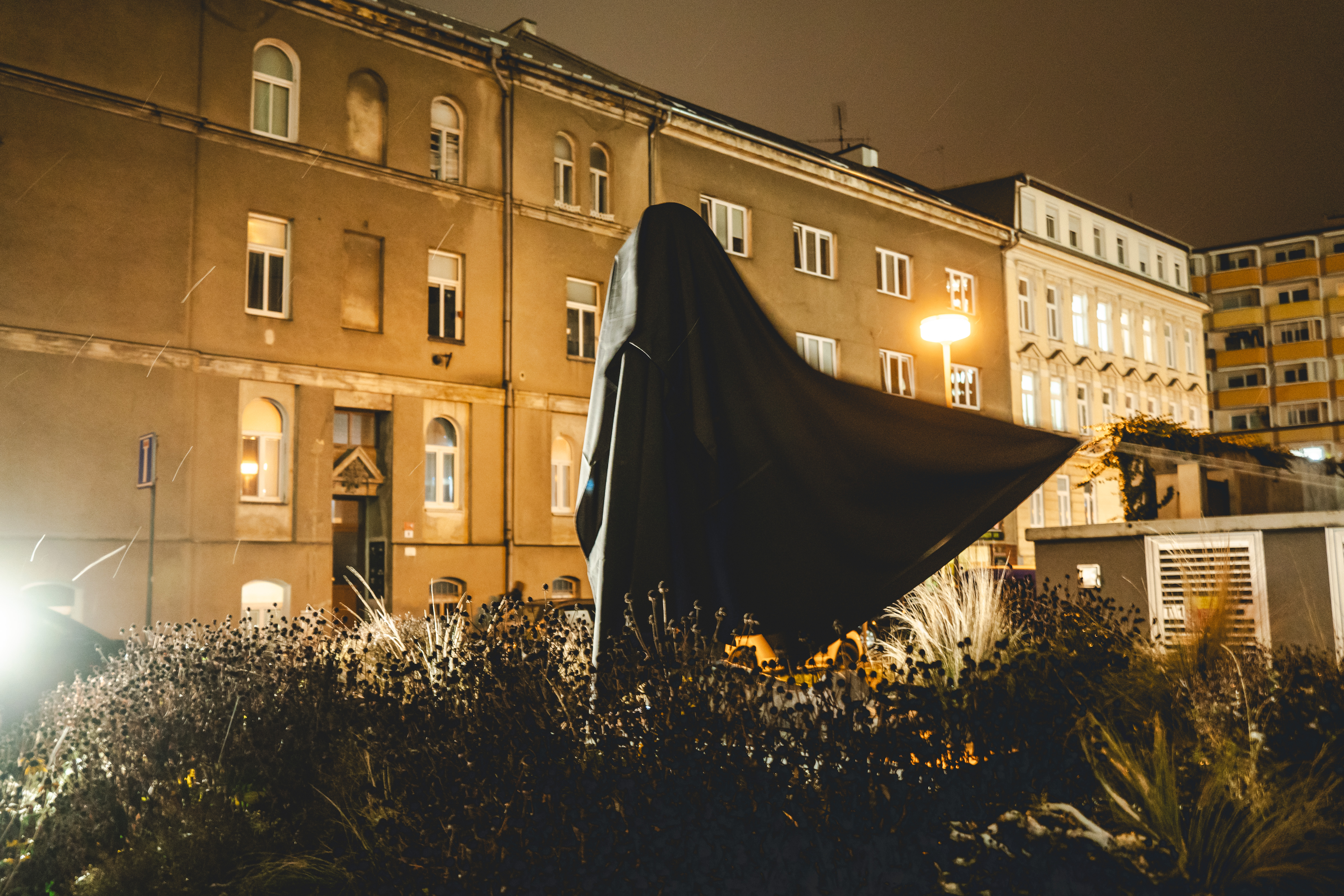
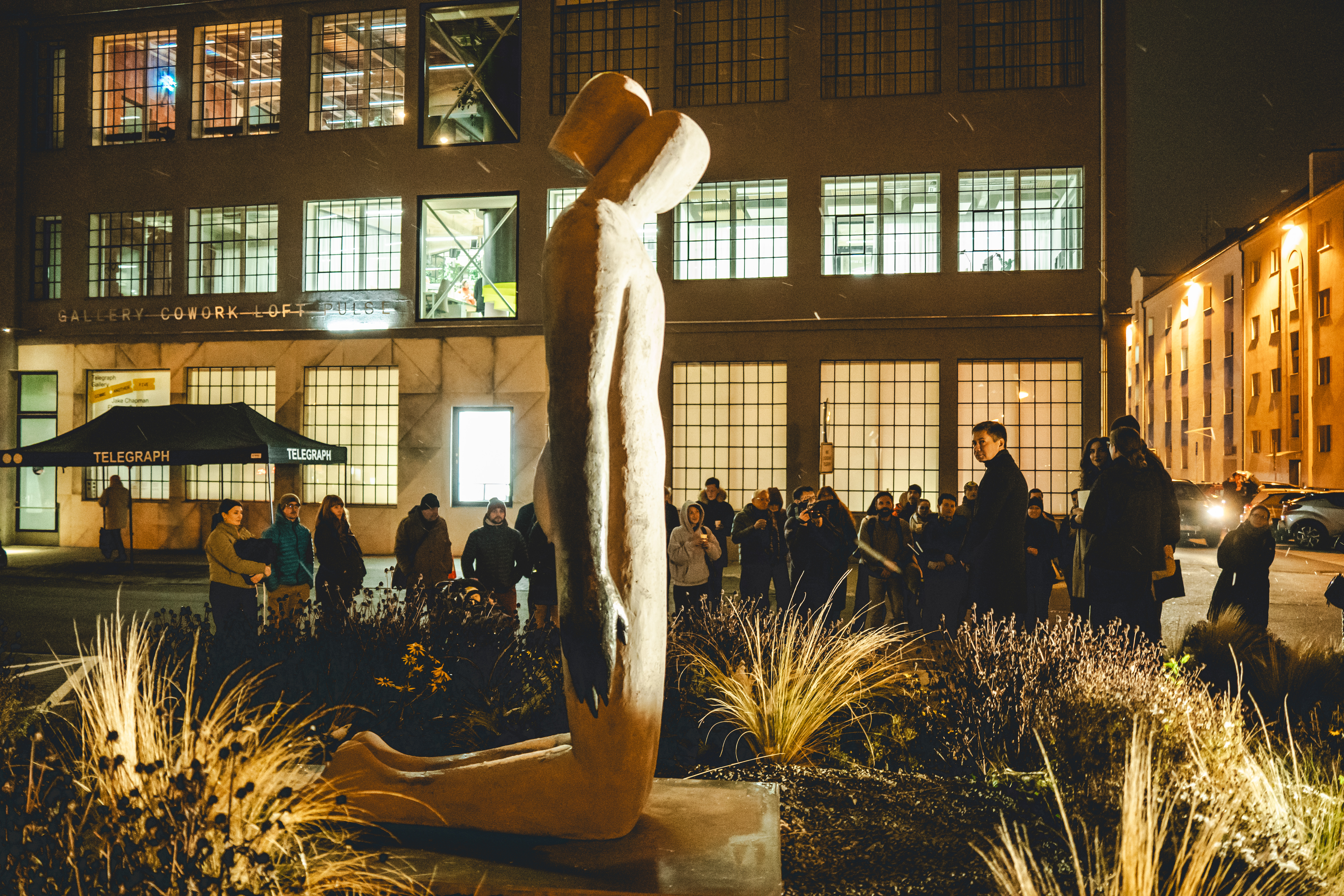
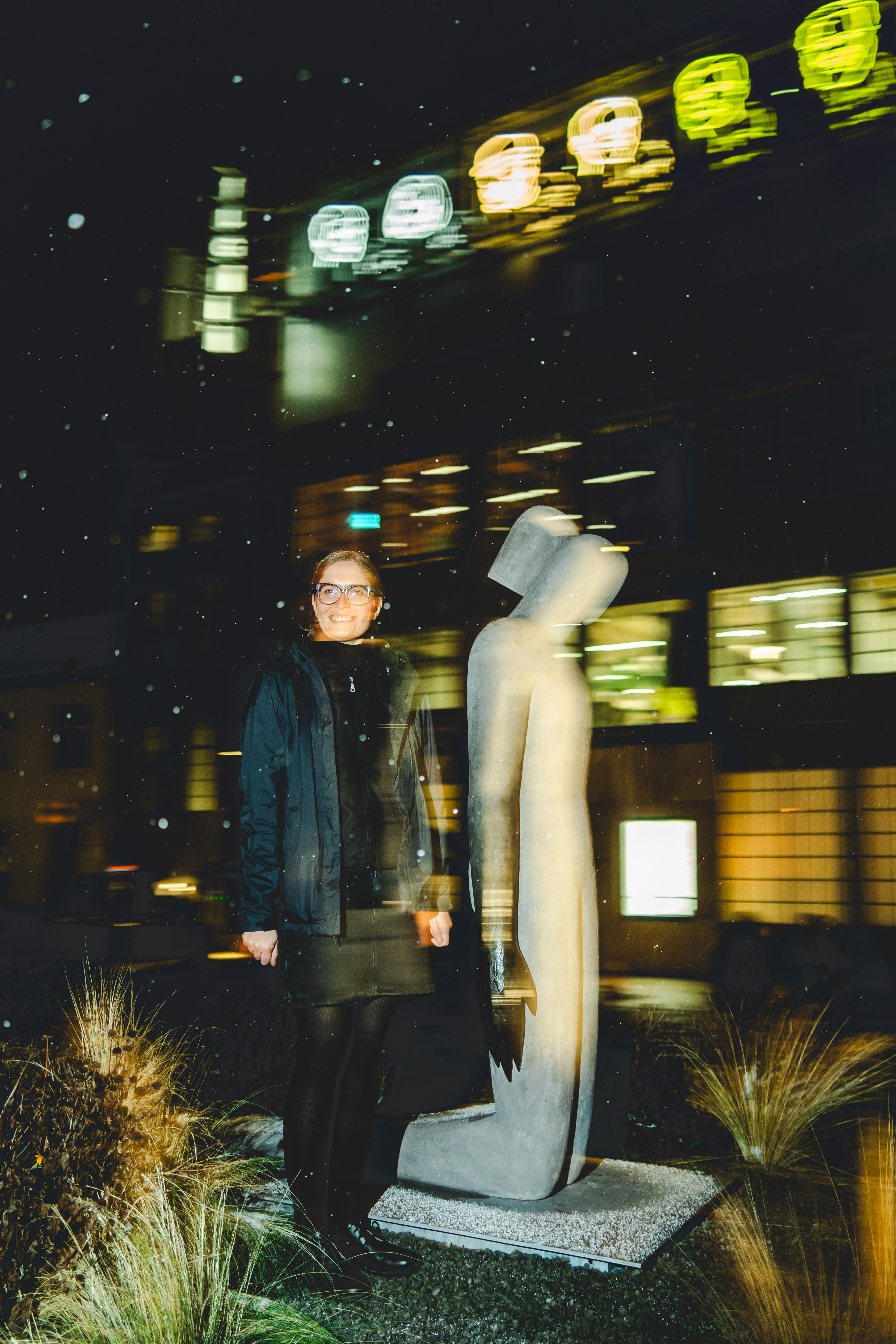
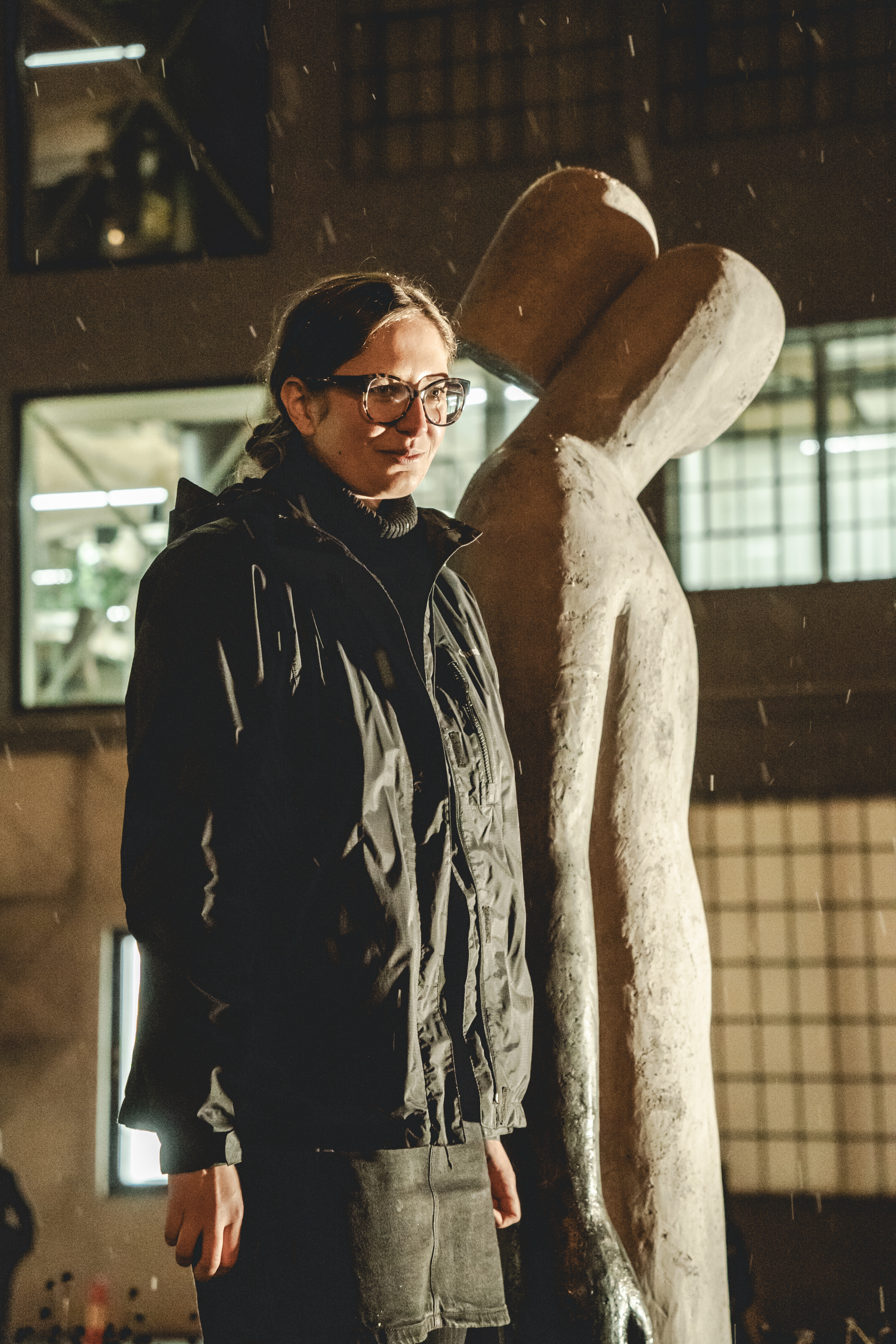
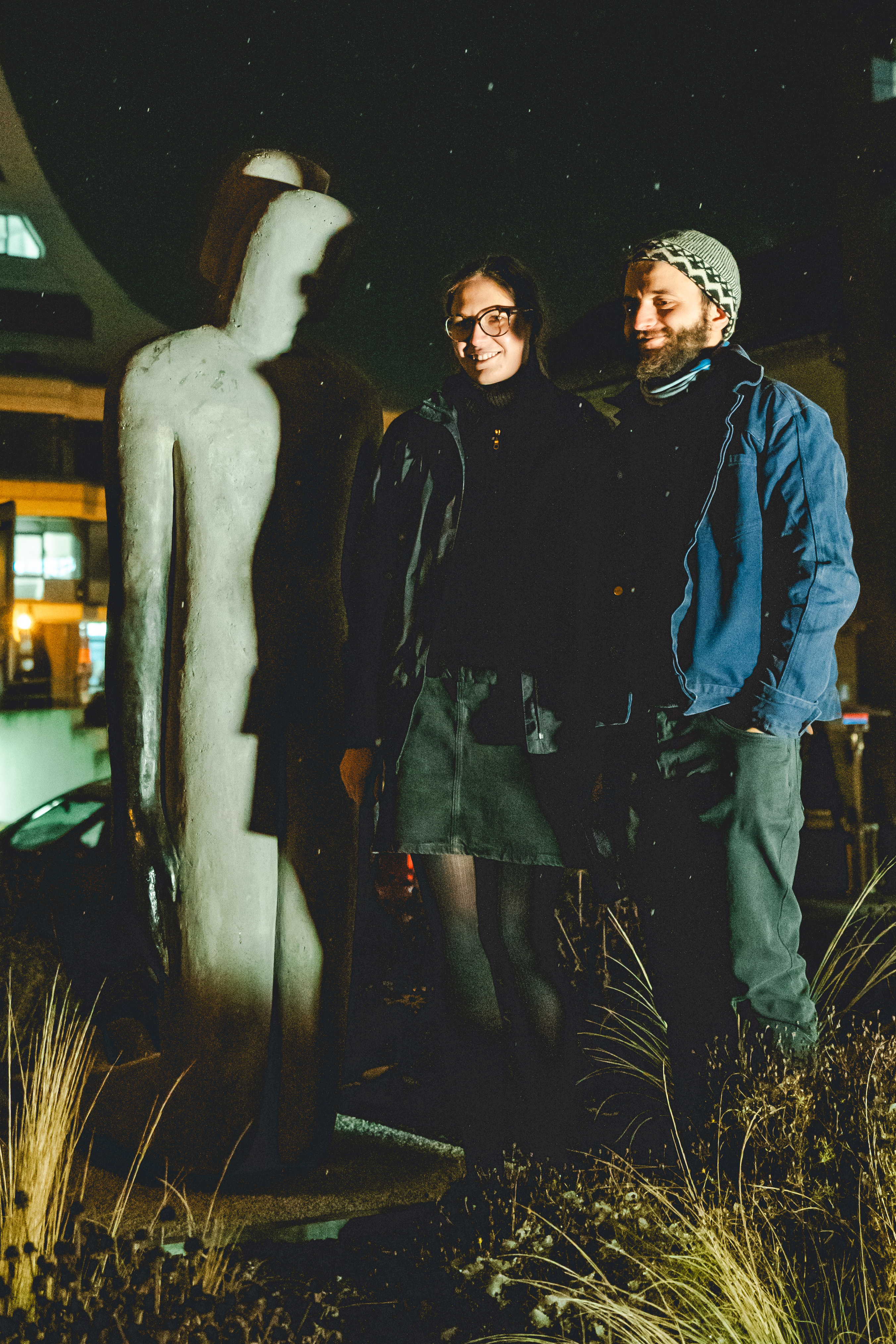
Sabina Knetlová has previously held a residency at Telegraph Gallery and one of her sculpture also stands in front of the Telegraph building. This experience does not enter the exhibition as a biographical note, but rather as a natural awareness that her figures have a "life" outside the gallery, in the public space.