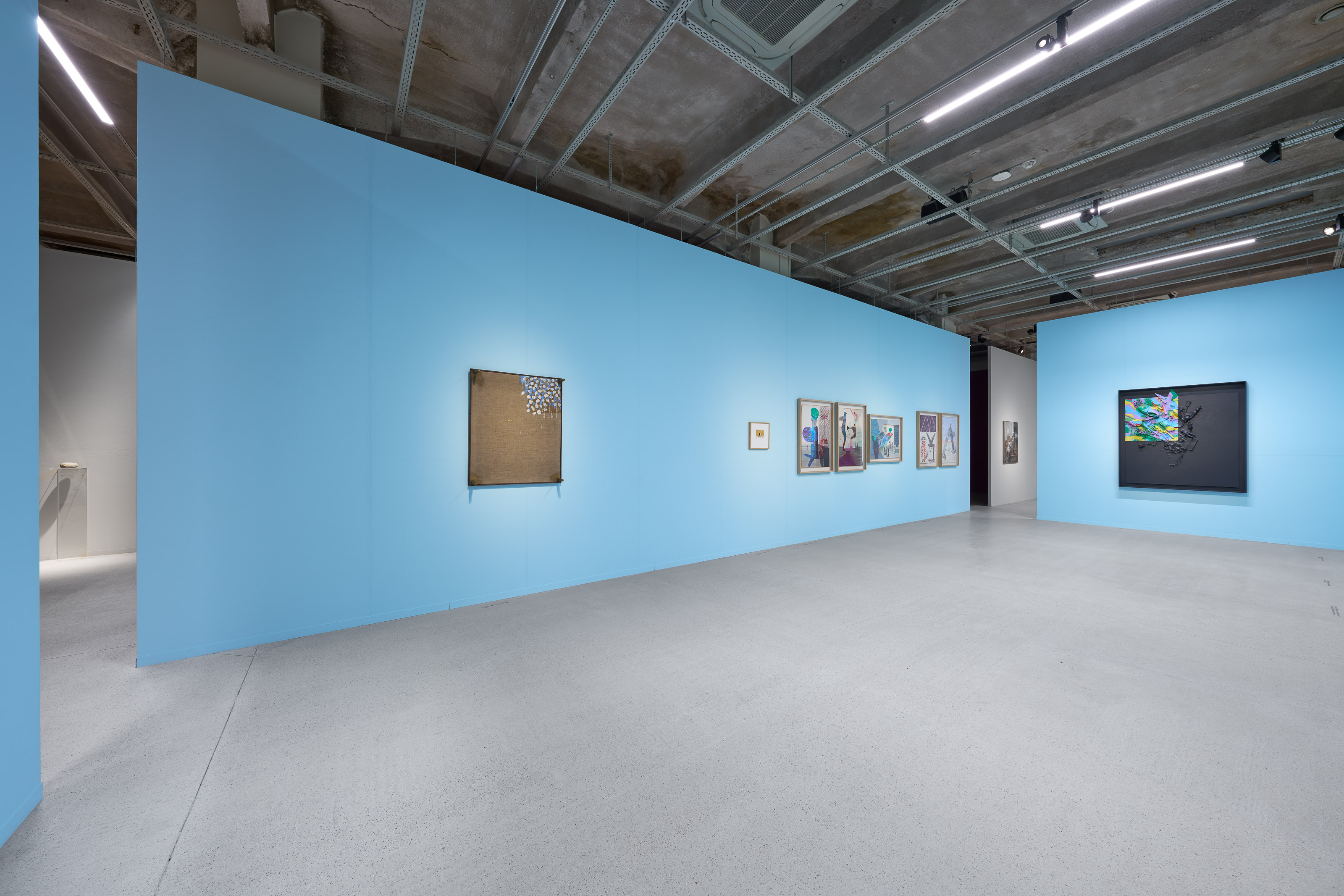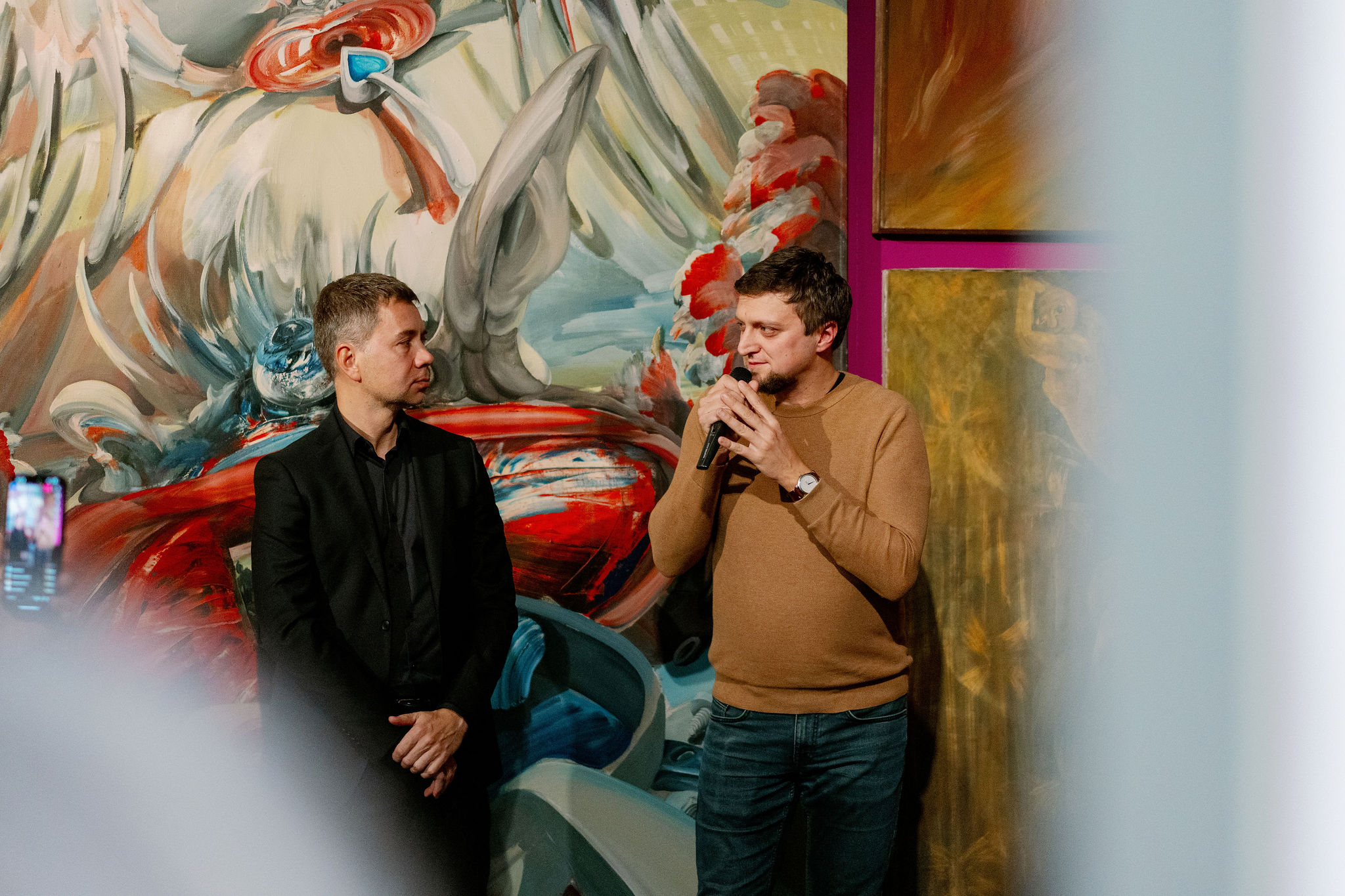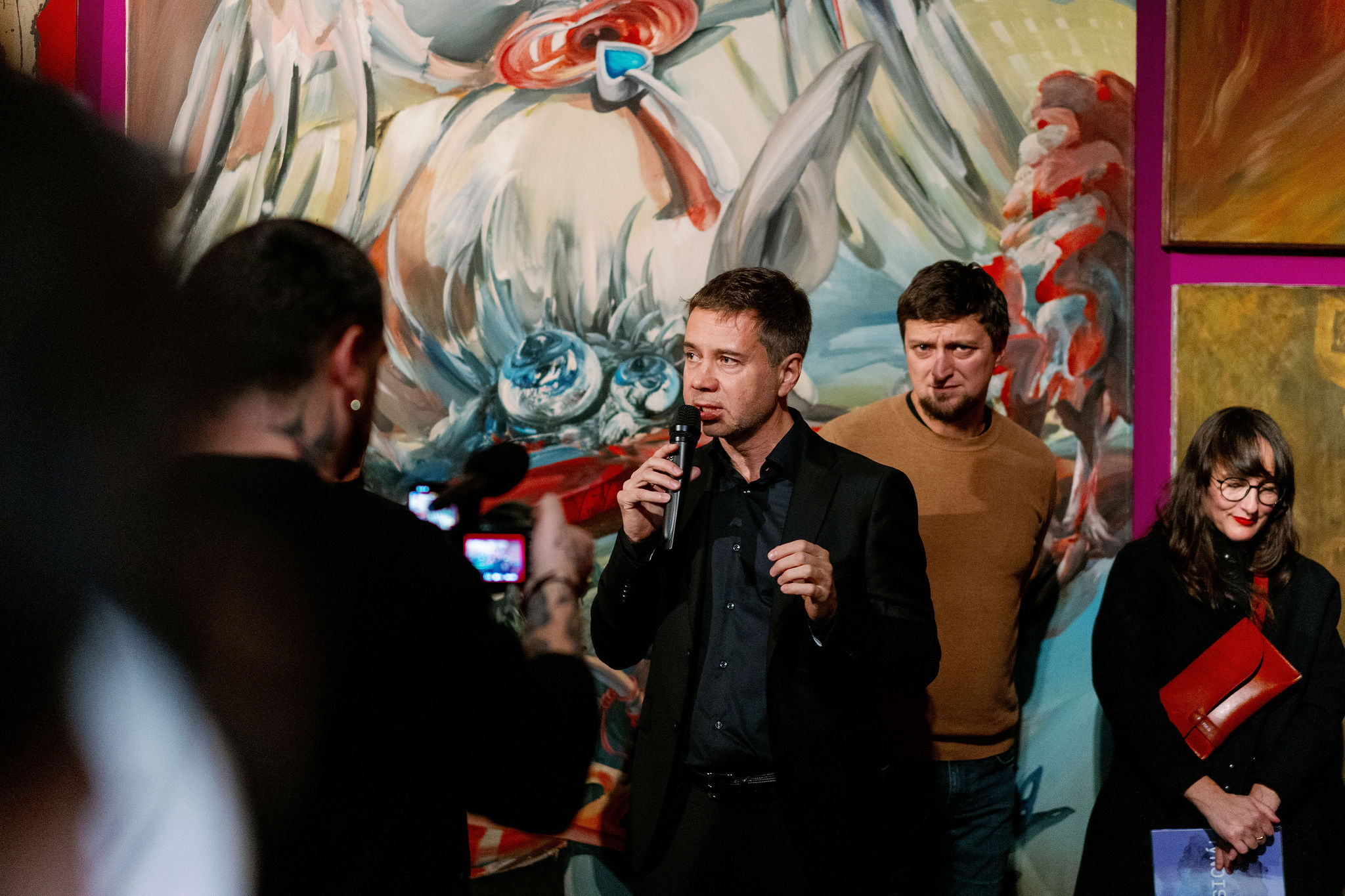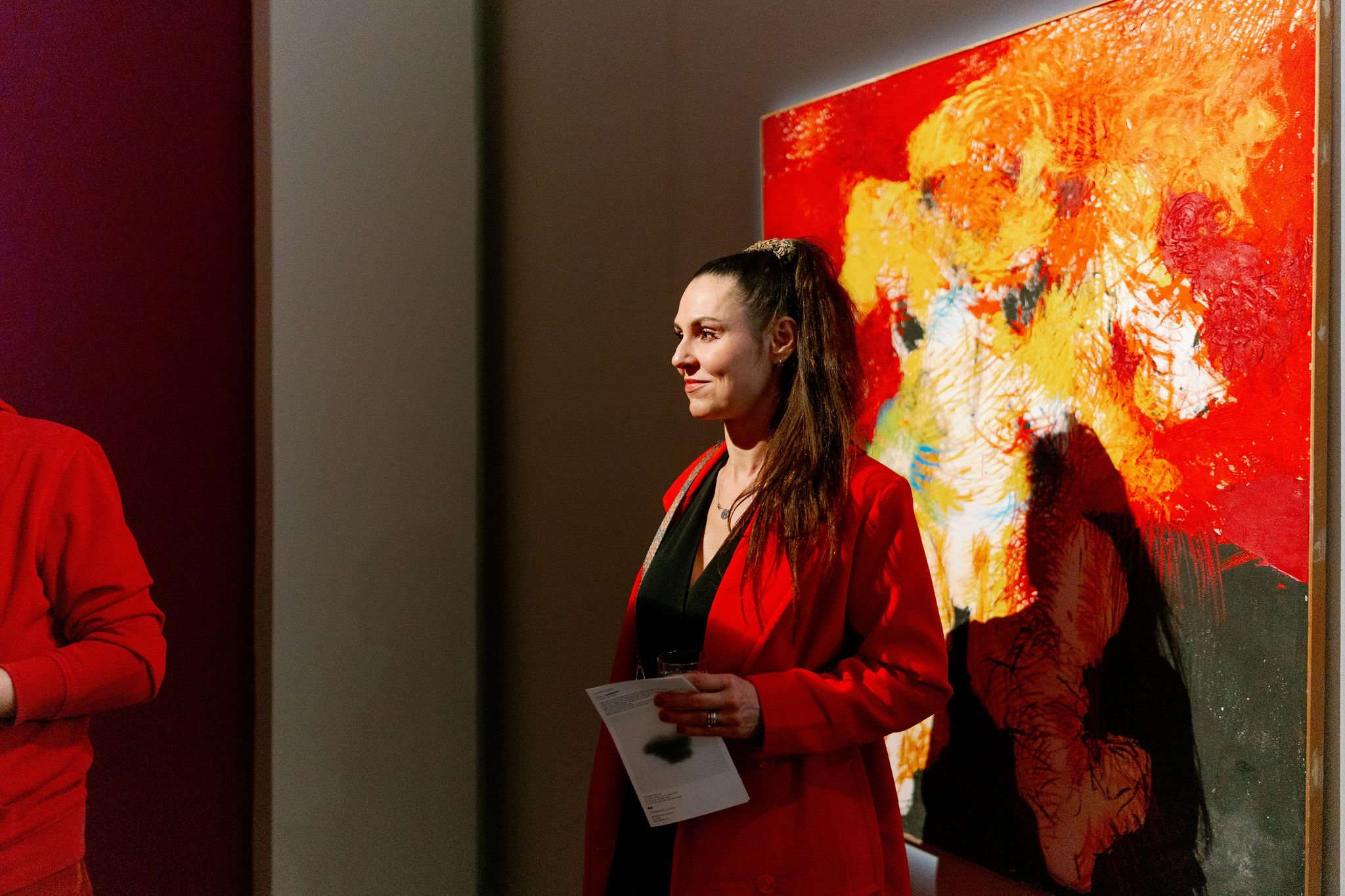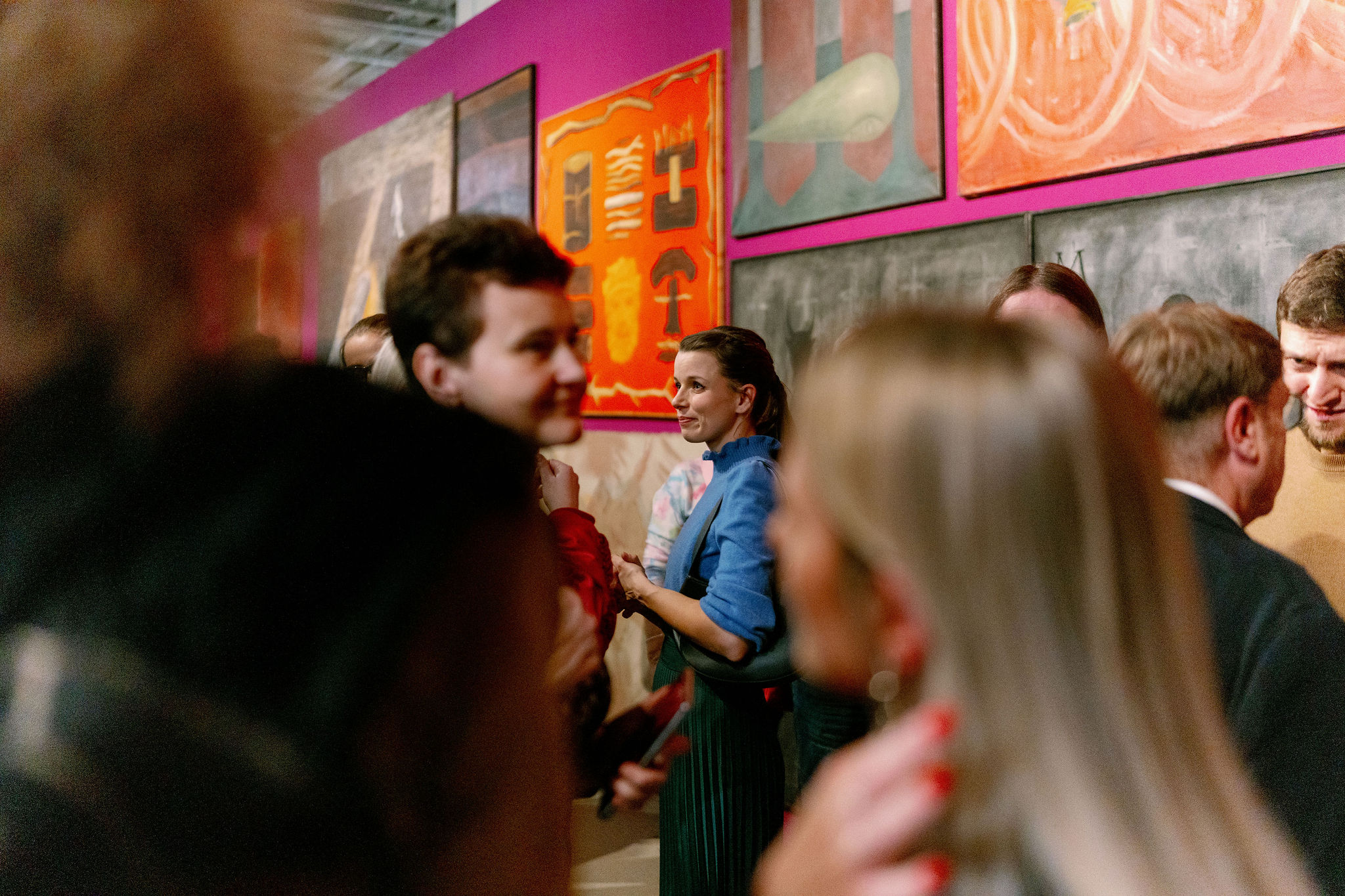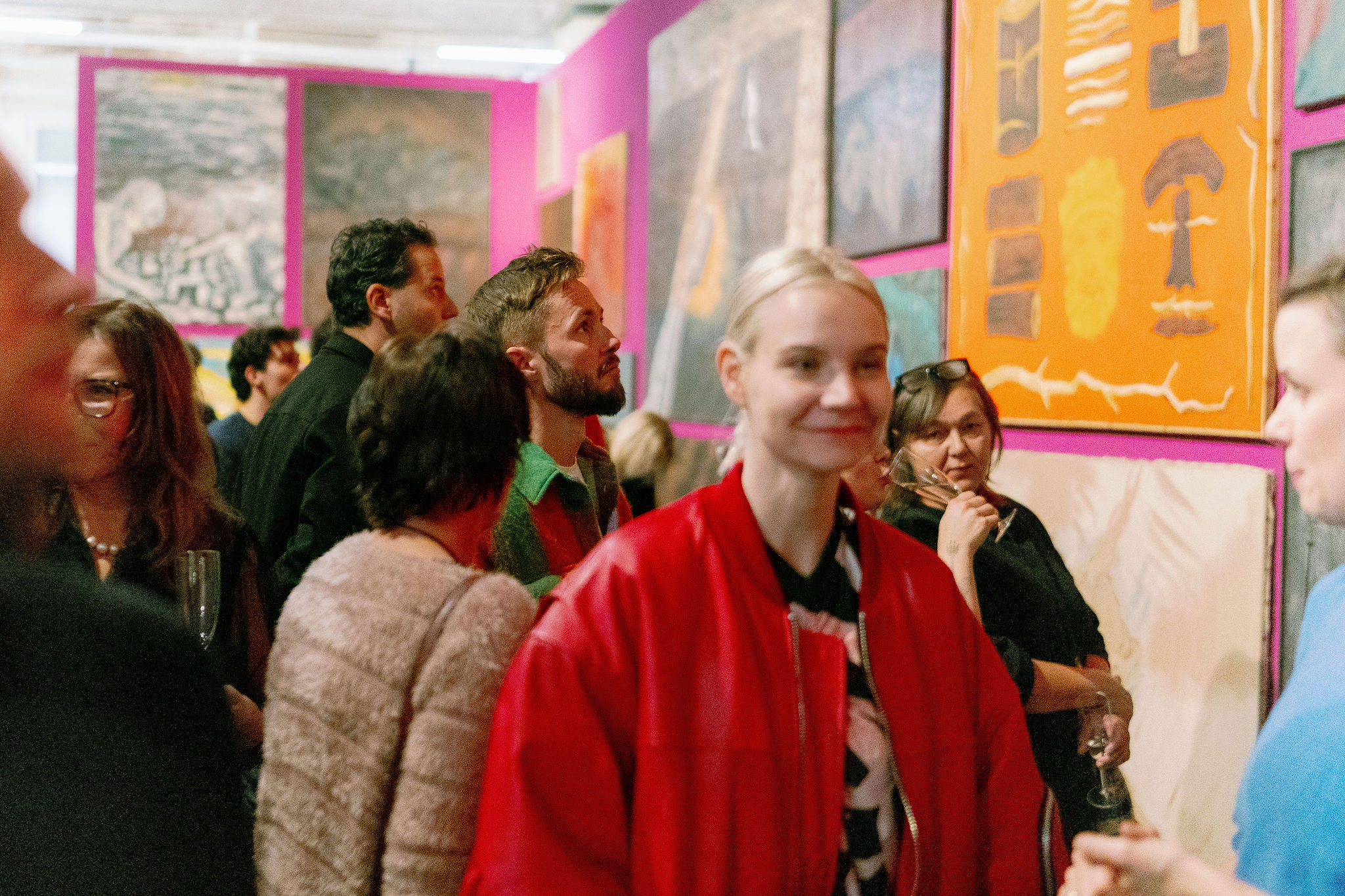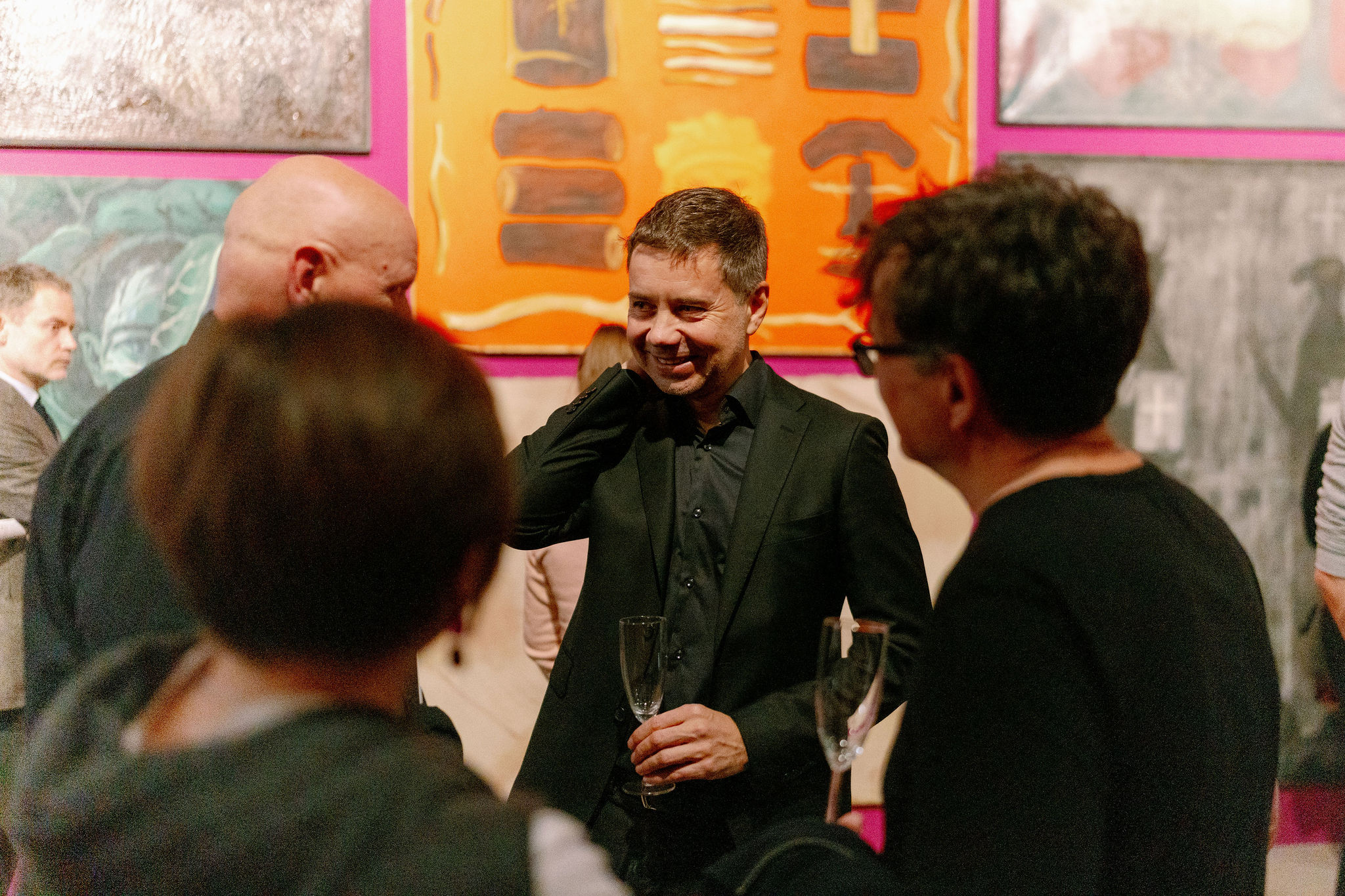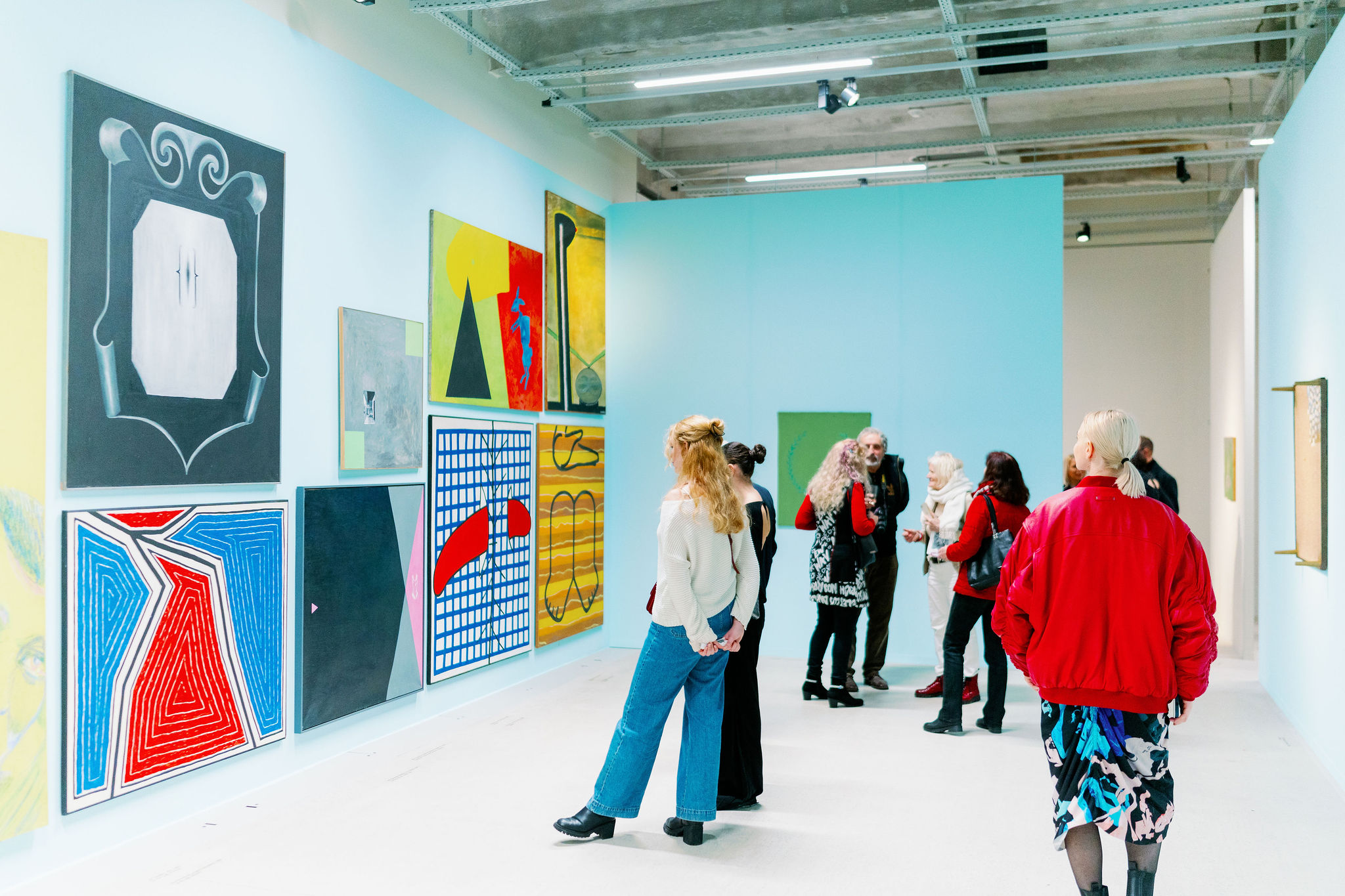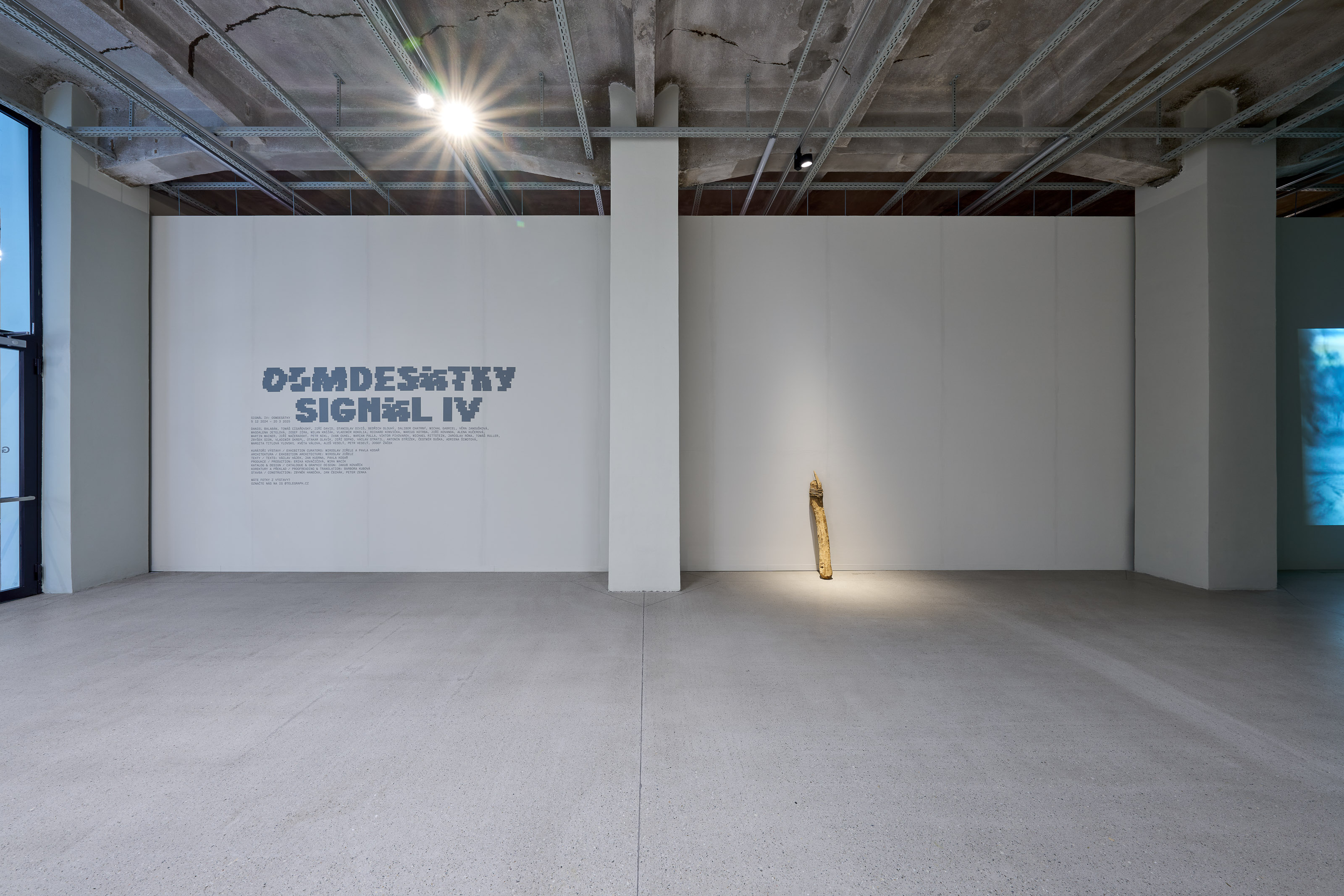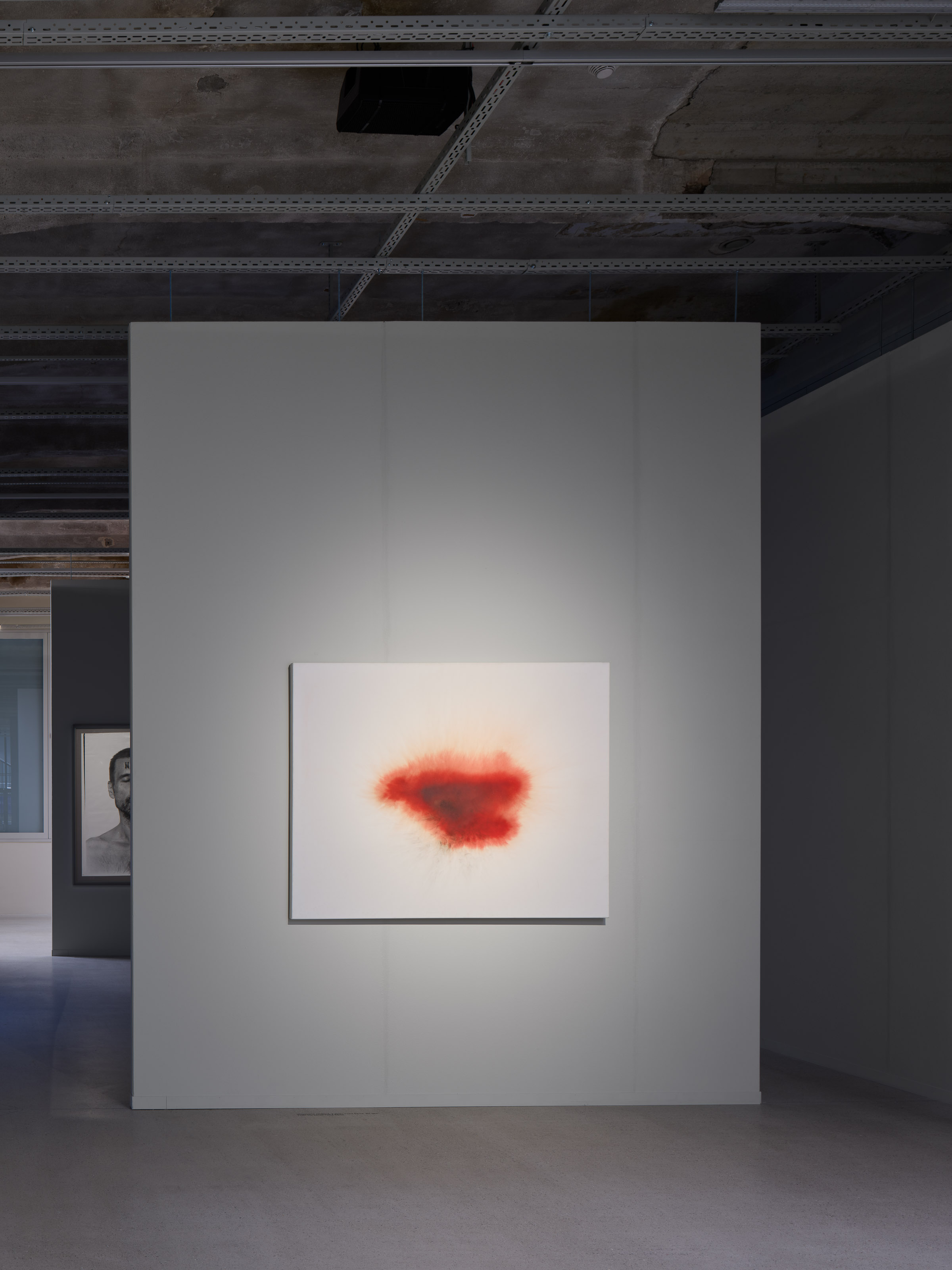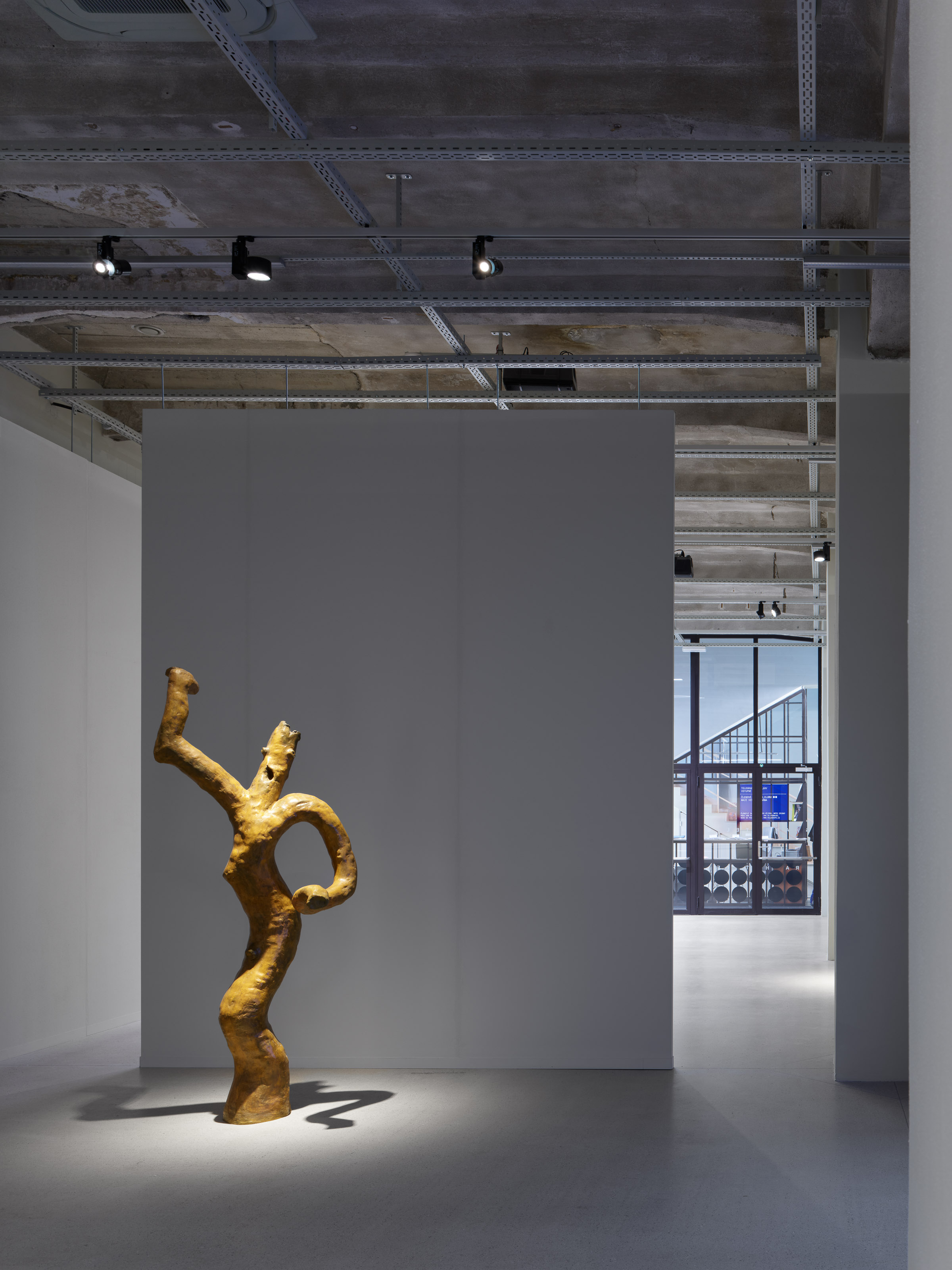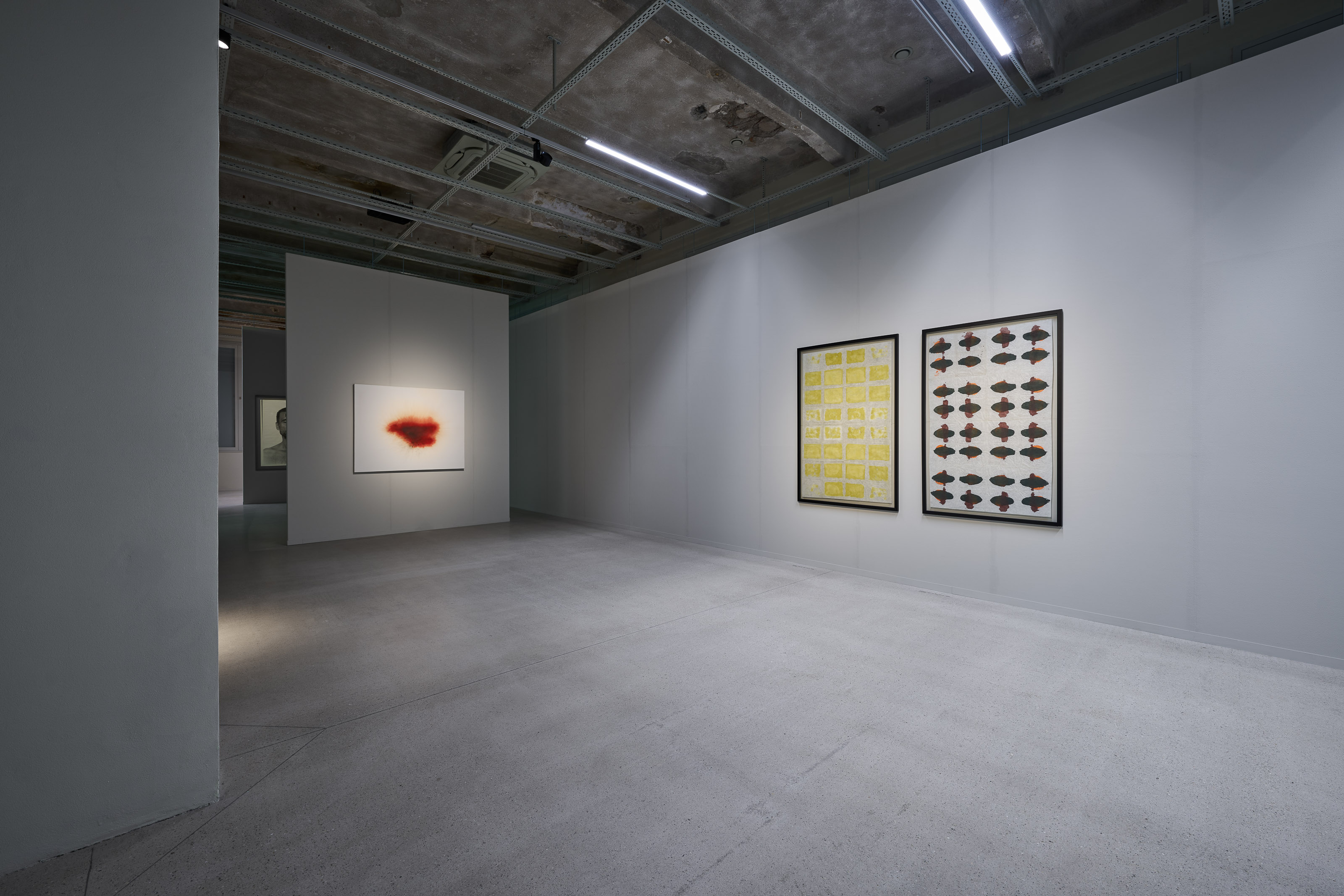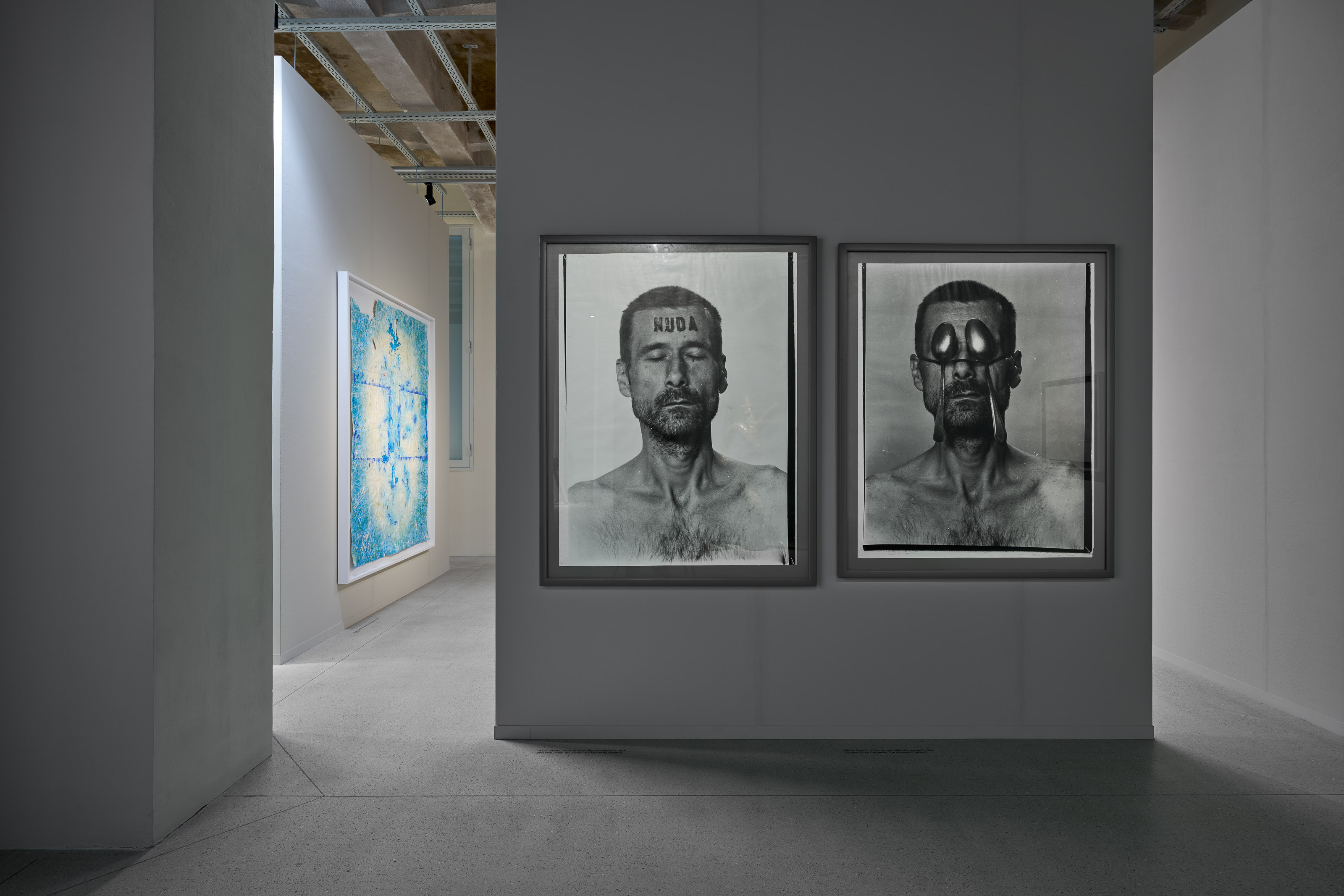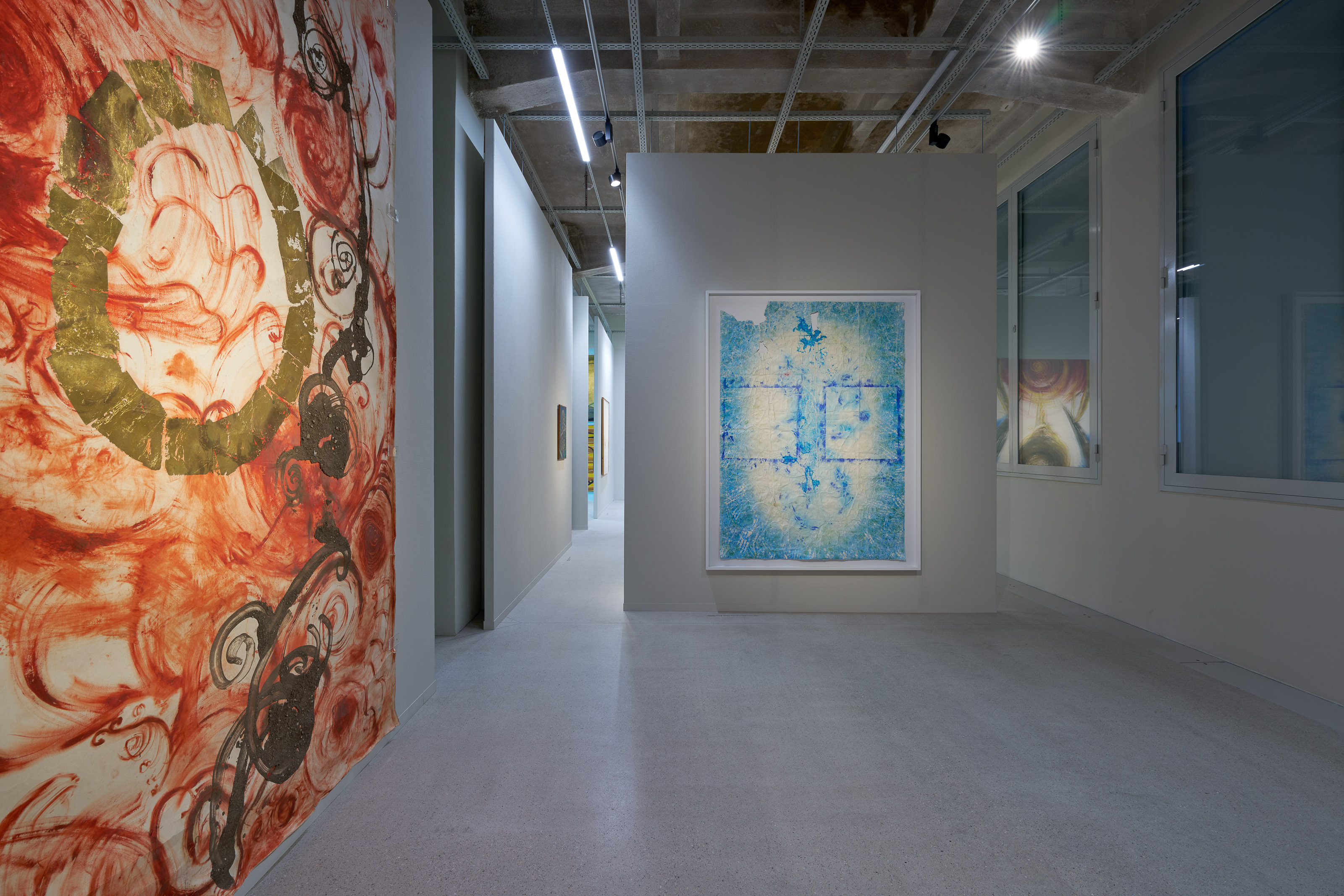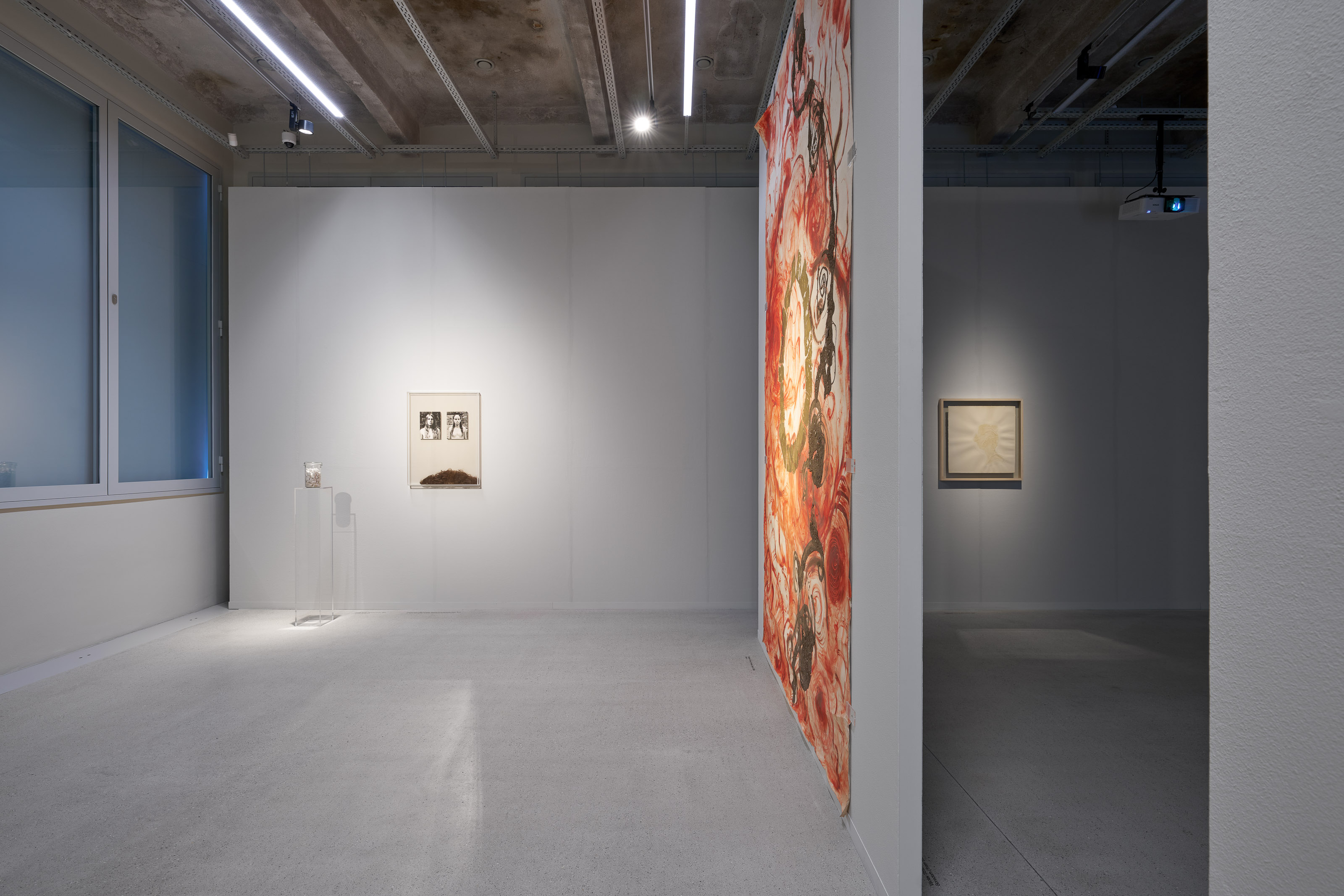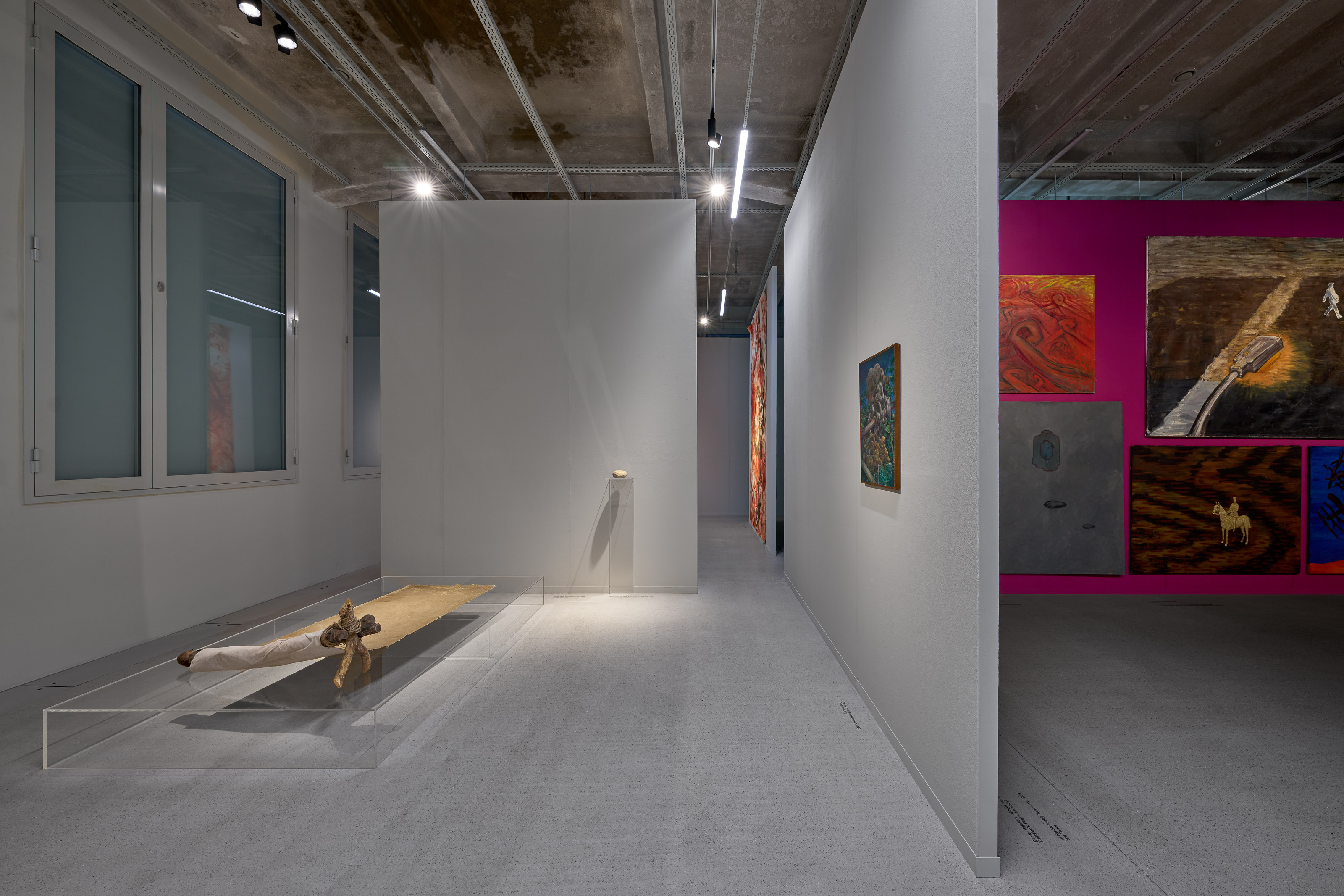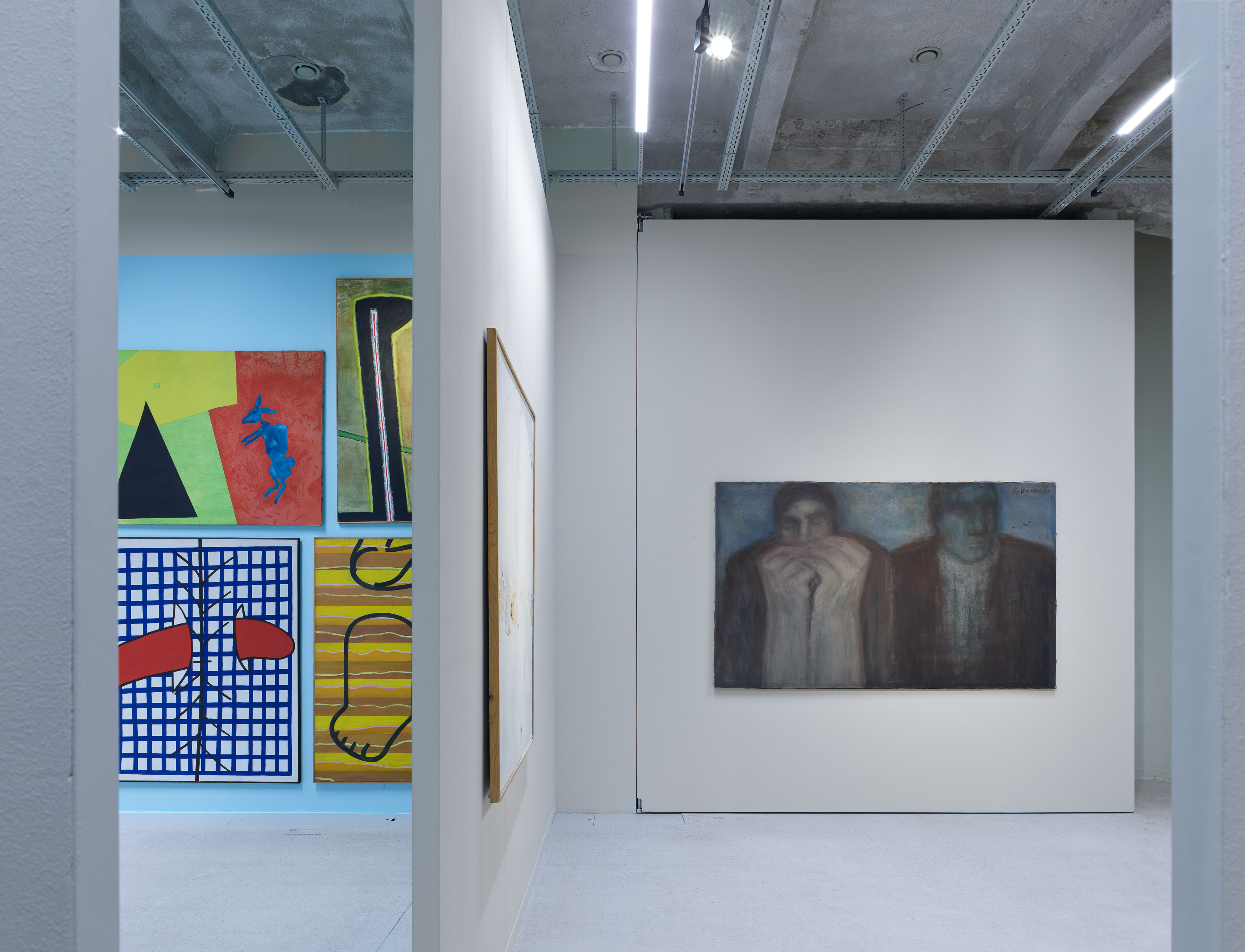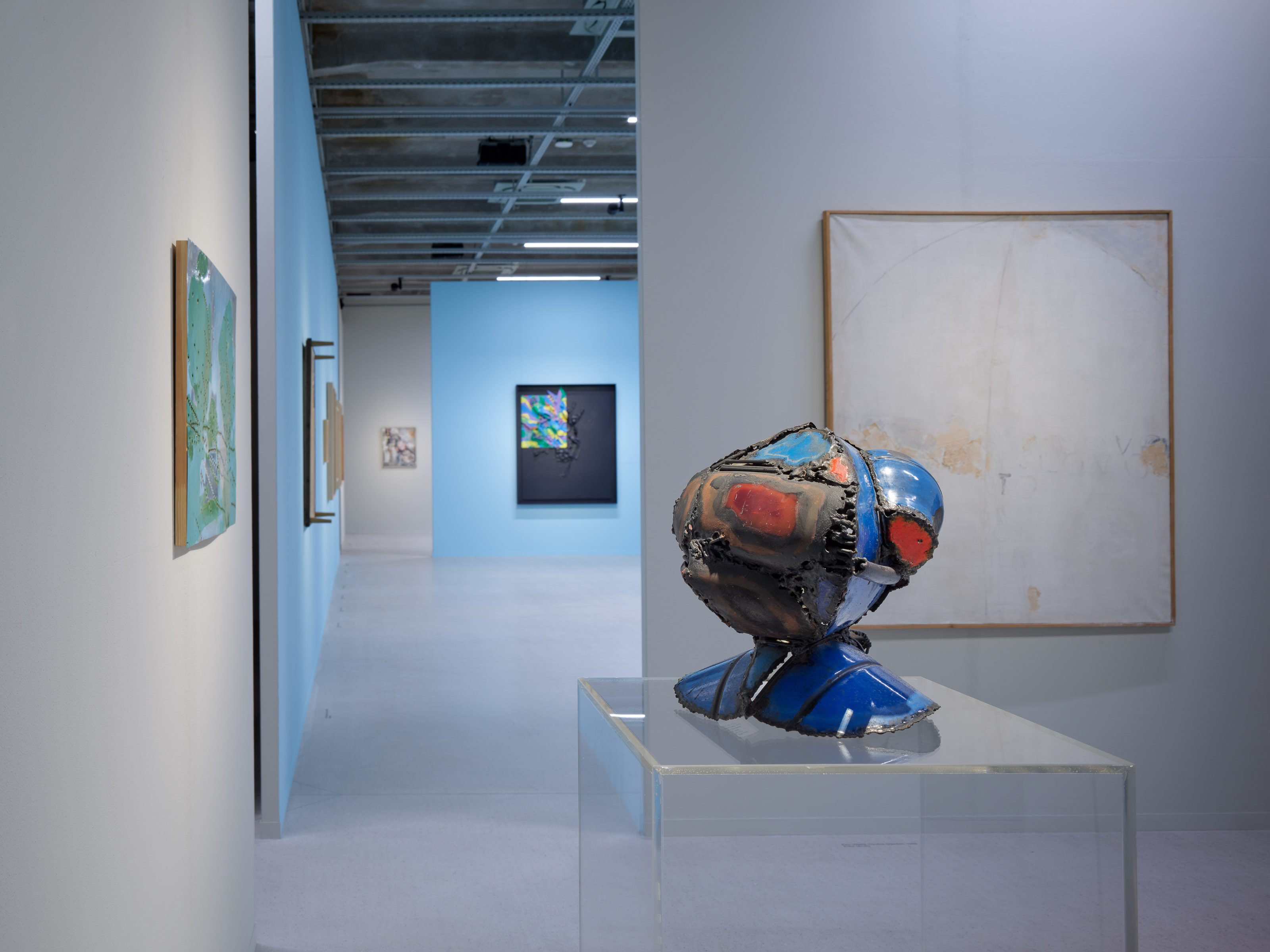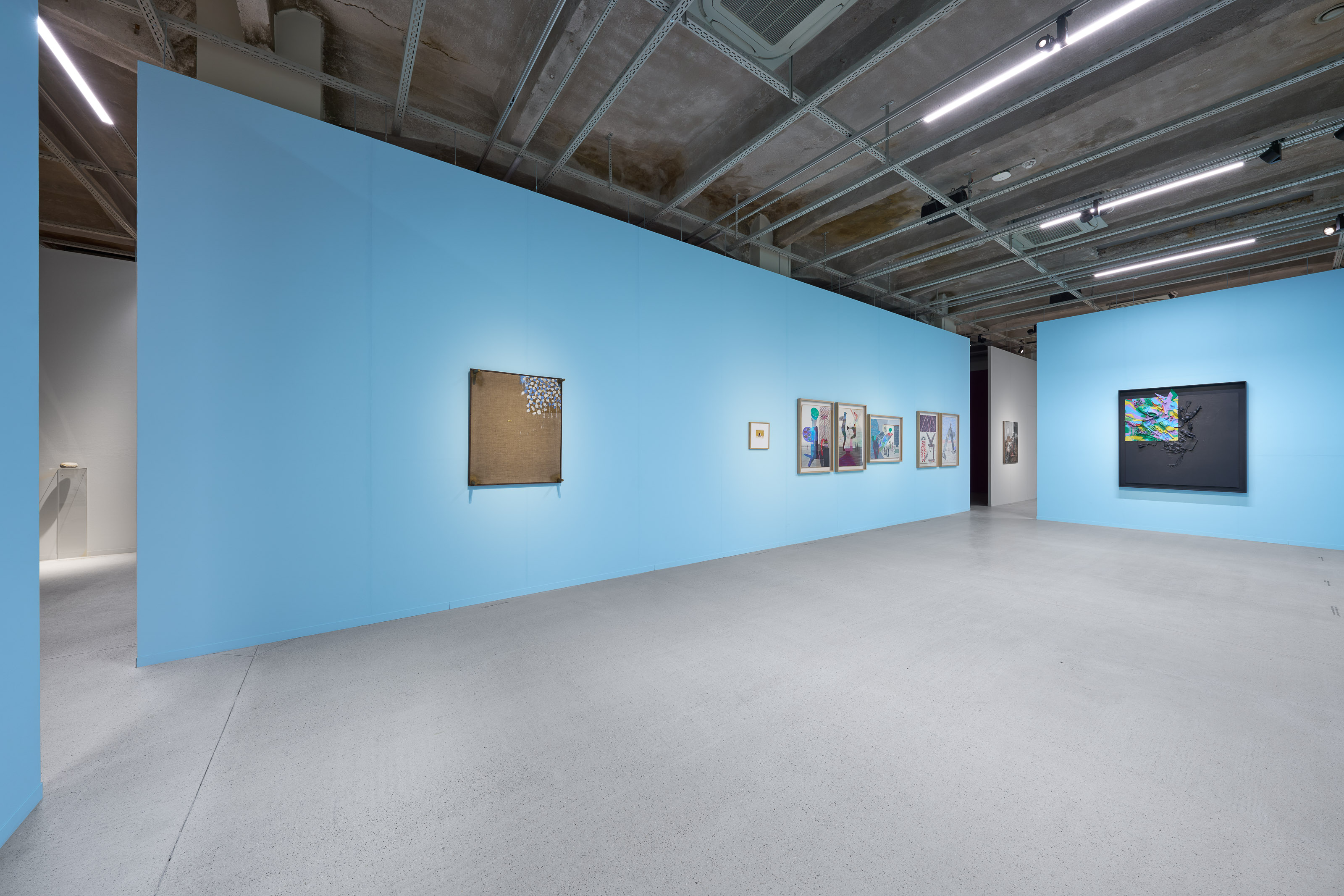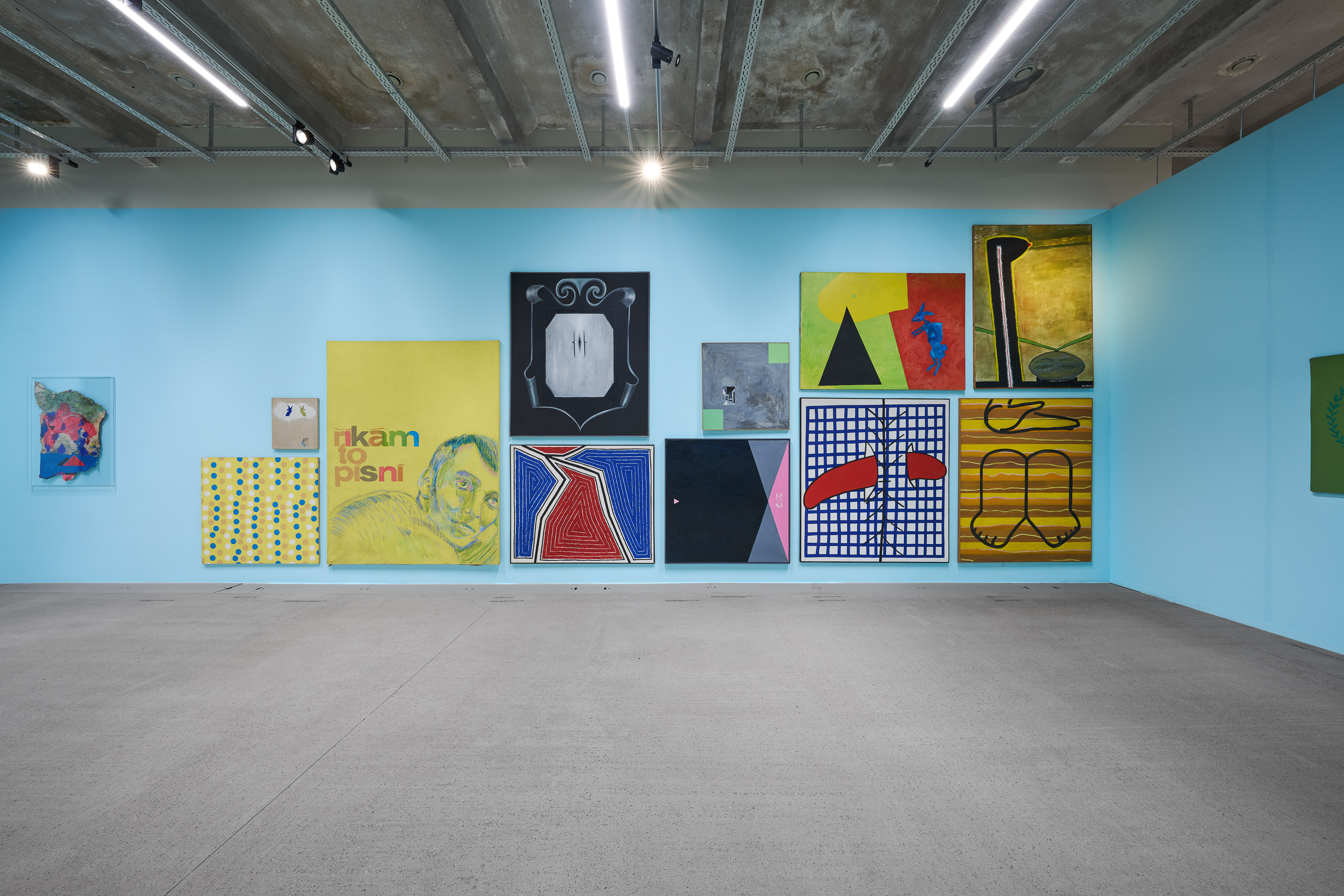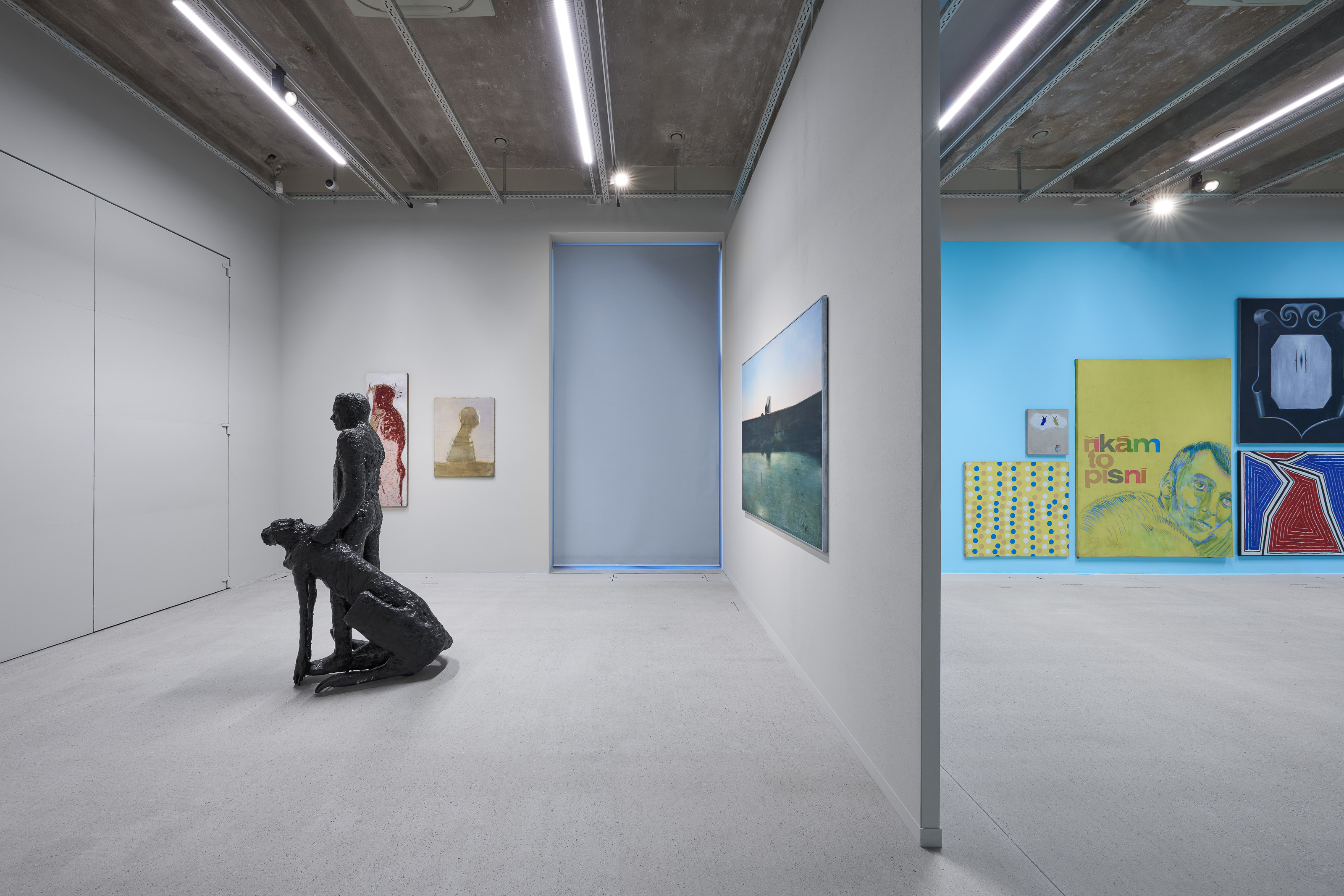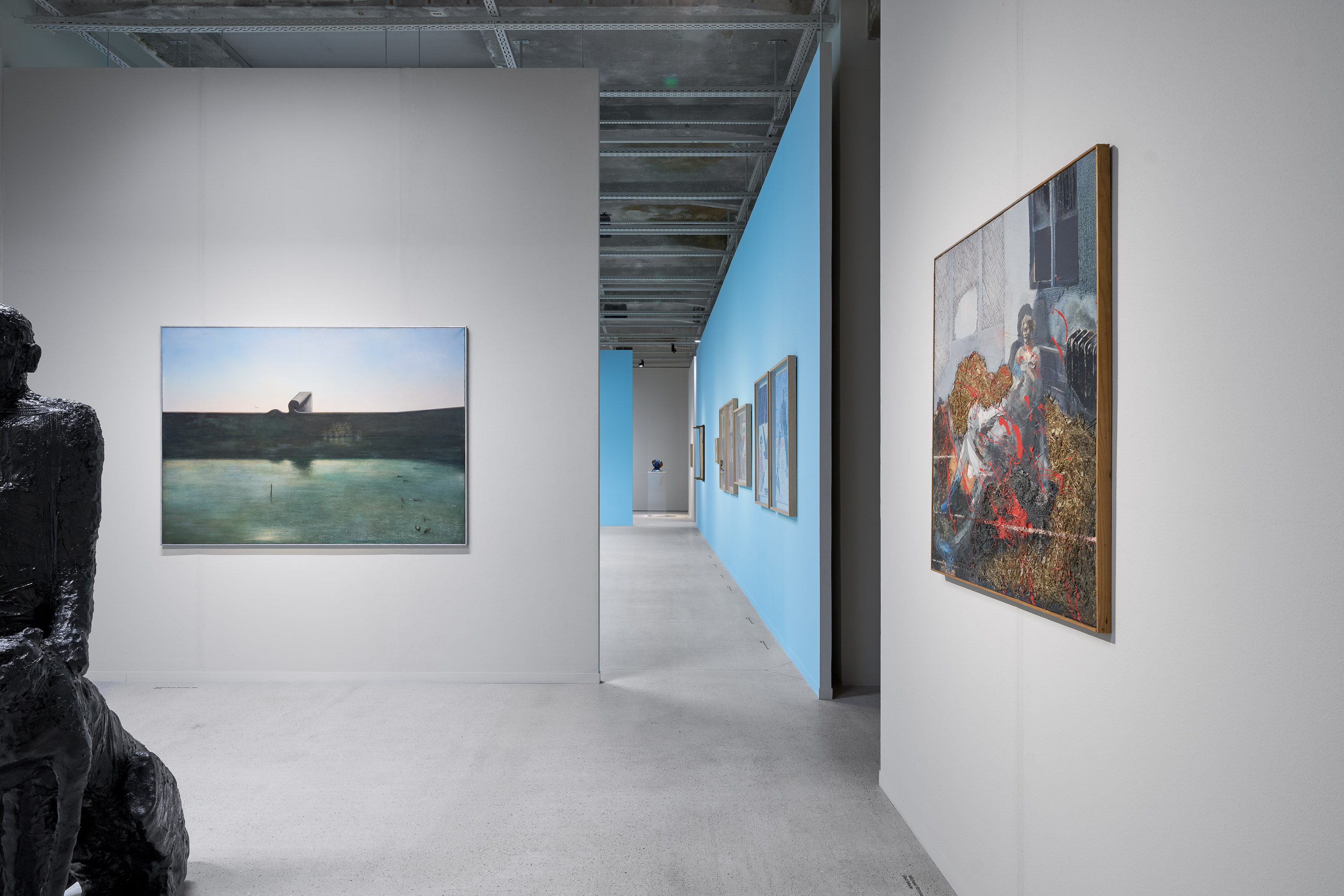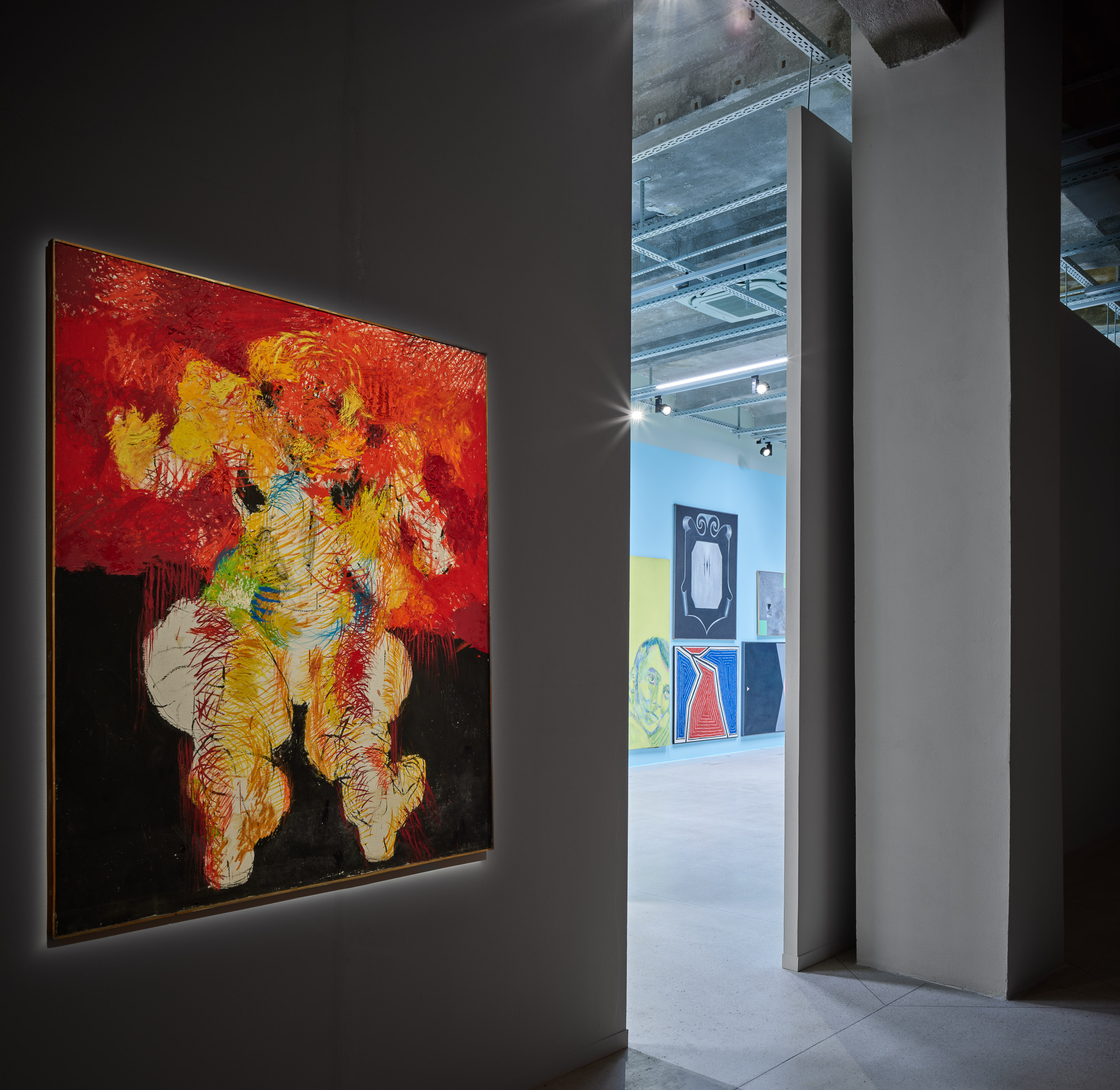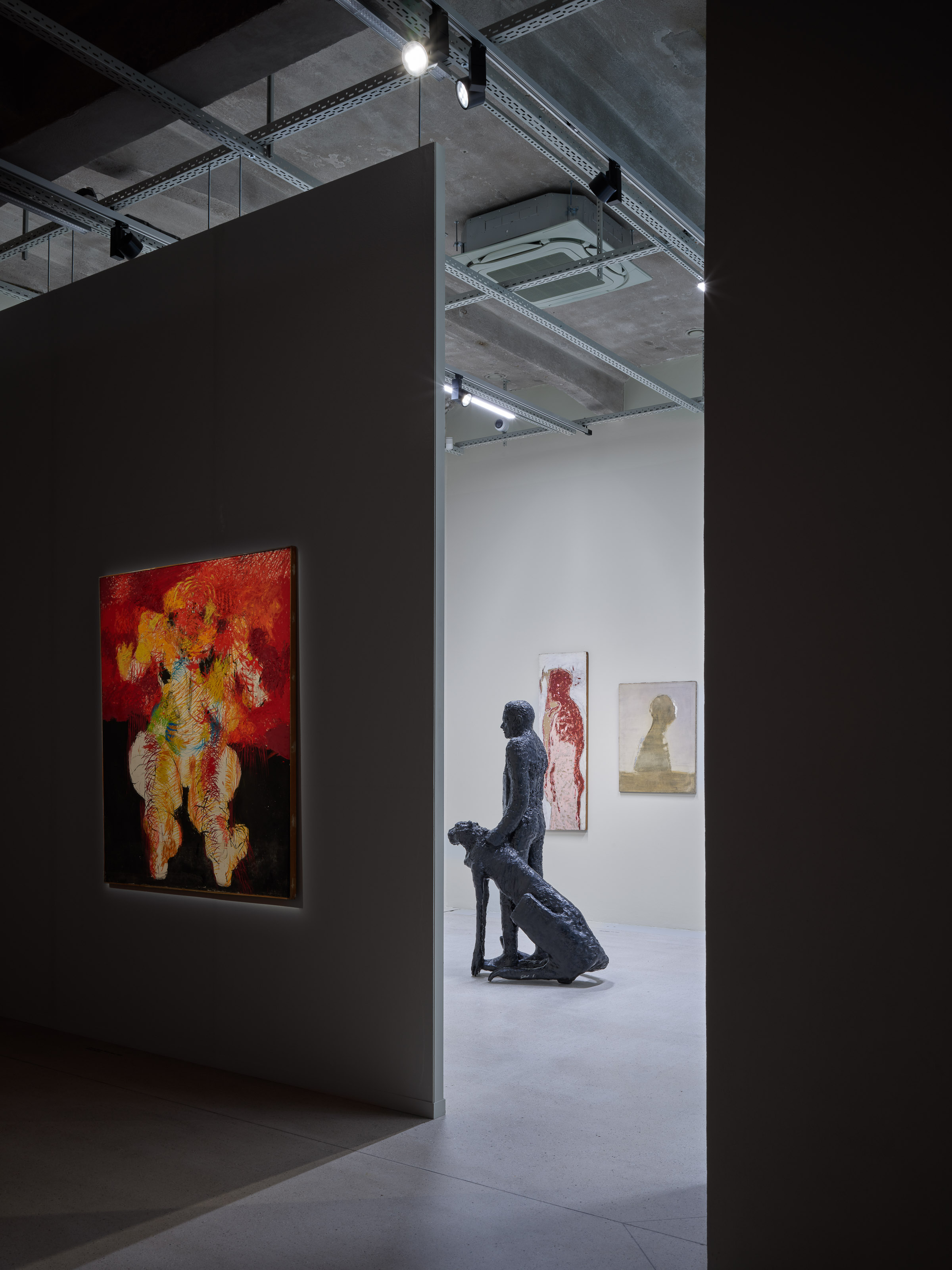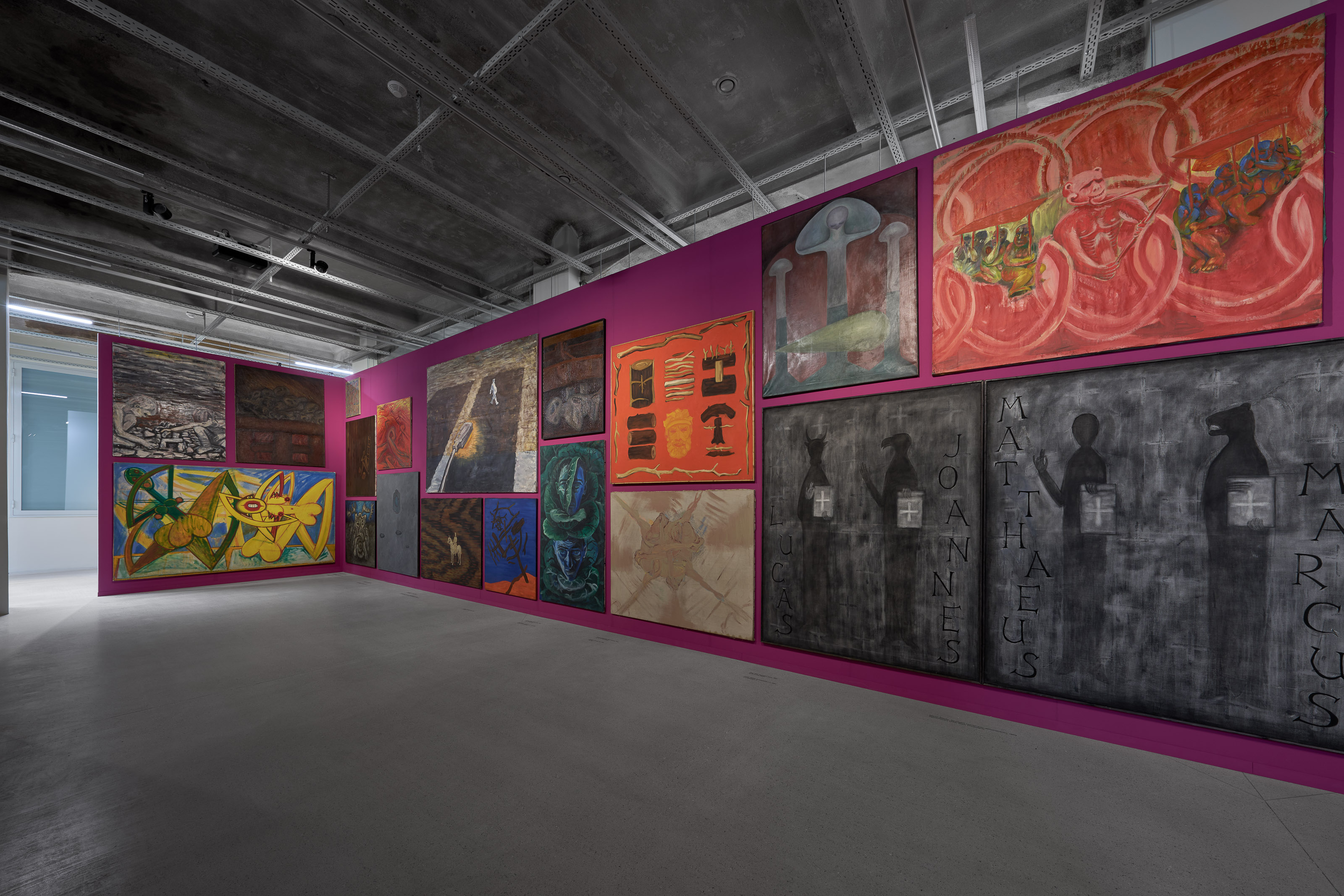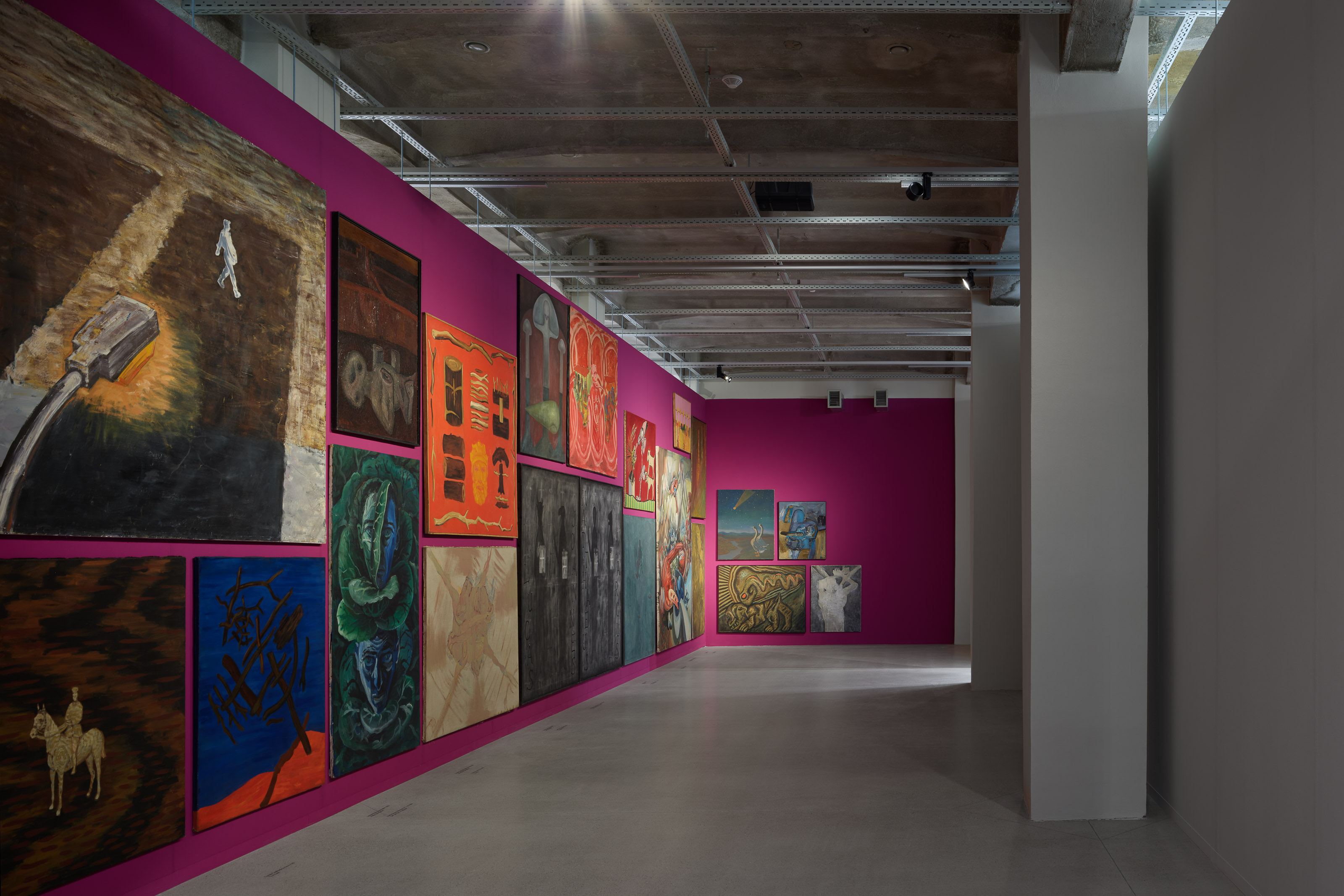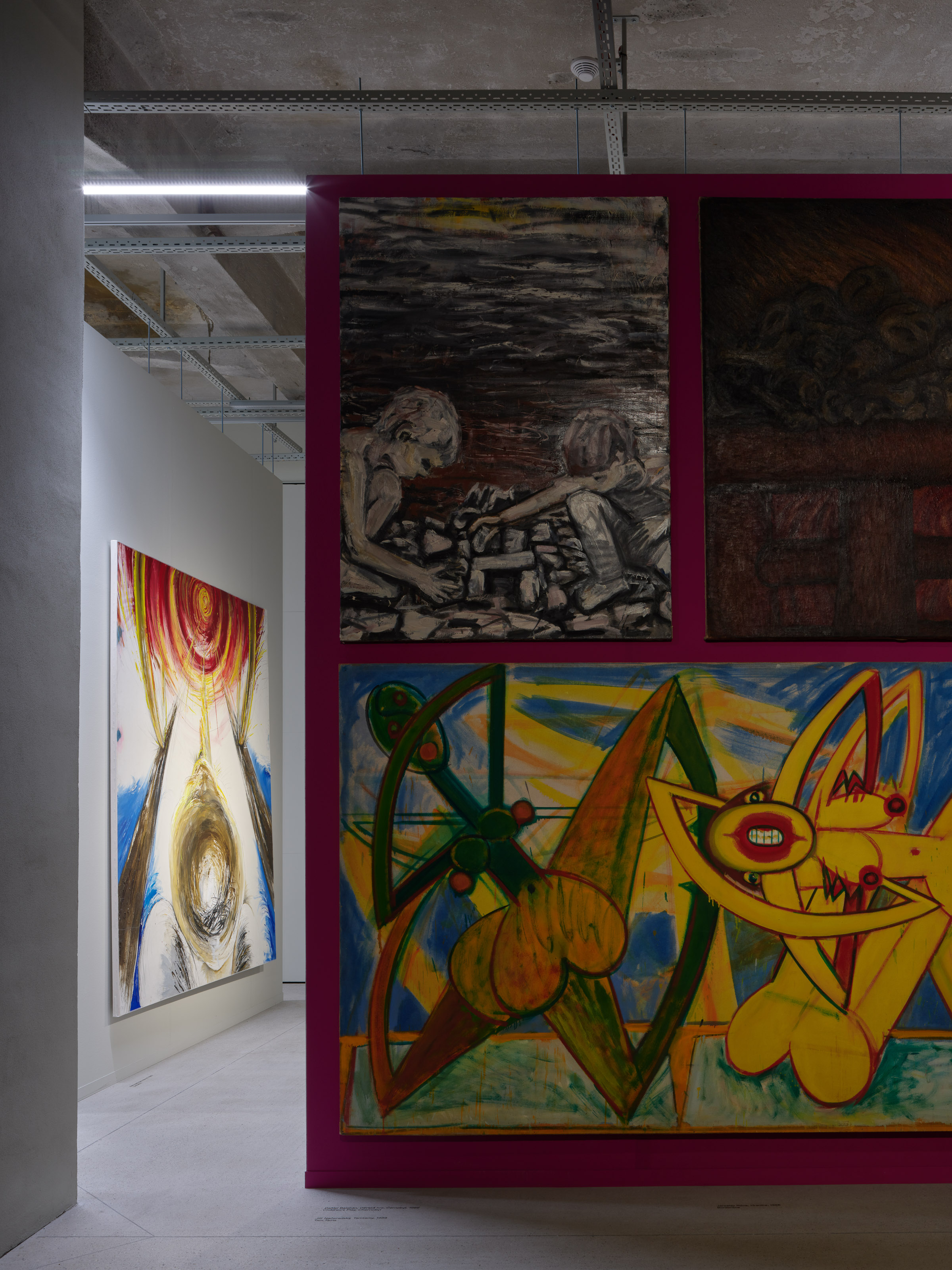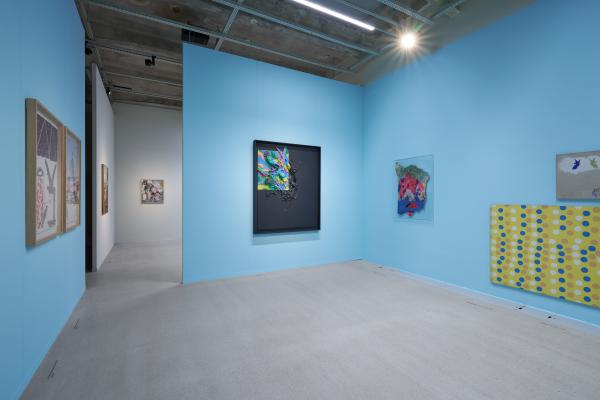
Milan Knížák, Neospoerri, 1989, assemblage, acrylic, woodchip, frame, 163 × 150 cm, signed on the reverse M. Knížák 1989, part of the exhibition Signal IV: The Eighties
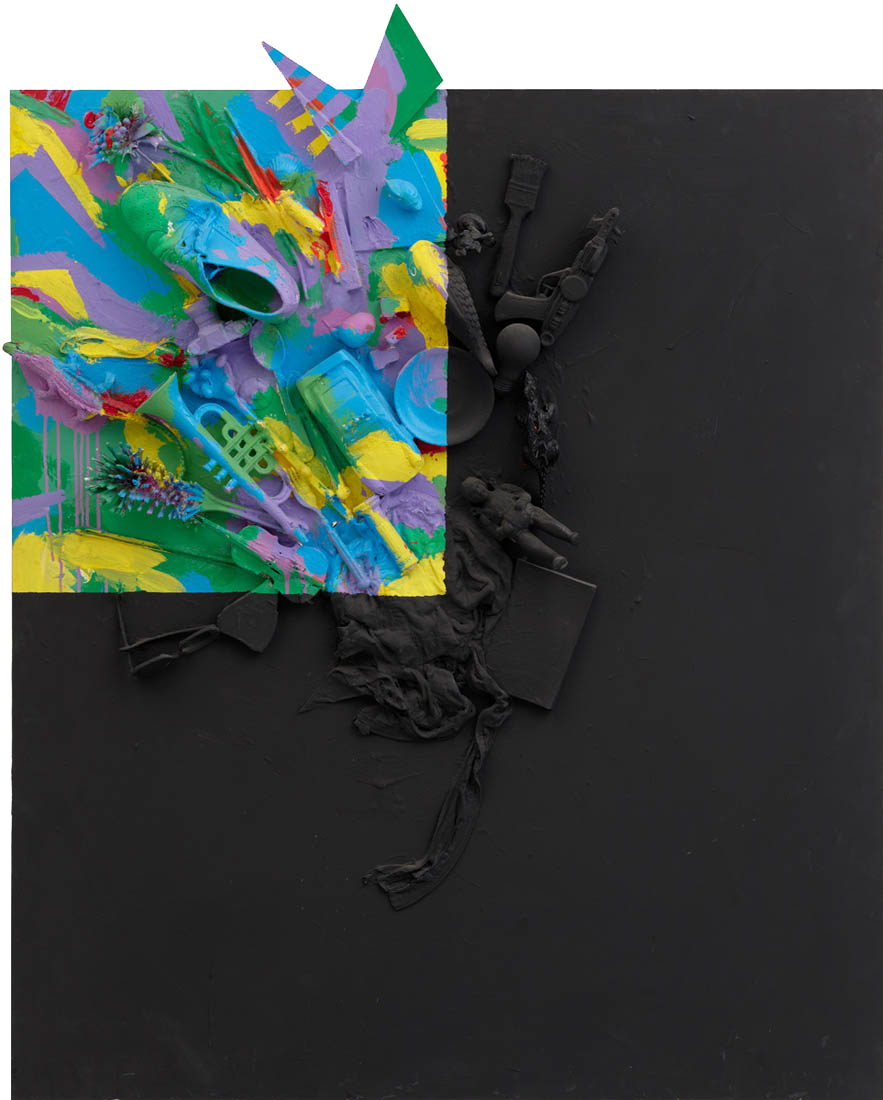
Milan Knizak is a public figure and artistically prominent. At the turn of the 1950s and 1960s he studied at the University of Education and the Academy of Fine Arts in Prague. Later, in the 1970s, he attended the Faculty of Mathematics and Physics at Charles University, which was related to his interest in mathematics, which was also reflected in his work at the time. He did not graduate from any of these schools. Already in the mid-1960s he became a prominent figure in Czechoslovak action and conceptual art or happening. In 1965 he was admitted to the Union of Czechoslovak Artists. His credo was to bring art closer to life. For this reason, many of his events and "short-lived exhibitions" took place in public spaces. Knížák's artistic activities were soon noticed by leading Czech art theorists, including Jindřich Chalupecký and Jiří Kolář, who publicly praised his work. In 1977, for example, Knížák became a laureate of the Jiří Kolář Prize. He was the only Czechoslovak artist to be a member of the Fluxus movement, for which he is still world famous today. As a result, in 1968, after obstruction by the authorities, who for a long time refused to issue him a passport, he was sent to the United States of America for an internship, where he was appointed director of Fluxus East. Knížák continued to work in the art of action and happening until the 1980s, when his work began to show an inclination towards classical, but in his conception innovative, techniques of painting and sculpture, or the object. In the preceding years, however, the hyper-productive Knížák had also devoted himself to other areas, including design, fashion, music, photography, architecture and literary work. In Czechoslovakia, however, it was probably after 1989 that he made his greatest impact. In 1990 he became the head of the Academy of Fine Arts in Prague as its rector, where he stayed for seven years. This was followed by a long period of controversy, when he was Director General of the National Gallery in Prague (1999-2011). Although his specific actions were often criticised, he was nevertheless one of the longest serving directors of this leading Czech institution. As rector and professor of the Academy of Fine Arts and director of the National Gallery, he had a significant long-term influence on the Czech art scene. Currently, Knížák is devoted to social criticism and his attitude is accurately described by the motto with which he welcomes visitors to his website: "I'm probably a fool or a Martian". The offered painting-assemblage comes from the Neospoerri series, which Knížák created in 1989 during his stay in the German village of Preunschen. It is one of those works in which the artist once again found the possibilities of the hanging painting. The cycle is quite crucial in the context of Knížák's work and became the impulse or starting point for the objects and installations he created over the next few years. Knížák's creative process consisted of randomly grouping diverse objects on the picture surface. Once fixed, he painted the entire assemblage and the picture surface white and then painted everything in bold colours without respecting the volumes of the individual artefacts placed in the picture. The result is a whole full of dynamism and tension created by a completely different rhythm of three-dimensional objects and surface painting. The title of the series suggests that Knížák was aware of the proximity of these works to the work of Daniel Spoerri. It is therefore an acknowledged appropriation of a creative process that is characteristic of postmodern work and of Milan Knížák himself.
The exhibition was also accompanied by a catalogue, which can be purchased on our eshop.