You may have already come across Adriena Šimotová's work in the Telegraph. Her work was part of the exhibition Signal III: Masterpieces from the Robert Runták Collection (1900–1990), which presented the historical part of the collection in the broader context of 20th-century Czech art. Two years later, her work also appeared in Signal IV: The Eighties, this time in confrontation with the generation of artists emerging during the 1980s. Šimotová appeared here alongside authors from several generations, from her own peers to younger artists who were influenced by the older generation outside of official school and institutional structures. Now the work of this author is commemorated by the Museum Kampa in Prague. On the occasion of the centenary of her birth, the project Dear Adriena… has been prepared.
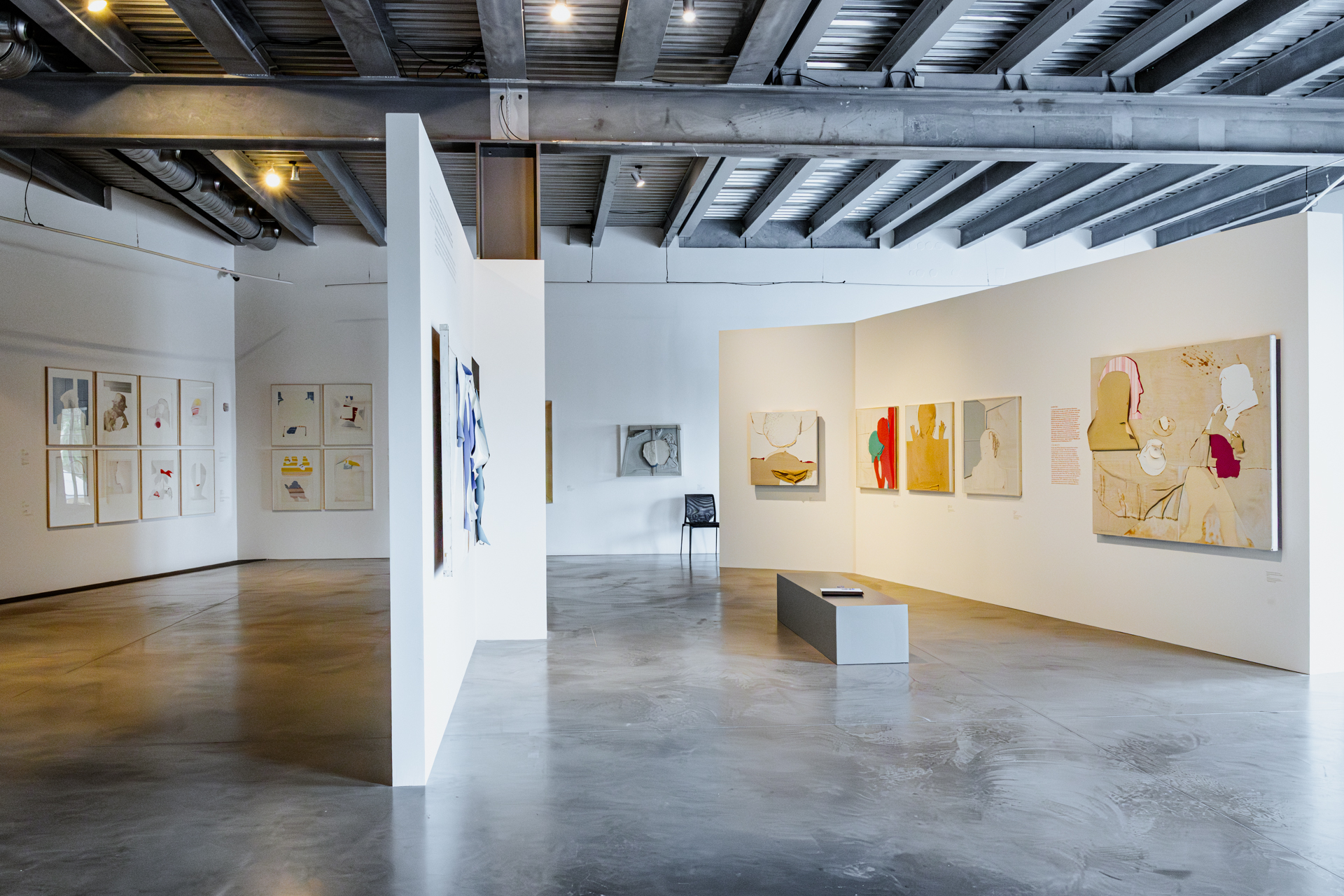
Adriena Šimotová (1926–2014) was a Czech painter, graphic artist and member of the UB 12 group and is widely considered one of the most important figures of Czech post-war art. From 1945 to 1950, she studied at the Academy of Arts, Architecture and Design in Prague in the studio of Josef Kaplický. Initially, she focused mainly on painting and graphics, but from the 1970s she gradually abandoned the classical pictorial surface and increasingly worked with textiles and especially paper. She layered it, pressed it, perforated it and cut it, used frottage and direct prints of the human body. For her, the body ceased to be just a depicted motif. She recorded its outline, pressure or touch directly into the material. The figure thus often appears in her works only as a fragment, an imprint or a trace of someone's presence. It was in this way that Šimotová returned to the closeness between people, their absence, loss and memory. In 1979, she won the Grand Prize at the International Biennial of Graphic Arts in Ljubljana, and in 2001, her work was presented in an extensive retrospective at the National Gallery in Prague.
Meda Mládková (1919–2022) was an art historian, collector and patron of the arts. After 1948 she remained abroad; she studied economics in Switzerland and later art history in Paris. It was there that she ran the exile publishing house Éditions Sokolova, met František Kupka and began collecting his works. After moving to Washington, she returned to Czechoslovakia regularly from the late 1960s, visiting artists' studios, purchasing their works and helping to present them in the United States. She and her husband Jan Mládek gradually built up an extensive collection of Czech and Central European art and created a renowned salon for personalities, including Václav Havel, Bohumil Hrabal and Madeleine Albright, in one of their houses. After 1989, Mládková returned to Prague and focused on making the collection accessible to the public. The result was the reconstruction of the Owl Mills and the creation of the Kampa Museum, which opened in 2003.
Meda Mládková met Adriena Šimotová in the late 1960s and soon began to support her work in the United States. When she organized her first exhibition of contemporary Czechoslovak graphics in Washington in the fall of 1968, she selected one of Šimotová’s dry-needle prints – prints created by engraving a needle directly into a metal plate – as an invitation. In the following years, she bought her work, included it in exhibitions and looked for opportunities to present it abroad. The professional contact gradually turned into a long-term friendship, which continued in their correspondence.
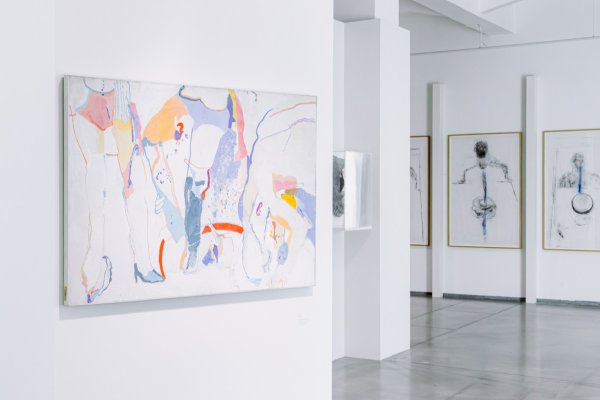
The exhibition Dear Adriena… is not conceived as a complete retrospective, but focuses on several fundamental stages and transformations of Šimotová's work from the late 1960s to her late work. The basis is the collection of Meda and Jan Mládek, supplemented by loans from public and private collections. In addition to earlier paintings, it shows a gradual departure from classical painting, experiments with textiles and subsequent work with paper, which Šimotová began to understand as a material that can be physically manipulated. An important part is also the textile collages from the mid-1970s, originally intended for a failed exhibition at the Livingstone-Learmonth Gallery in New York. However, after their transport to the United States, glue stains appeared on some of the works and the planned exhibition ultimately did not take place. Šimotová later tried to save them directly in the USA, but the damage was not repaired. The collages remained out of the public eye for decades, and today they also capture a lesser-known phase of her work, when she abandoned painting and sought new possibilities for working with surface, material, and the human figure.
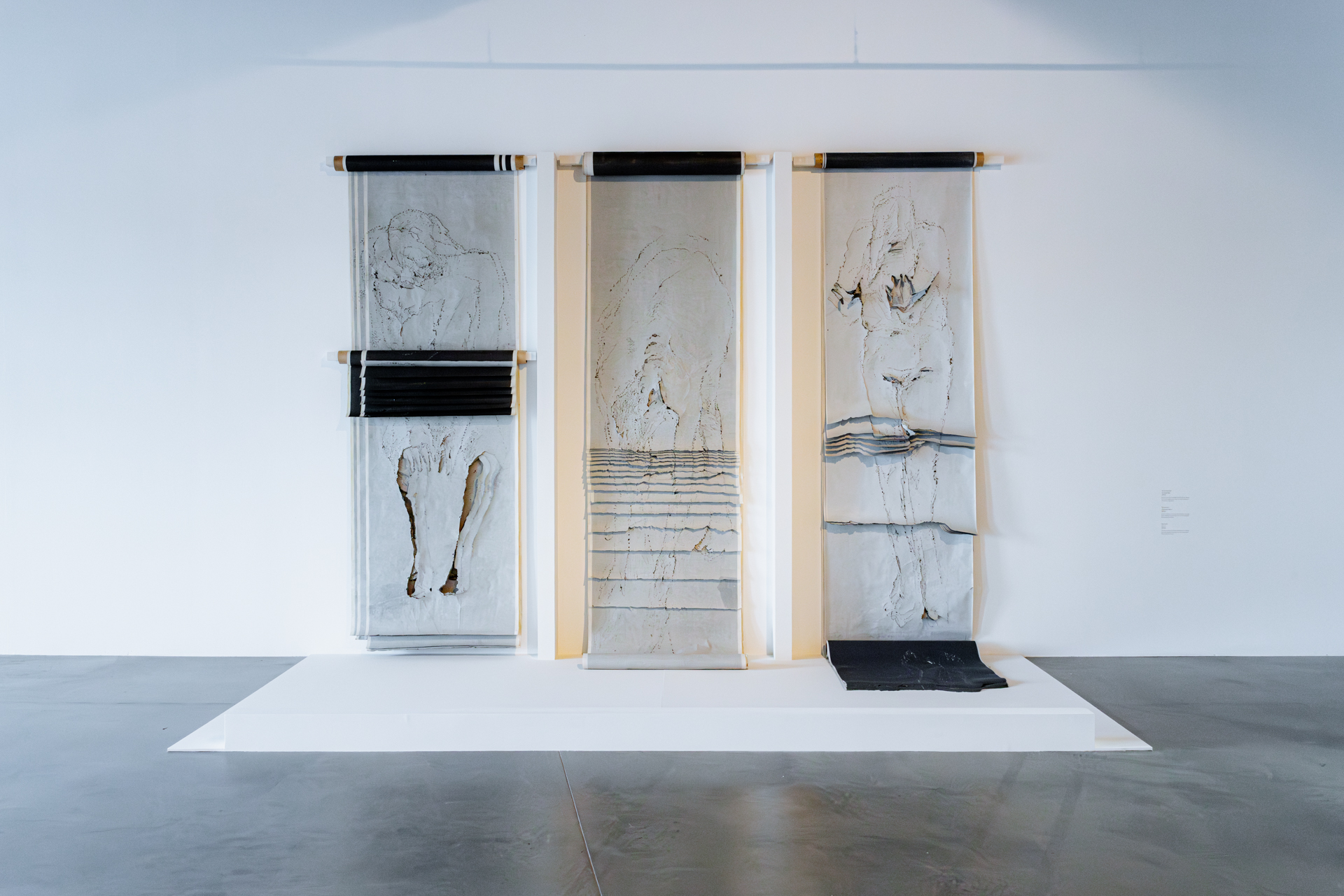
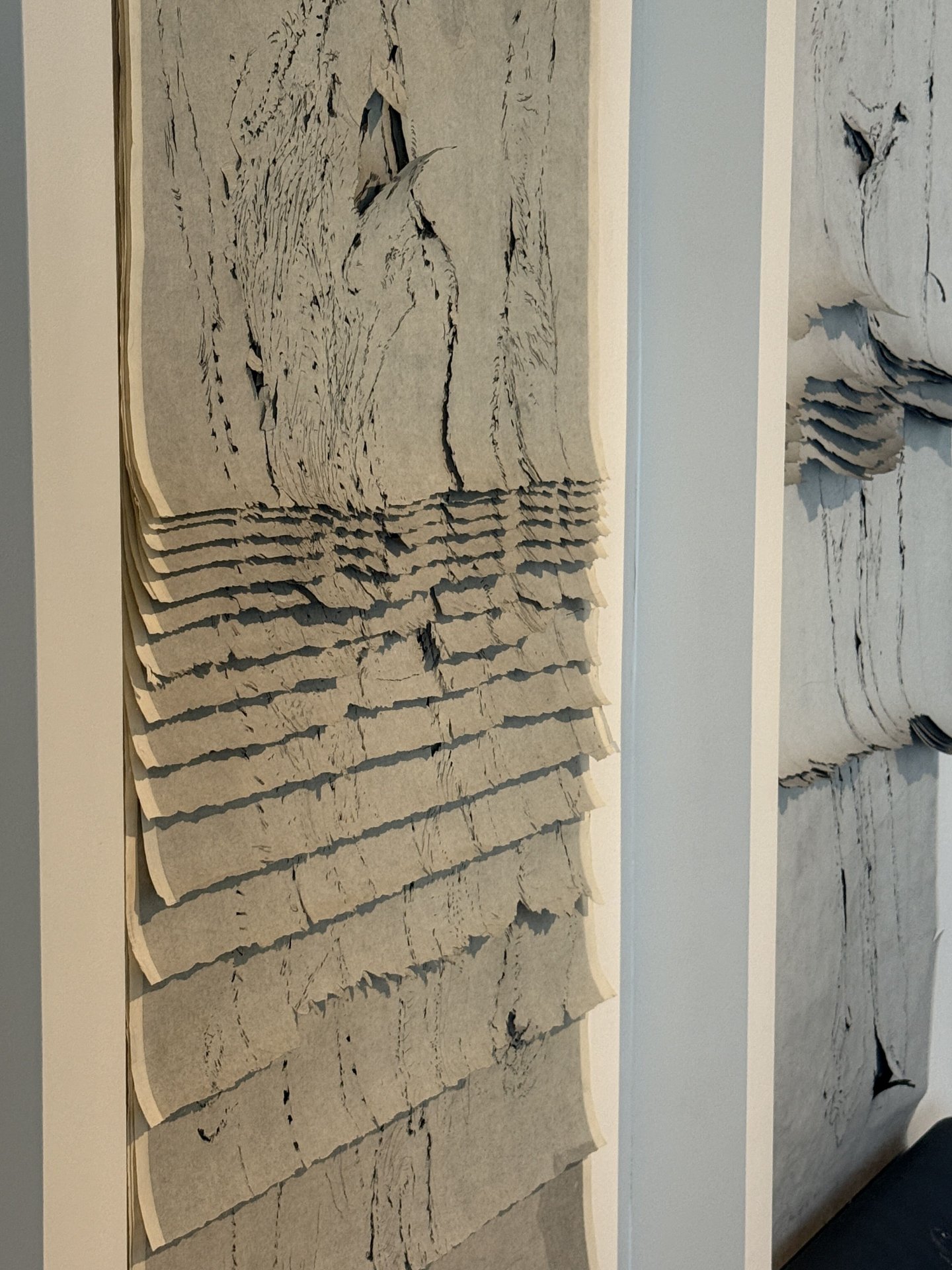
The highlight of the exhibition is the trio of monumental works Nesting , Fear and Maturation II from 1984. In them, Šimotová worked with several layers of paper, which she cut and disrupted. The human figure is thus not created by drawing or painting, but directly by interfering with the material. The exhibition continues to follow her work with frottage, the imprint and trace of the human body and concludes with the late cycle Huddled from 2009–2010. At that time, Šimotová was already confined to a wheelchair, but she did not give up on large formats – she used a long stick to help herself while working to reach the paper lying on the ground. Huddled thus concludes the exhibition exceptionally accurately: for the author, who has worked with the body for decades, its touch, imprint and physical trace, her own physicality was ultimately reflected in the very way in which the work was created.
The exhibition Dear Adriena… at the Kampa Museum commemorates her relationship with Meda Mládková, who collected her works and supported their presentation abroad. It is open to the public until September 13, 2026.